Max Darrow
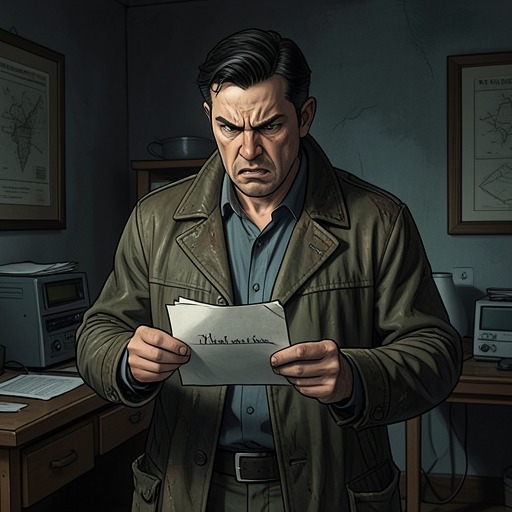
The InnocentMax Darrow is a retired Las Vegas homicide detective whose past investigation of Candace Potter’s death becomes a hidden force in the novel’s present-day mystery. The clues first identify him as a former officer found murdered in Newark; later revelations show that, before his death, he had been steering other people’s searches and withholding crucial information. His role links an old unsolved case to the attempts by Candace’s friends and daughter to discover what happened.
Identity and Background
The investigation into Sister Mary Rose yields fingerprints belonging to Max Darrow, a man with no local criminal record. Detective Loren Muse learns that he lived in Raleigh Heights, Nevada, near Reno, and had spent twenty-five years working homicide in Las Vegas before retiring. The distance between his Nevada life and a Catholic school in East Orange prompts Loren to ask why his prints are part of a New Jersey investigation. She and Ed Steinberg decide that locating him is the next step, only to learn that he has already been found.
Darrow’s body was discovered in Newark, near a cemetery off Fourteenth Avenue. He had been shot twice in the head. This revelation connects the apparently separate cases: the retired detective whose identity emerged through the school investigation is also the murder victim whose death Loren’s colleagues had been examining.
The Candace Potter Investigation
Darrow had been the homicide investigator assigned to the case of Candace Potter, also known as Candi Cane. Adam Yates identifies Potter as a small-time stripper and probable sex worker, and says that Emma Lemay and Clyde Rangor disappeared soon after her body was found. Years later, Loren obtains Potter’s autopsy file from Darrow’s widow, Gertie. The report records strangulation, a severe beating, and trauma to the head. Those findings fit the information Loren already has, but leave a central question: what did Darrow notice in the old case that eventually brought him to Newark and to Emma, living as Sister Mary Rose?
Darrow’s connection to Potter also reaches her daughter, Kyra. Kyra says she tracked down the policeman who had investigated her mother’s death and told him who she was, providing information about her birth and the doctor involved. Darrow gave her Kimmy Dale’s address, and Kyra visited Kimmy. The meeting began Kyra’s further search for Olivia and for the person responsible for her mother’s death; it also shows that Darrow could direct a genuine inquiry while keeping parts of the story concealed.
Darrow’s Manipulation of the Search
The later account of Kyra’s visit to Kimmy complicates the apparent helpfulness of Darrow’s earlier intervention. When a girl presented herself as Candace’s daughter and said she wanted to find her mother’s killer, Kimmy listened as the girl explained that she had some money but was not wealthy. In the final explanation, Kimmy says Darrow told her the visitor was not really Kyra and had been sent to test whether Kimmy would contact Olivia. Darrow suspected Kimmy knew where Olivia was; the supposed daughter’s visit was therefore a probe, not simply an effort to help solve Candace’s killing. Kimmy says she did not call Olivia: she went to Olivia’s grave site and cried. The episode reveals Darrow using personal grief to monitor the people connected to the old case.
Darrow’s concealment extended to Kyra’s genuine search. Kyra tells Matt that she had identified herself to Darrow and given him information about her birth and the doctor, and that he supplied Kimmy’s address. Matt realizes that Darrow had kept Kimmy in the dark about the existence of a real daughter, even while directing Kyra to her. The false visitor and the genuine one thus become parts of the same controlled investigation: Darrow could send Kyra toward Kimmy while later using another girl to test Kimmy’s response, withholding the truth from each woman as it suited his purpose.
The Camera-Phone Scheme
Darrow’s interference was not limited to testing whether Kimmy would contact Olivia. Kimmy explains that he devised a plan to undermine Olivia’s marriage by using a call to her husband’s phone. Darrow had intended to use his own camera phone, but decided it would serve him better to use the husband’s: if the scheme went wrong, the husband could be made to appear to be the person holding the camera and carrying the bag. To put that plan into motion, Darrow enlisted Charles Talley, whom Kimmy describes as muscle rather than a planner.
Talley and Darrow traveled north to pressure Emma Lemay for information about Olivia. Emma refused to give Olivia up, despite what the two men did to her, and their pressure went too far. Kimmy’s account supplies a further link between Darrow’s old investigation and the present danger around Olivia: he was not merely following leads but arranging surveillance and recruiting others to force information from people who had kept the secret.
Death and Unresolved Motive
Darrow’s own murder becomes a continuing question for the investigation he once conducted. When Loren receives a call from his widow, Gertie, she learns that Darrow had kept an autopsy file on Candace Potter in his office. The report confirms that Potter died after strangulation and a severe beating that caused head trauma, but it does not explain what Darrow discovered in the case or why that discovery led him to Newark and to Emma, then living as Sister Mary Rose. His death therefore removes a potential source of answers even as the records he left behind extend the inquiry.
Darrow’s influence persists after his death because he had shaped what the people around him knew. Kyra’s account reveals that he gave her Kimmy’s address after she approached him about her mother’s killing, while his separate test of Kimmy concealed the fact that the daughter seeking her mother’s killer was real. Matt recognizes that Darrow had managed information between them, keeping Kimmy unaware of Kyra’s genuine identity. The same pattern appears in the scheme involving Charles Talley: Darrow planned to use Talley and a camera phone to compromise Olivia’s marriage, arranging matters so that Talley could be made to appear responsible if the plan failed. Even absent, Darrow remains an organizer of suspicion, turning private grief and trust into instruments of control.