Young Thangs
The InnocentYoung Thangs is the Las Vegas nightclub where Candace Potter worked as a dancer under the stage name Candi Cane. The club anchors a wider account of how work, housing, and management constrained the women around it, making it more than a backdrop to Candace’s death and the later disclosures about her life.
The Club and Its Performers
A report on Candace’s killing identifies her as a 21-year-old dancer at Young Thangs, on the outskirts of Las Vegas. The club’s public association with her stage name contrasts with the identity she later reveals: she had spent years living under a constructed persona shaped by the conditions surrounding her work.
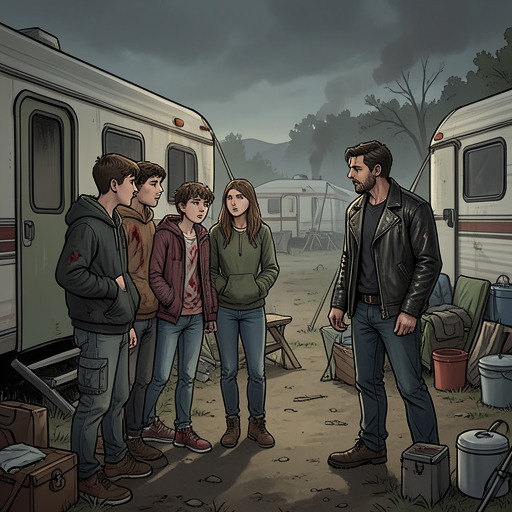
Candace’s recollection places her in Las Vegas by age sixteen, after arriving two years earlier. She describes performers living in old trailers and says that the club’s manager, Clyde Rangor, had set up a fenced compound about a mile away, with several dilapidated trailers. Candace shared one with Cassandra Meadows, who was around sixteen or seventeen, and Kimmy Dale. The club’s labor arrangements thus reached beyond the stage: the women’s housing was also under Rangor’s control.
Work, Control, and Dependence
Rangor sent the dancers on road trips to perform in smaller towns, sometimes giving three shows a day. Candace recalled that the trips brought tips for the women, but that Rangor kept most of the money. The arrangement joined the club’s entertainment business to a system in which management controlled both work and much of its proceeds.
Candace also said that Rangor was connected to a network that found girls in difficult circumstances, including young women from foster homes in Idaho. Her account presents the club as part of a broader structure of vulnerability and recruitment, rather than as an isolated workplace. The performers’ ages, dependence on employer-controlled housing, and limited access to their earnings narrowed their practical choices.
The account also distinguishes the women’s coping strategies. Kimmy objected to drug use, while Candace turned to drinking; when her drinking began to affect her performances, Rangor made her stop. At a later point in her life, Candace worked at the Eager Beaver and used the stage name Black Magic, but she did not look back on her earlier headlining days with longing. The change of venue and persona does not erase the circumstances that had shaped her working life.
Violence and Narrative Significance
Candace’s account describes a confrontation in the trailer involving Rangor, Cassandra, and Emma Lemay. When Rangor turned his attention toward Emma, Candace used the distraction to act and reach for one of Kimmy’s guns, which Kimmy kept in the room. This episode links the workplace’s control over the women to the danger that could erupt within their living arrangements; the club’s influence did not end when a performance was over.
The novel’s newspaper account states that Candace was found strangled in a trailer park off Route 15 and that police were investigating. The later disclosure that the dead woman recorded as Candace Potter had been living as Olivia Hunter makes the club an important point of departure for the novel’s account of concealed identity. Young Thangs represents the public name and labor attached to her past, while the recollections of its performers expose the economic and personal pressures behind that name.