
From Individual Dreams to Culture
The Interpretation of DreamsThis thread follows the book's expansion from personal dream analysis to literary, political, and cultural interpretation.
increasing Bearing strength in each event
 decreasing
Bearing strength in each eventdecreasingClassical Frames

Classical Frames
Dreams in tradition
Freud situates dream inquiry alongside ancient philosophy and literature. Classical references make the topic part of a broad cultural history.
Beyond medicine
The book presents itself as an investigation of human meaning, not merely a technical medical report.
Literature as Psychological Evidence
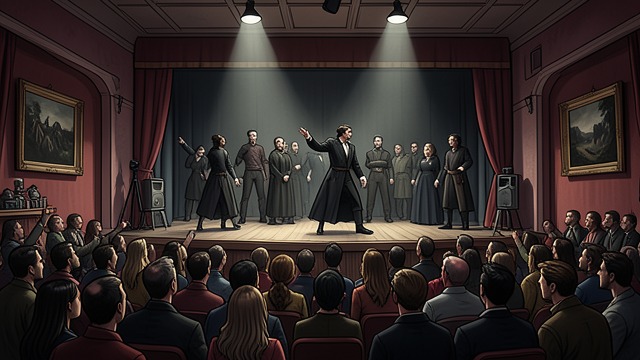
Literature as Psychological Evidence
A tragic pattern
Freud reads classical tragedy and Shakespearean drama as forms that give shape to hidden family wishes and conflict.
Interpretation's reach
Literature becomes evidence for a theory of psychic life, though the Introduction warns against reducing a work to that theory.
Political Dreams

Political Dreams
Public events enter private life
Freud's dreams incorporate parliamentary conflict, national identity, and anti-Semitism. Political history is transformed by personal associations.
A marginal viewpoint
His position within and outside German-speaking society informs the detached yet invested perspective described in the Introduction.
Language as Social Text

Language as Social Text
Small signs become legible
Freud's attention to dreams, slips, jokes, and everyday mistakes encourages readers to treat ordinary behavior as meaningful.
A cultural method
Combined with linguistic approaches, psychoanalysis helps develop interpretive studies of customs, objects, and social life.
An Interminable Reading

An Interminable Reading
Meanings exceed solutions
The Introduction values the dream book for making interpretation productive, while cautioning that no analysis exhausts its material.
Reader and text
The encounter with a dream or literary work becomes a form of self-exploration as well as an inquiry into another mind.
In the opening survey
In the discussion of Oedipus and Hamlet
During Freud's late-1890s dream examples
In the Introduction's account of later influence
At the Introduction's conclusion
