
Freud and Breuer: Collaboration and Separation
The Interpretation of DreamsThis thread follows Freud and Breuer from shared clinical work to a divergence in how they understand psychological illness.
increasing Bearing strength in each event
 decreasing
Bearing strength in each eventdecreasingA Clinical Alliance
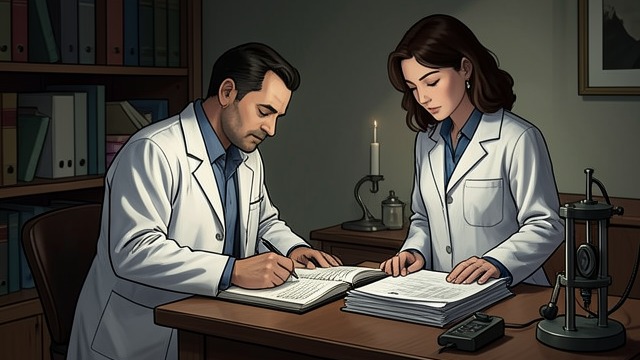
A Clinical Alliance
Shared inquiry
Freud follows Breuer's use of hypnosis and cathartic treatment. Their collaboration gives Freud a close colleague and a practical route into hysteria.
A common starting point
They investigate symptoms as meaningful formations tied to experience and memory.
Studies in Hysteria

Studies in Hysteria
A joint account
Freud and Breuer publish clinical cases that establish the importance of remembered experience in hysterical symptoms.
A professional partnership
The book marks both the success of their cooperation and a starting point from which Freud will move toward his own theory.
Freud’s New Emphasis

Freud’s New Emphasis
Fantasy and childhood
Freud increasingly focuses on unconscious fantasy and childhood relations, revising the explanations that had framed his earlier work.
A divergence begins
The shift creates intellectual distance between Freud and Breuer, even as their collaboration remains foundational.
Breuer as Dr. M.

Breuer as Dr. M.
A changed role
Freud represents Breuer as Dr. M., a figure who repeats an examination and offers a dubious consolation. The dream turns a colleague into a target.
Personal distance
The hostile depiction reflects their cooling friendship and Freud's desire to defend his own clinical judgment.
A New Intellectual Center

A New Intellectual Center
Former partnership recedes
Freud's thinking develops beyond the shared framework of the earlier clinical work. Breuer remains important but no longer occupies the center of Freud's intellectual life.
A transition completed
The separation helps define psychoanalysis as Freud's expanding project.
During the 1880s
1895
During Freud's later 1890s investigations
In the 1895 Irma dream
By the late 1890s
