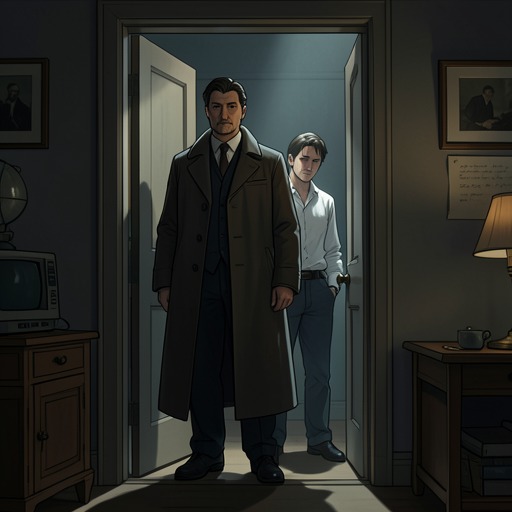
Nothing will come of the boy
The Interpretation of Dreams“Nothing will come of the boy” is the remembered judgment that Sigmund Freud says his father made when Freud was seven or eight. Its importance in Freud’s account lies not only in the rebuke itself, but in its return across his dreams: he presents the phrase as a point of origin for recurring images of success, a way of answering his father’s prediction, and a key to interpreting a later dream in which the positions of father and son are reversed.
The childhood incident
Freud recalls that one evening, before going to bed, he broke a rule by relieving himself in his parents’ bedroom while they were present. His father rebuked him and, in doing so, let fall the remark “Nothing will come of the boy.” Freud describes the episode as a severe blow to his ambition. The childhood scene is preserved as a family recollection, though Freud notes that his memory of an earlier incident had itself been replaced by the account told to him.
The remark is therefore remembered within a specific scene of reprimand, rather than offered as an isolated saying. Its force in Freud’s later interpretation comes from the judgment it appears to pass on his future: the child is told that he will amount to nothing, and the adult dreamer repeatedly returns to the challenge contained in those words.
Recurrence in dreams
Freud says allusions to the rebuke recur in his dreams, invariably alongside enumerations of his successes and achievements. He reads these pairings as a continuing answer to his father: his adult accomplishments become the evidence set against the childhood prediction. The recurrence gives the phrase a role beyond its original domestic context, linking an early humiliation with a repeated dream pattern and with Freud’s account of his ambition.
The phrase’s return also illustrates how, in Freud’s interpretation, a childhood memory can remain active in later psychic life. It does not simply reappear unchanged; its meaning is reshaped by the dream material around it. The dream’s lists of achievement convert the father’s dismissive judgment into a point against which the dreamer can assert that something did come of him.
Reversal in the dream
Freud connects the childhood rebuke to the final image of a later dream, in which an older man—identified as his father—is urinating in front of him. The arrangement reverses the remembered incident: as a child, Freud had done this in his father’s presence and been reprimanded; in the dream, the father occupies the exposed position before his son. Freud interprets the reversal as revenge.
The dream image also incorporates details Freud associates with his father’s later life. The older man’s blindness in one eye refers to the glaucoma from which Freud’s father suffered. Freud links the bottle in the scene to cocaine that had helped his father during an operation, and interprets the dream as turning his own knowledge of hysteria into a source of pride and mockery. These associations make the childhood phrase part of a broader dream construction: the remembered rebuke, the father’s physical condition, and Freud’s professional knowledge converge in an image where the son has the advantage.
Meaning within Freud’s account
Freud’s reading makes the phrase a recurring counterpoint between paternal judgment and adult self-assertion. The dream does not merely replay the childhood reprimand; it reorganizes the scene so that the son can reverse the earlier positions and answer the prediction through the display of later success. The phrase’s significance thus rests on its repeated connection to achievement and on the dream’s transformation of a childhood memory into a scene of reversal.
The account also preserves a distinction between the remembered words and Freud’s interpretation of their later effects. The rebuke belongs to a childhood episode; its recurrence among dreams of achievement and its connection to the reversed urination scene are meanings Freud draws from the associations. In his presentation, the saying becomes legible through that pattern of return: what was once a judgment on the boy’s prospects reappears as material through which the adult dreamer asserts that the judgment was wrong.