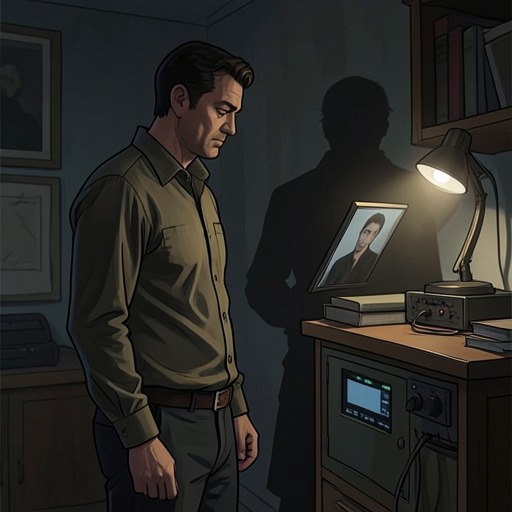
Professor Brücke
The Interpretation of DreamsProfessor Brücke, Freud’s former professor and an influential figure in his early scientific work, appears in The Interpretation of Dreams not as the subject of an independent biography but as a recurring point of reference in Freud’s dream analyses. He is associated with scientific authority and the pressure to publish, and his remembered presence helps Freud interpret both a dream of dissecting his own body and a dream of annihilating a friend and rival. These appearances make Brücke a link between Freud’s professional past and the private conflicts his theory seeks to uncover.
Identity and Background
Freud describes Brücke as an old professor from his first years of scientific work. Their relationship included a concrete episode of intellectual guidance: Freud had put a finding aside until Brücke’s energetic urging prompted him to publish it. In a later dream, Freud therefore recognizes Brücke as an apt presence in a scene about the difficult work of examining and relating his own dreams. The professor represents not simply the past, but an authority whose earlier intervention had helped move Freud’s work from withheld finding to publication.
The Dream of Self-Dissection
In one dream Freud is apparently set the task of dissecting his own lower torso, pelvis, and legs, with Louise N. assisting. The scene shifts from examination to travel: after regaining his legs, Freud takes a cab through a passage and then crosses changing landscapes with an Alpine guide. At a wooden hut, the guide lays two planks on the windowsill to bridge a chasm, but the anticipated crossing gives way to the sight of two adult men and what seem to be two sleeping children. Freud awakens with thoughts full of terror.
Brücke is not physically present in the dream scene as Freud recounts it; Freud identifies his relevance through the associations that follow. A visit from Louise N. had brought up the question of whether Freud had written anything of his own that others would find readable. Freud connects the dream’s task of dissecting his body to the self-analysis involved in publishing his dreams, an undertaking that required him to reveal much of his inner life. In that context, Brücke’s former insistence that Freud publish a scientific finding becomes a precedent for the pressure Freud now feels to make his work public.
The dream’s journey also draws on details Freud associates with Rider Haggard’s novels She and Heart of the World, as well as on a real sensation of tired legs. Freud interprets the wooden hut as also representing a coffin and connects its interior with an Etruscan grave he had visited near Orvieto. These details complicate the dream’s movement between scientific exposure, literary material, physical weariness, and the prospect of death. Brücke’s contribution is more focused: his remembered authority helps Freud frame the painful act of self-disclosure as a task he must complete and publish.
Brücke in the Non Vixit Dream
Brücke returns in Freud’s discussion of a dream centered on the words Non vixit and on the destruction of a friend and rival. The immediate occasion was troubling news that Freud’s Berlin friend Fl. had undergone an operation. Freud wanted to travel to Berlin, but a painful complaint made movement difficult; he feared that his friend might die and that he would arrive too late. The dream transformed this fear and self-reproach into a scene in which Brücke gives Freud a terrible look, while the roles of accuser and destroyer are rearranged through the dream’s wishful reversal.
The dream gathers several pressures rather than expressing a single feeling. Freud’s concern for his friend, regret that he could not visit, embarrassment about the circumstances, and reliance on illness as an excuse all contribute to the emotional intensity he remembers from sleep. The same dream also draws on an earlier episode in which Freud had indiscreetly repeated a remark between two friends and received reproaches. Brücke, the revered master from Freud’s student years, thus becomes the figure who delivers the rebuke associated with arriving too late, even though the dream’s roles do not simply reproduce the waking situation.
Narrative and Interpretive Role
Across these episodes, Brücke functions as a remembered standard of professional authority rather than as a fully developed character with an independent plot. In the self-dissection dream, his past encouragement of publication gives shape to Freud’s present difficulty in exposing personal material. In the Non vixit dream, his stern appearance carries a reproach produced by Freud’s fear, illness, and memory of earlier guilt. The contrast is revealing: the same professor who once helped Freud bring work into the open can reappear in a dream as an accusing presence.
Freud’s account also demonstrates how a dream figure can acquire meaning through associations rather than through a fixed identity. Brücke’s role in the Non vixit dream is not a report of an actual confrontation; it is part of Freud’s explanation of how emotional material shifts into dream scenes and how the dream changes the distribution of roles. His appearances therefore support the book’s larger argument that professional relationships and personal concerns can be transformed, combined, and rearranged in dreams. The surviving evidence leaves Brücke’s own perspective and any response to Freud’s later work outside the account; what it records is his continuing importance in Freud’s recollection of scientific beginnings and in the interpretations Freud makes of himself.