Wachau
The Interpretation of DreamsThe Wachau appears in Freud’s analysis of his revolutionary dream as both a real place visited on an excursion and a point of departure for memories of rebellion. It connects the dream’s apparently political surface to episodes from his school and student years, showing how a landscape encountered in the present can organize older recollections without simply reproducing them.
A place in the dream’s associations
Freud says that his memories of 1848 had been renewed by the anniversary celebrations of 1898 and by a small excursion to the Wachau. There he visited Emmersdorf, associated with the retired student leader Fischhof. These recollections helped give the dream the impression of a fantasy transporting its dreamer to the revolutionary year, while remaining only a partial façade for a more complicated assembly of memories.
School rebellion and political imagery
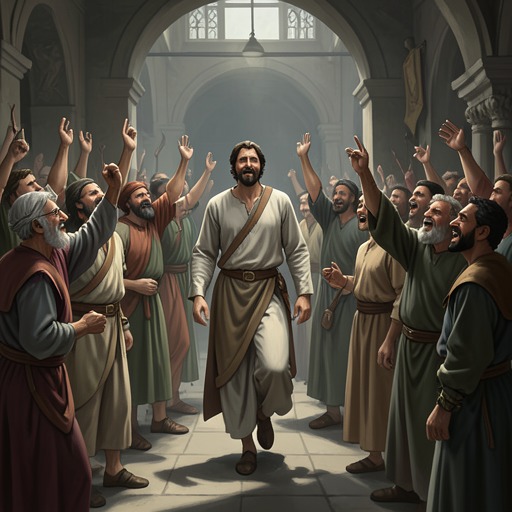
The Wachau also enters through a rebellion at Freud’s Gymnasium during his fifteenth year. Freud and his fellow pupils conspired against a teacher they regarded as unpopular and ignorant. Freud was assigned to lead the main attack, and a discussion of the Danube’s importance to Austria—the river landscape recalled through the Wachau—became the occasion for open resistance. In the dream, the Count’s arrogant posture recalls the teacher whom the conspirators confronted, while the unusually tall aristocratic pupil known as the giraffe stood before that teacher in a similar pose.
The dream’s revolutionary associations therefore do not derive from the landscape alone. The Wachau supplies a geographic and historical link, but the scene draws together the 1848 anniversary, the excursion, a remembered school revolt, and figures from Freud’s youth. The effect is associative rather than documentary: distinct episodes converge in a dream situation whose apparent historical setting conceals its mixed personal sources.
Narrative significance
Freud’s interpretation makes the Wachau a hinge between public history and individual memory. A journey through the region renews associations with the student leader Fischhof and the revolutionary past, while the Danube discussion recalls a youthful act of defiance. The location thus helps explain how the dream turns political rebellion into a composite of personal episodes, rather than presenting a single, straightforward recollection of 1848.