Calling the Friends of Narnia
The Last BattleCalling the Friends of Narnia is King Tirian’s appeal across worlds for aid against the Ape’s rule, and the turning point that brings Jill Pole and Eustace Scrubb into the struggle. The call begins in apparent abandonment: Tirian asks Aslan to save Narnia, then summons the children of another world, whose arrival transforms remembered stories into immediate help.
Causes and Background
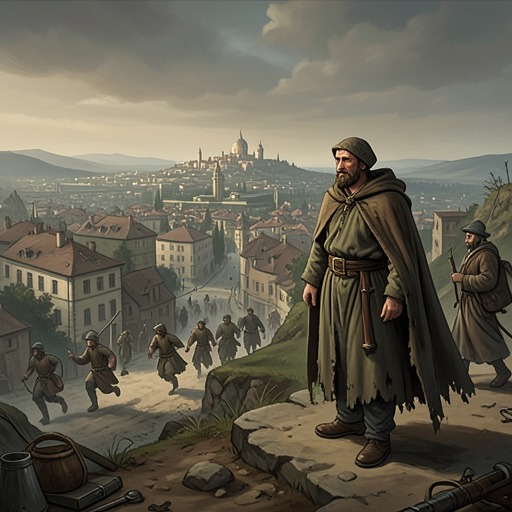
Tirian’s appeal follows the exposure of the Ape’s political deception. The Ape claims that Aslan will speak only through him, and presents forced labor as a settled arrangement with the King of Calormen: horses, bulls, and donkeys are to be sent to Calormen for work, while moles, rabbits, and Dwarfs are assigned to the Tisroc’s mines. When the Beasts protest that Aslan would never sell them into slavery, the Ape denies that it is slavery, describing wages supposedly paid into Aslan’s treasury and spent for everyone’s good. He redefines freedom as obedience to his own commands. The language of public benefit thus conceals coercion, while the Ape claims the authority to speak for Aslan and suppresses the Beasts’ ability to judge his claims for themselves.
That rule is enforced by violence as well as persuasion. When a speaker calls the Ape a liar and begins to challenge the equation of Tash with the Lion who saved Narnia, Calormenes strike him down. The Ape orders him taken away and tied to a tree, disguising the expulsion as justice to be administered later. By the time Tirian calls for help, dissent has been met with assault and detention, and the Ape’s promise of divine authority has become a means of controlling what the Beasts can hear.
Tirian’s hope draws on Narnia’s earlier history. He remembers that children from beyond the world once helped Caspian regain his father’s throne, and that the same four children later defeated the White Witch, ended the Hundred Years of Winter, and ruled at Cair Paravel during Narnia’s golden age. Aslan had appeared in those stories too. Tirian recognizes a recurring pattern: Aslan and children from another world had come when Narnia was in greatest danger. But he doubts that the pattern can recur now, and that doubt gives his appeal its urgency.
The Call Across Worlds
Tirian first cries to Aslan three times, asking him to come and help. Nothing in the night, the cold, or the surrounding silence changes. He then asks to be killed if necessary, provided Narnia itself can be saved. The absence of an outward answer is followed by an inward change: a faint hope comes over him, and he feels stronger. He asks Aslan either to come himself or to let Tirian’s voice reach beyond the world.
The appeal that follows names its intended recipients as children and friends of Narnia. Tirian identifies himself by his titles—King of Narnia, Lord of Cair Paravel, and Emperor of the Lone Islands—and calls them to come quickly. The titles establish who is summoning them, but the appeal is not a request for rescue from danger for his own sake: immediately beforehand, Tirian has said that he asks nothing for himself and wants Narnia saved. The call turns private desperation into an address across worlds, grounded both in his responsibility as king and in his remembered knowledge of Narnian history.
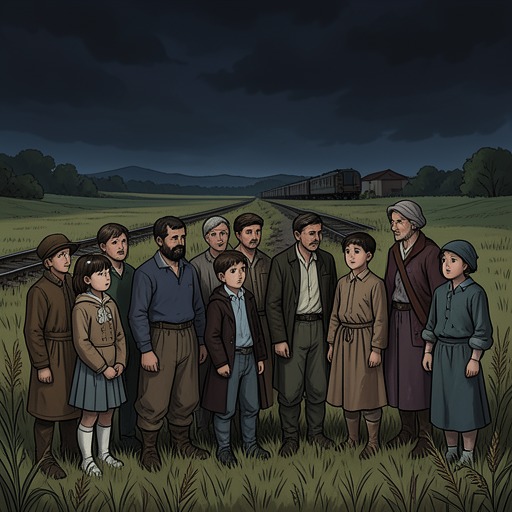
The narration marks the transition as a dream, but qualifies the word: Tirian is plunged into a dream, “if it was a dream,” more vivid than any he had experienced. In it, he stands in a lighted room where seven people sit around a table after a meal. He sees two old people, a young man with the look of a king and warrior, another youth, and three younger children; their clothes seem strange to him. The youngest boy and both girls rise, one gives a little scream, and a wine glass is swept from the table and breaks on the floor. The startled gathering makes the summons concrete: Tirian’s call has reached people in another world, even though he does not yet know what form their response will take.
Arrival and Release
The answer comes almost at once in Narnia. A bump, then a second bump, precedes the appearance of two children in the wood, where the space before Tirian had been empty. They have not come from behind the tree; they seem simply to have appeared. Tirian recognizes them as the youngest boy and girl from the gathering in his dream, wearing the same queer, dingy clothes. The correspondence between his vision and their arrival confirms that the appeal has crossed worlds, even as the difference in time remains unexplained.
The girl takes immediate charge of the practical emergency, telling the boy to untie Tirian before they talk. She apologizes for the delay and says they came as soon as they could. Eustace produces a knife and cuts the King’s bonds quickly; Tirian is so stiff and numb that, when the last cord is severed, he falls forward onto his hands and knees. He has to rub life back into his legs before he can rise. The release is therefore not merely symbolic: the arriving children physically free a king who has been bound and left helpless.
The girl asks whether Tirian was the figure who appeared to them at supper nearly a week earlier. Tirian is astonished, since from his perspective the dream took place scarcely ten minutes before. Eustace explains that time works differently in their land. Tirian recognizes the difference as part of the old stories, but refuses to linger over it: his enemies are close, and it is time to leave. Jill answers that they have come to help him. Their exchange establishes both the temporal dislocation that separates the worlds and the direct commitment that brings the children into the resistance.
Escape and Consequences
Tirian leads Jill and Eustace downhill, southward and away from the stable. He chooses rocky ground to prevent their pursuers from following their trail, then takes them across water to break their scent. The escape takes about an hour of scrambling and wading, leaving the newcomers and their guide too short of breath to talk. Tirian nevertheless steals glances at his companions: walking beside people from another world makes him feel dizzy, while also making the old stories seem more real. Their presence changes what he believes is possible; after the call, he can imagine that anything might happen.
When they reach a small valley among young birch trees, Tirian judges that they are out of immediate danger and can walk more easily. The episode has moved from a call met by silence to the arrival of allies, the release of the captive King, and a cautious escape from his enemies. It does not yet end the threat. Rishda Tarkaan later orders his forces to take Tirian’s party alive if possible and drive them into the stable as an offering to Tash. The danger against which Tirian called therefore remains active, but the isolated King now has the help of children whose arrival links his present crisis to the earlier histories on which his hope depended.