Digory Kirke
The Last BattleDigory Kirke is the Professor who first entered Narnia as a child with Polly, and whose presence at its end gives him an unusually long view of the world’s history. In the last events, he is at once a remembered pioneer, a practical member of the Friends of Narnia, and the person who explains why the destruction of the familiar world is not the destruction of all that was real in it.
Identity and First Journey
Digory is one of the two people who came into Narnia on the day its animals first learned to talk. Tirian initially does not recognize the names Eustace gives him, but, on hearing that Digory and Polly were present at the beginning, identifies them as Lord Digory and Lady Polly, figures from the dawn of the world. The recognition establishes a striking distance between Narnia’s ancient history and the lives of the visitors: Digory and Polly have survived in their own world while more than two hundred years have passed in Narnia.
In England, Digory is known as the Professor, and Polly is his friend rather than his aunt, despite Eustace’s explanation that the children call her Aunt Polly. Digory gathers the Friends of Narnia partly so they can talk about the country they alone share as a subject of conversation, and partly because he has a feeling they are wanted there. After Tirian appears to them and vanishes, the group takes the incident as confirmation that something is happening in Narnia and begins considering how to return.
The Friends’ Return
Digory understands that wishing cannot bring the group to Narnia. He proposes the Magic Rings as the means of passage, recalling that he and Polly used them to reach Narnia when they were children. The Rings have been buried in the garden of a London house that has since been sold, so retrieving them becomes a practical obstacle to answering the call.
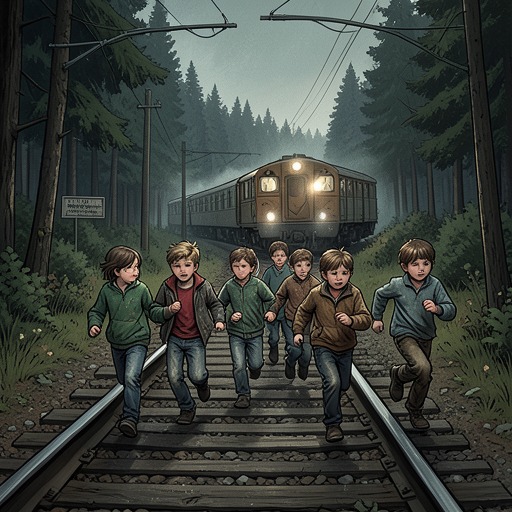
Peter and Edmund go to London early in the morning, dressed as workmen, and enter the garden from the back. The following day Peter sends word that he has obtained the Rings. Digory then travels with Polly and Lucy alongside Eustace and Jill, the two schoolchildren who can still return to Narnia. The party intends to stay together until the older visitors have to part from them. Their journey is interrupted in the railway carriage: after a violent jolt and noise, they find themselves in Narnia, where Tirian is bound to a tree.
Arrival and Recognition
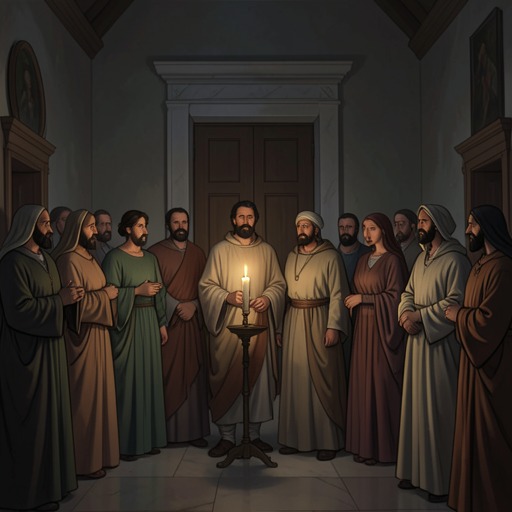
At the final gathering, Digory’s identity is made public once more. Peter introduces him to Tirian as Lord Digory, and identifies Polly as the woman who was present on the First Day, when Aslan made the trees grow and the Beasts talk. The introduction joins personal recognition to Narnian history: the visitors whom Tirian knows through chronicles are physically present before him.
The return also changes how Digory experiences age. Edmund describes the arrival as an event that did not hurt, though it brought a roar and a blow, and says he felt light. Digory says that he and Polly chiefly felt as if they had been unstiffened: they stopped feeling old. Jill remarks that they seem little older than the younger visitors in Narnia, and Polly replies that they have been older, even if they are not so there. Their arrival is therefore not merely a change of location; the old friends find themselves renewed in the country they had known from childhood.
Witness to Narnia’s End
Digory remains with the others as the world reaches its end. When the stars fall, the company understands that the darkness spreading across the sky is emptiness: Aslan has called the stars home. Digory’s place among those who witness this cosmic change is continuous with his history as a visitor from Narnia’s beginning, but the scale has changed from the first making of the world to its final unmaking.
As the waters rise and cover the land, Digory and Polly recognize the significance of the enormous, dark-red sun. In another world they once saw a dying sun, and that earlier experience enables them to understand what is happening now. Digory thus brings memory across worlds at the moment when Narnia’s familiar landscape disappears. After the sun and moon merge and the Time-giant destroys the sun, he remembers that he saw Narnia begin and did not expect to live to see it die. His grief belongs to the same history as his wonder at its creation.
Tirian insists that mourning is proper: Narnia is the only world he has known, and failing to grieve would be discourteous. Digory’s own statement supports that response rather than cancelling it. The ending allows the loss to be fully felt before Digory explains its larger meaning; the reality of grief and the reality of a world beyond the destroyed one are held together.
The Real Narnia and the Great Story
When Lucy says that the new country is so different, Digory explains that Aslan’s promise that they could not return referred to the Narnia they had been thinking of. That Narnia had a beginning and an end; it was a shadow or copy of the real Narnia, which has always existed and always will. He extends the comparison to England, describing their own world as a shadow or copy of something in Aslan’s real world. The familiar country has ended, but what mattered in it—the dear creatures—has been drawn through the Door into the real Narnia.
Digory’s explanation makes him more than an eyewitness to Narnia’s history: he interprets the relation between the world that ends and the reality into which its creatures pass. The difference is not, he says, that everything familiar was meaningless. Rather, the real Narnia is deeper and more wonderful than its copy, as waking life differs from a dream. His words restore continuity without pretending that the lost landscape remains unchanged.
The Western Wild offers a final confirmation of Digory’s long connection with the country. As the company runs onward, Tirian asks whether stories are true that Digory and Polly journeyed there on the very day the world was made. Digory confirms that they did, and says it seems to him as if it were only yesterday. The scene closes the circle between the first journey and the final one: the world that Digory once encountered at its making has opened into a reality beyond its ending.
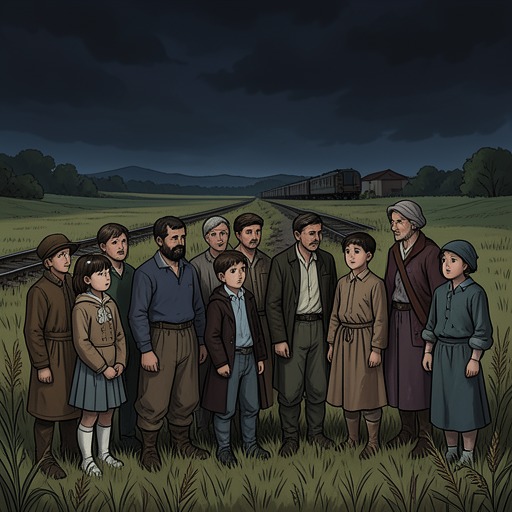
At the last revelation, Aslan tells the children that there was a real railway accident and that they, along with their parents, are dead in the world they called the Shadow-Lands. Digory’s account of the copy and the real country has prepared the meaning of this disclosure: death is not presented as a return to the vanished old Narnia but as entry into the lasting reality. The story’s final movement turns beyond the end of the familiar adventures toward the Great Story, whose chapters continue and grow better. Digory’s presence at both beginning and ending makes him a living measure of that transformation: he remembers the world’s first day, mourns its last, and recognizes the onward journey as a beginning.