Discovery of the Real Narnia
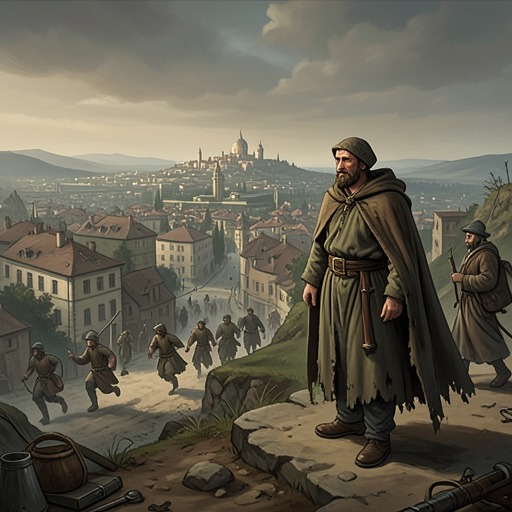
The Last BattleThe Discovery of the Real Narnia is the final reversal of the book’s apparent catastrophe: the destruction of Narnia does not erase what was real and beloved in it, but brings its creatures into a country that is at once recognizably Narnia and more enduring than the world they have lost. At the open Door, Aslan’s call gathers the stars and the last inhabitants of the old world; at its threshold, each creature’s response to him determines whether it enters. Beyond lies not a mere restoration, but a deeper reality in which the old Narnia is understood as a shadow or copy—and the end of one story as the beginning of another.
The Door and the gathering
After Aslan declares that it is time, he goes to the Door and raises his head. His three calls—first a roar, then a louder cry, then the word thundered so powerfully that it could have shaken the stars—make the Door fly open. Its opening establishes the threshold around which the concluding sequence turns: the world outside is reaching its end, while the Door becomes the passage through which its living history can be gathered and judged.
The stars’ homecoming makes that cosmic change visible. When the Time-giant sounds his horn, shooting stars fill the sky in increasing numbers, until a spreading blackness reveals that the darkness is not a cloud: all the stars are falling, because Aslan has called them home. They are people, not distant flaming globes. They descend with silver hair and bright spears, hiss as they land, and gather behind the company. Their white light illuminates the Narnian woods before the Door, even as the familiar heavens are emptied. The image makes the transition both an ending and an arrival: the stars leave their places in the sky to stand present at the threshold.
The gathering is not limited to the stars. Creatures of many kinds rush toward Aslan at the Door, and the account itself marks this passage as difficult to measure: it seems at different moments to last minutes or years, while no one pauses over how so many could pass through the opening. That dreamlike uncertainty belongs to the scene’s movement out of ordinary time. The company sees the procession, but its scale and duration resist the measurements that governed the world now ending.
The threshold and its judgment
As the creatures approach, their eyes grow brighter. Each looks directly at Aslan, apparently without choice, and the encounter divides the procession. Some faces take on fear and hatred; among the Talking Beasts, that expression lasts only a fraction of a second before they cease to be speaking animals and become ordinary animals. They turn to Aslan’s left and disappear into the great black shadow streaming from the Doorway. The children never learn what becomes of them. The passage therefore gives the scene a grave limit: the Door is not simply an open escape for everyone, and the account does not soften the disappearance of those who turn away.
Others look at Aslan and love him, though some are frightened as well. They enter on his right. The distinction is not presented as a debate or a test the creatures can negotiate; it is enacted in their faces, their changed nature, and the direction in which they pass. For the Talking Beasts who turn away, the loss of speech makes the inward refusal outwardly visible. The threshold gathers the old country’s creatures, but it also reveals what their encounter with Aslan means for each of them.
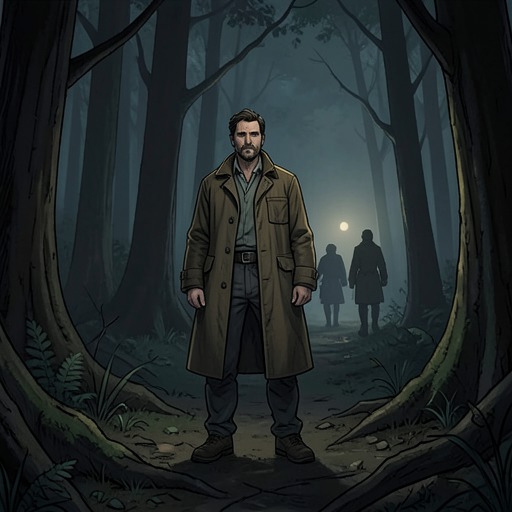
Among those who enter are creatures the company had believed dead: Roonwit the Centaur, Jewel the Unicorn, a good Boar and Bear, Farsight the Eagle, the Dogs and Horses, and Poggin the Dwarf. Their return turns apparent loss into recognition without undoing the severity of the judgment. Jewel leans his snowy head over Tirian’s shoulder, and the King whispers in the Unicorn’s ear; the familiar bond survives within a setting that has become newly vast. Roonwit cries, “Further in and higher up!” and gallops west. His words give direction to the next movement, while the others respond in their own ways: Poggin shakes hands and grins, and the Bear hurries toward fruit trees.
Discovering where they are
The company follows westward, understanding Aslan’s call to mean “Further up and further in.” The grassy country is wide, and other creatures move slowly in the same direction without crowding them. Morning freshness still fills the air. They repeatedly stop to look around and behind them, drawn by the beauty but also unable to understand what they are seeing. The journey is therefore not merely movement across a landscape: it is a gradual recognition that the landscape’s relation to the Narnia they remember has changed.
Farsight gives that uncertainty its decisive answer. He spreads his wings, rises thirty or forty feet, circles, and lands again; from above, he has seen Ettinsmuir, Beaversdam, the Great River, and Cair Paravel still shining beside the Eastern Sea. He tells the Kings and Queens that they have been blind and are only beginning to see where they are: Narnia is not dead; this is Narnia. His flight supplies a concrete view of places that establish continuity with the old country, while his declaration overturns the company’s assumption that the destruction they witnessed had left Narnia nowhere to be found.
Peter objects that Aslan had told the older children they would never return to Narnia, and Eustace recalls seeing it destroyed and its sun put out. Lucy, too, senses the difference. Digory explains that Aslan meant the Narnia they had known: that world had a beginning and an end and was only a shadow or copy of the real Narnia, which has always existed and always will. In the same relation, England and the children’s own world are shadows or copies of something in Aslan’s real world. The old Narnia’s end is thus not denied; rather, the revelation changes what that ending means. What mattered in it—the beloved creatures and country—has been drawn through the Door into the enduring Narnia.
Shadow, reality, and homecoming
The difference between the old and new Narnia is conveyed through an image of reflected landscape. A sea or valley seen in a mirror can be recognizably the same as the scene beyond the window and still appear different: deeper, more wonderful, and more like an unexplored story. The new Narnia bears that relation to the old. Its rocks, flowers, and blades of grass seem to mean more; the familiar world has not simply been copied again, but encountered in a more profound form. The comparison makes the revelation experiential as well as explanatory: the company has to learn to see the country differently before its continuity becomes intelligible.
Jewel gives that discovery a personal voice. Stamping his right forehoof, he cries that he has come home at last and found his real country—the land he had sought all his life without knowing it. The old Narnia was loved because it sometimes resembled this one. His recognition gathers the scene’s apparent contradictions into a single relation: the old country was real enough to be loved, but its beauty pointed beyond itself. His call to go further up and further in turns homecoming into an invitation onward.
The final exchange widens that idea beyond Narnia. Aslan tells the children that a real railway accident has killed them and their parents; “The term is over: the holidays have begun. The dream is ended: this is the morning.” The revelation reframes their arrival not as a return to their former lives, but as entry into a lasting reality after death. Aslan no longer looks to them like a lion, and the narrator cannot describe what follows. The ending calls the adventures in Narnia and the children’s life in their own world only the cover and title page of the Great Story. For those who have passed through the Door, what seemed an ending is the beginning of a story that goes on for ever, with every chapter better than the one before.