Emeth
The Last BattleEmeth is a young Calormene warrior whose search for Tash carries him through the Stable and into the presence of Aslan. Although he enters Narnia with the invading army and has long regarded Aslan as hateful, he refuses to accept the conspiracy’s false equation of Aslan and Tash as a political convenience. His encounter with Aslan transforms his understanding of whom his sincere service has reached, and his eventual welcome among the others makes him a decisive example of the difference between honest devotion and the exploitation of religious belief.
Identity and Background
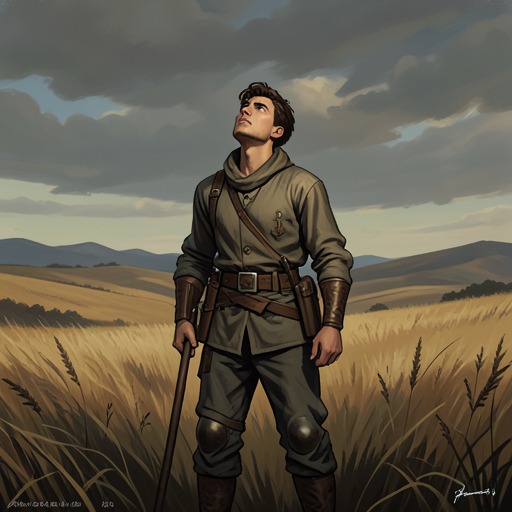
Emeth identifies himself as the seventh son of Harpa Tarkaan, from Tehishbaan, westward beyond the desert. He is young, tall, slender, and described as having a striking, haughty Calormene appearance. He is also of Tarkaan blood and regards himself as a warrior, not a subordinate whose youth should silence him. When he speaks to Rishda Tarkaan, he invokes both his lineage and his service to Tash as reasons he has a claim to enter the Stable.
He came into Narnia with twenty-nine others under Rishda Tarkaan’s command. At first, the prospect of marching against Narnia pleased him: he had heard much about the country and wanted to meet its people in battle. His enthusiasm ended when he discovered that the Calormenes were to enter disguised as merchants and proceed by lies and trickery. He regarded the disguise as shameful for a warrior and a Tarkaan’s son. His objection is therefore present before he knows the full extent of the religious fraud: he is already repelled by the dishonourable means of the campaign.
Emeth has served Tash since boyhood and longs to know more of him, especially to see his face. This devotion is not merely a public identity or a tool for advancement. When the claim that Aslan and Tash are one begins to circulate, it unsettles him precisely because it confuses the object of his lifelong desire with a figure whose name he has been taught to hate. His religious certainty is tested by evidence of hypocrisy, but his longing to encounter Tash remains sincere.
From Invasion to Opposition
Emeth’s first view of the conspiracy develops through watching Rishda Tarkaan and Shift. Night after night, the Ape presents something from the hovel to be honoured by the people and Beasts. Emeth initially suspects that Rishda has been deceived by the Ape. Watching Rishda’s manner, however, changes his judgment: he concludes that the Tarkaan does not believe in the supposed god at all, and consequently does not truly believe in Tash. For Emeth, the performance is not simply a mistaken religious practice; it is mockery by men who invoke sacred names without reverence.
That recognition produces anger, but Emeth conceals it and waits to see what will happen. When the supposed object of worship changes and the people are told they may enter one by one to see Tashlan, he again suspects a deception. Ginger’s return in terror changes his assessment. Emeth interprets the Cat’s reaction as evidence that the true Tash may have arrived to avenge the false worship and mockery. He is afraid, but his desire to see Tash outweighs his fear, and he forces himself to approach the Stable.
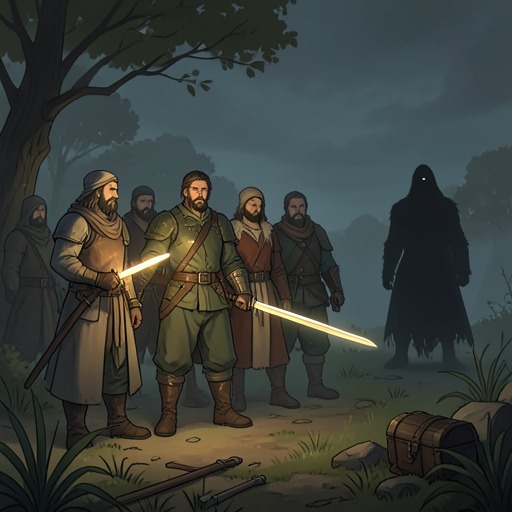
Before he goes in, Emeth challenges Rishda’s claim that Aslan and Tash are one. If the claim is true, he argues, then Tash is inside and he has as much right as any Narnian to approach him. Rishda dismisses him as a fool and says the matter is too elevated for him to understand. Emeth persists, asking whether the Ape has lied. When Shift swears to the claim, Emeth declares that he is determined to enter. The Dwarfs’ protests—that Narnians are allowed in while Rishda’s own people are kept out—help force the Tarkaan to let him pass. Rishda publicly disclaims responsibility for what may happen and grants permission reluctantly.
As Emeth walks across the grass toward the Stable, Jill is moved by his solemn expression and raised head. Jewel tells Tirian that he almost loves the young warrior despite his being Calormene, and considers him worthy of a better god than Tash. Their response marks a contrast between Emeth’s enemy affiliation and the integrity of the motive that brings him forward: he does not approach as a conspirator but as a worshipper prepared to risk his life for the encounter he seeks.
The Stable and the Encounter with Aslan
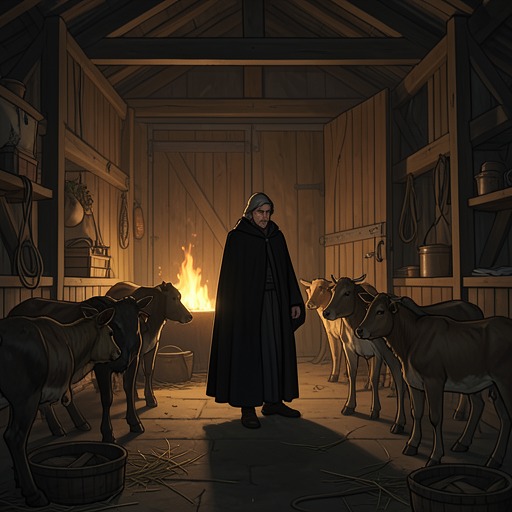
On entering the Stable, Emeth finds himself in sunlight rather than darkness. He has little time to wonder at the change before a Calormene guard attacks him. He understands that the guard has been placed there by the Ape and the Tarkaan to kill anyone who enters without being part of their secret. In Emeth’s judgment, the guard is another liar and mocker, not a true servant of Tash. Emeth fights him, prevails, and throws him back through the door. The episode exposes the Stable’s political function: entry is not simply a test of religious faith, since Rishda’s men have arranged violence against those who are not in on the plot.
Beyond the doorway, Emeth sees the sky and open country and begins to travel through it, wondering whether he has reached Tash’s own land. Among grass, flowers, and trees, he meets a great Lion in a narrow passage between two rocks. Emeth describes the Lion’s speed, size, golden appearance, and brightness with awe. He expects that the Lion will know he has served Tash rather than him, and believes that seeing the Lion even at the cost of his life would be better than worldly supremacy without that sight.
Instead, the Lion welcomes him and touches his forehead with his tongue. Emeth protests that he is Tash’s servant, not the Lion’s son. Aslan answers that the service Emeth has done to Tash is accounted as service done to himself. Emeth then asks whether the Ape was right that Tash and Aslan are one. Aslan rejects the claim: they are opposites, not the same being. The explanation makes the conspiracy’s slogan a distortion rather than a genuine reconciliation of the two names.
Aslan describes the moral distinction between their service. An oath kept for the sake of keeping it is truly sworn by Aslan, even when the person invokes Tash; cruelty done in Aslan’s name is accepted by Tash, despite the name spoken. The point is not that the gods are interchangeable, but that the moral character of an act discloses whom it serves. Aslan says that no vile service can be done to him and no service that is not vile can be done to Tash. Emeth admits that he has sought Tash throughout his life, and Aslan tells him that he would not have sought so long and so truly unless his desire had been for Aslan. Emeth’s sincere aim, rather than his mistaken understanding of its object, is what gives his devotion its meaning.
Aslan takes away Emeth’s trembling and helps him stand. He says little more than that they will meet again and that Emeth must go further up and further in, then disappears. Emeth continues through the country, describing the happiness of his new state as so great that it weakens him like a wound. His account ends in gratitude and wonder at being called beloved despite his former identity as a servant of Tash.
Welcome and Narrative Significance
After the destruction of the old Narnian world, Peter’s party finds Emeth sitting beneath a chestnut tree beside a clear stream. He rises and bows gravely. Not knowing whether the newcomers are friends or enemies, he says he would count it an honour to have Peter as either, invoking the idea that a noble enemy is the next best gift after a noble friend. Peter replies that there need be no war between them. The meeting turns the earlier prospect of battle into a meeting grounded in mutual honour, and confirms that Emeth has been received into the new country rather than condemned for his former allegiance.
Emeth’s story is set against the invasion he joined and the treachery he came to recognize. He wanted battle at first, but recoiled from the merchant disguise; he believed Tash had come, but did not use that belief to excuse the conspiracy; and he entered the Stable not to serve Rishda’s scheme but to meet the god he had sought all his life. His contrast with the leaders is especially sharp: Rishda and Shift manipulate the names of Aslan and Tash without belief, while Emeth risks himself because he believes and longs to know the truth.
The ending of his account also belongs to the book’s larger movement from apparent catastrophe to a reality that exceeds the old world. Aslan has called the stars home, and the creatures who face him are separated according to their response: some turn away, while others enter through the Door. Emeth’s welcome belongs to this final order of recognition, where a person’s true seeking and the moral quality of service matter more than an erroneous name. After Aslan tells the children that a real railway accident has killed them in the Shadow-Lands, he describes the end of the dream as the morning and the beginning of the real story. Emeth’s arrival offers a parallel expression of that ending: what appeared to be a life directed toward the wrong god is disclosed as a sincere search that has reached its true object.