Eustace Scrubb
The Last BattleEustace Scrubb is one of the two schoolchildren summoned to Narnia when King Tirian calls beyond his world for aid. Returning with Jill Pole, he helps Tirian resist the forces oppressing Narnia, fights in the battle at Stable Hill, and reaches the final country beyond the destruction of the old world. His part in the story joins practical courage and remembered experience to a larger ending: the adventures that seemed to conclude with Narnia’s destruction prove to have been only the beginning of a new life.
Identity and Return to Narnia
Eustace arrives in the forest with Jill after Tirian’s appeal for help. The king recognizes the two children as the visitors who had rescued King Rilian from his enchantment. Eustace explains that he and Jill had been trying to reach Narnia with the help of the older members of their party, but that Aslan brought them there without their ever using the Magic Rings. Their arrival therefore answers Tirian’s plea while also recalling their earlier Narnian adventure: they are not strangers to the country or to the work of rescuing its people.
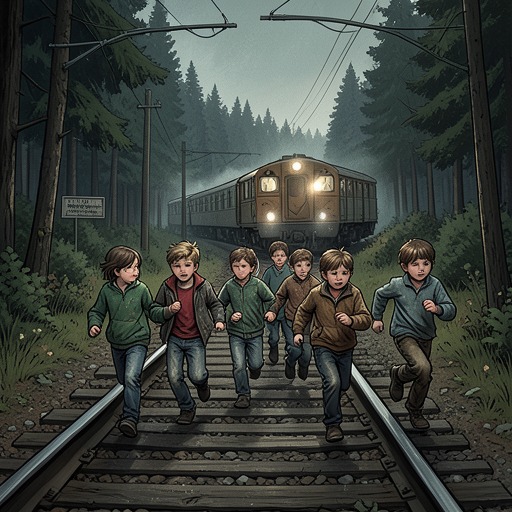
The account of their attempted journey makes the route from their world part of Eustace’s return. The Professor, Aunt Polly, and Lucy had accompanied the children as far as the train; Peter and Edmund had recovered the Rings from a garden in London and were to pass them to Eustace and Jill on their way to school. A sudden jolt interrupted that plan. Instead of using the Rings, the children found themselves in Narnia beside Tirian, who had been tied to a tree. Eustace relates these circumstances while the group keeps moving toward a guarded tower where Tirian expects to find weapons, armor, and food.
Skills and Preparation
Tirian prepares Eustace and Jill for the immediate effort to rescue Jewel and join the force expected from Cair Paravel. Jill practices archery and demonstrates a measure of competence; Eustace works with sword and shield. Although he had learned sword fighting during his earlier adventures, that training was with a straight Narnian sword, not the curved Calormene scimitar. Its different strokes make some of his previous habits a disadvantage, so Tirian has to teach him to adjust rather than simply rely on what he already knows.
Eustace nevertheless shows a good eye and quick feet, and Tirian is surprised by how strong and grown-up both children seem after only a few hours in Narnia. The narration attributes this change in appearance and strength to the effect Narnian air often has on visitors from their world. Their preparation is practical rather than effortless: Eustace must adapt his technique to a weapon he has not handled before, and the coming fight will demand more than the confidence of someone who has trained before.
Combat and Resistance
When Tirian confronts the guards and identifies himself, Eustace draws his sword and attacks the second soldier. The narration stresses the difference between training and action: pale-faced and frightened, Eustace forgets the lessons Tirian had given him and strikes wildly. He kills his opponent, to his own surprise, and finds the result frightening even as it relieves the immediate danger. Tirian kills the other guard and warns him about the remaining men; the Dwarfs deal with those two. The encounter ends with Tirian declaring the Dwarfs free and promising to lead their liberation of Narnia, though that hope will not hold.
At Stable Hill, Eustace takes his place in Tirian’s line as the Calormene force advances. Tirian assigns him to the king’s right, with Jewel holding the other part of that wing and Puzzle beside the unicorn. Eustace is terrified by the approaching enemy, which includes fifteen Calormenes as well as Narnian collaborators. Jill’s arrows bring down a Calormene and then a Satyr before the enemy reaches the defenders. In the confusion of the fight, Eustace cannot later remember what happened over the next two minutes; the scene’s decisive point for him is the shock of battle and the call from Rishda Tarkaan ordering a retreat and regrouping.
Companions and the End of Narnia
Eustace’s return is inseparable from his partnership with Jill: they arrive together, train under Tirian, and serve in his resistance. The pair are also linked to Narnia’s earlier history through their rescue of Rilian, a deed Tirian immediately recalls when he learns who they are. Their relationship to the king is formed in action: he welcomes their help, instructs them, and entrusts them with positions in battle. Eustace’s inexperience with the scimitar and his fear do not remove him from the defense; they show what his service costs him in the moment.
After the old Narnia ends, Tirian sees Eustace again among the seven crowned Kings and Queens. Eustace, like Jill, appears changed, and Tirian recognizes him despite the difference from the tired child he had fought beside. Later, when the company reaches a country whose colors seem unlike those of any land in their own world, Eustace remarks on its extraordinary blue mountains. His response marks a new stage of perception: the journey is no longer a campaign to restore the familiar kingdom, but an entrance into a reality beyond its limits.
Aslan’s Country and the Larger Story
As the company approaches the Great Waterfall, Eustace stops to point it out. When the others enter the pool and find themselves moving toward the waterfall, he calls the undertaking crazy; Edmund shares the hesitation, while Lucy insists that it is wonderful and that fear no longer seems possible. Eustace tests her claim and confirms that he cannot feel afraid, even though the ascent would be impossible in the ordinary world. The episode carries his journey from the practical dangers of combat into a world whose physical impossibilities no longer function as barriers.
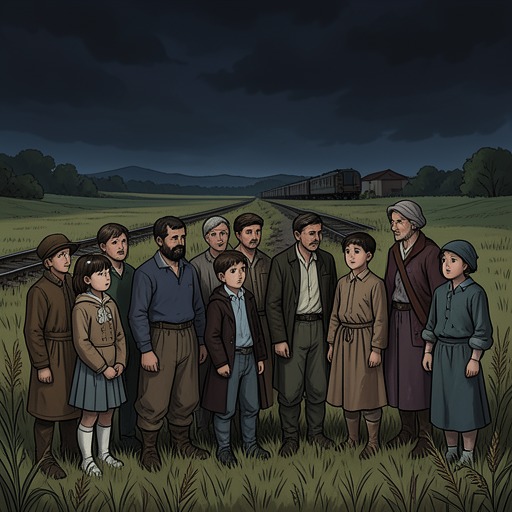
At the end, Aslan tells the visitors that there has been a real railway accident and that they, along with their parents, are dead in the world they had called the Shadow-Lands. The term is over and the holidays have begun, but the revelation is not presented as a final closing of life. Their lives in that world and their adventures in Narnia are described as the cover and title page of the Great Story. For Eustace, as for the others, the end of the old world is the threshold of a story that continues without end, with each chapter better than the one before.