Narnia
The Last BattleNarnia is the world at the center of the story’s final reversal: the country that appears to be destroyed is revealed as a finite copy of a deeper, enduring Narnia. Its last days move from invasion and devastation to a cosmic ending, but destruction is not the final truth of the place. Through the Door, the familiar country’s beloved creatures pass into a more real Narnia, where the world opens inward into further worlds and a new beginning.
Definition and Setting
In its familiar form, Narnia is a country with forests, rivers, hills, cities, and borders that shape both ordinary life and the last struggle for its survival. At the western edge, the River of Narnia flows from Caldron Pool beneath the great waterfall; beyond Lantern Waste lie the western lands. At the opposite end of the country, Cair Paravel stands beside the Eastern Sea. The scale and geography are concrete: the story moves between the western pool, the eastern royal city, the northern moorlands, and the rivers and woods that connect them.
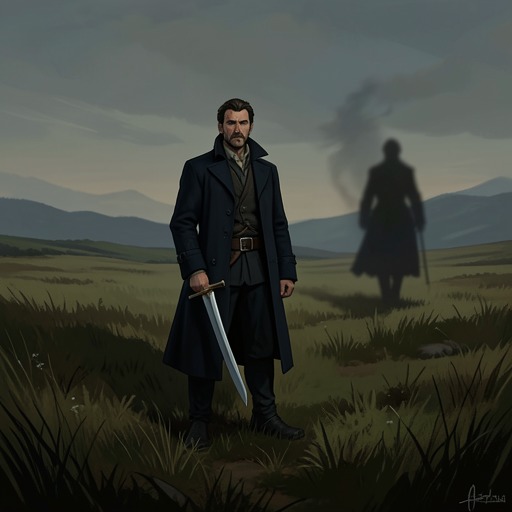
The country’s final ruler, Tirian, lives simply at a small hunting lodge near the eastern end of Lantern Waste, away from the state and ceremony of Cair Paravel. His friendship with Jewel is bound to the kingdom’s history: they love one another like brothers and have each saved the other’s life in war. Narnia is thus not merely a territory to be defended. It is a home made meaningful by its places, creatures, loyalties, and shared past.
Invasion and the Fall of the Familiar Country
Narnia’s political crisis becomes unmistakable when Farsight brings word that Cair Paravel has fallen. Twenty Calormene ships arrived under cover of darkness; the city is filled with dead Narnians and living Calormenes, the Tisroc’s banner flies above the royal battlements, and the inhabitants have fled in different directions into the woods. Farsight also reports the death of Roonwit, killed by a Calormene arrow. The news joins military defeat to personal loss: the kingdom’s seat has been captured, its people scattered, and one of its wise defenders is dead.
The defeat expands into the destruction of the landscape itself. After Aslan opens the Door and calls the end, the Dragons and Giant Lizards are left with the country. They tear up trees by the roots and crunch them as if they were sticks; the forests disappear, the grass dies, and the land is reduced to bare rock and earth. The monsters themselves grow old, die, and become enormous skeletons scattered over the dead ground. The sequence strips Narnia of its living surface until its former abundance seems almost impossible to believe.
Water then erases the remaining shape of the country. The sea advances across the land: rivers widen, lakes join, valleys fill, and hills become islands before vanishing beneath the rising water. The moors and mountains crumble into the flood, which reaches Aslan’s threshold but does not cross it. Under a dying sun, the Moon draws near and merges with it; at Aslan’s command, the giant reaches across the sky and crushes the Sun, plunging the world into darkness. Narnia’s ending is not simply a change of rulers or a ruined kingdom: earth, sea, and sky all pass out of their familiar order.
The Door, the Stars, and the Last Judgment
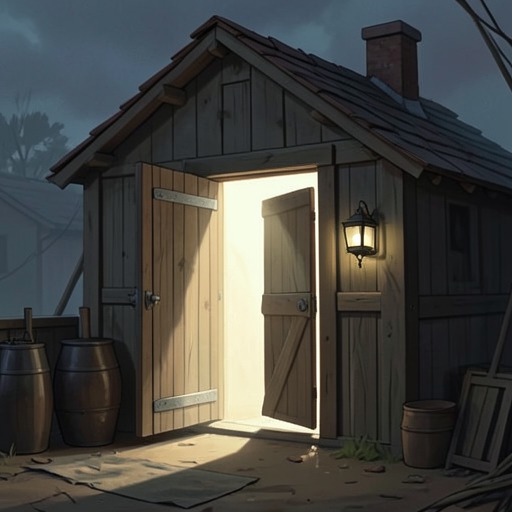
The end becomes a passage as Aslan raises his head and roars first, “Now it is time!” and then “TIME.” The Door opens onto the dark country. Far away, the giant once known as Father Time wakes on the northern moorlands and sounds his horn. The stars fall from the sky in increasing numbers, until the spreading darkness is revealed to be empty space: the stars have been called home. They descend as shining people and stand behind the gathered company, their light illuminating the woods as the old sky empties.
The creatures of Narnia run toward Aslan at the doorway, but their arrival divides them. Each looks into his face. Some meet him with fear and hatred; Talking Beasts among them cease, in that instant, to be talking animals, and the rejected creatures turn aside into his shadow. Others look at him with love, even when frightened, and enter through the Door. Among those welcomed are creatures the company had believed dead: Roonwit, Jewel, Farsight, Poggin, the good Boar and Bear, Dogs, and Horses. The threshold therefore gives the ending a moral as well as a physical shape: the passage into the renewed country is also a judgment that separates rejection from welcome.
The Real Narnia
Beyond the loss of the old country lies a Narnia at once recognizably itself and more fully real. Farsight flies high enough to see Ettinsmuir, Beaversdam, the Great River, and Cair Paravel still shining beside the Eastern Sea. He declares that Narnia is not dead and that the land before them is Narnia. Digory explains the apparent contradiction: when Aslan had said that the older children could not return, he meant the Narnia they remembered, not the enduring reality of which that country was a shadow or copy. England too, in his account, is only a shadow or copy of something in Aslan’s real world.
The older Narnia’s destruction does not mean that everything precious in it has been lost. Digory says that all of the old Narnia that mattered, including its dear creatures, has been drawn through the Door. The new country is described not as a merely repaired version but as a deeper reality: its rocks, flowers, and blades of grass seem to mean more, as a landscape in a mirror can be both recognizably the same and somehow more wonderful than the landscape outside the window. The distinction changes how the catastrophe is understood. The end is real for the shadow-country, but it cannot extinguish the reality toward which that country pointed.
The country continues to open inward. In a garden that proves to be a whole world, Lucy recognizes that this is still Narnia, more real and beautiful than the Narnia below and the Narnia outside the Stable door. Tumnus compares the succession of worlds to an onion, but each inward circle is larger than the one before it. The familiar kingdom is neither discarded nor left behind; it is present within a widening reality, with known lands and places available to be seen again.
Ending and Narrative Significance
Narnia’s final transformation belongs to a larger ending and beginning. Aslan tells the children that a real railway accident has occurred and that they, along with their father and mother, are dead in the world they called the Shadow-Lands. He names the transition as the end of the term and the start of the holidays, the ending of a dream and the arrival of morning. The old Narnia’s destruction and the children’s arrival in Aslan’s country therefore converge: both mark the end of one finite order and entry into a reality that is not bounded by that order.
The story closes by calling the next life the beginning of the real story. The children’s lives in their world and their adventures in Narnia have been its cover and title page; the Great Story begins beyond them and continues forever, with each chapter better than the last. Narnia’s decisive significance lies in this double status: it is a beloved country whose forests, cities, and skies truly end, and a shadow whose deepest meaning is fulfilled when its people and places are gathered into the reality that endures.