Narnian Dwarfs
The Last BattleThe Narnian Dwarfs are a people caught between two failures of trust in the final crisis of Narnia: the Ape’s false authority, which claims to speak for Aslan while arranging their exploitation, and their own later refusal to believe anyone who offers rescue. Their fate gives the story a stark counterpoint to political liberation. The Ape’s rule can be challenged and the Dwarfs can be freed from the mines, but freedom alone cannot make them trust again; even Aslan’s direct help is rejected as a trick.
Identity and the Ape’s rule
The Dwarfs are among the digging peoples whom the Ape says will be sent to the mines of the Tisroc in Calormen. To make forced labor sound legitimate, he claims that Aslan has settled the arrangement with the Calormene ruler and that the Dwarfs, along with moles and rabbits, will work in the mines. When the Beasts protest that Aslan would never sell them into slavery, the Ape denies the word and presents the arrangement as paid employment, though the supposed wages will go to Aslan’s treasury. His account converts dispossession into a purported policy for everyone’s good, while his glance toward the chief Calormene suggests an understanding between the speakers that his public explanation conceals.
The Ape also claims that he is a Man rather than an Ape, and that his age and wisdom make him the only creature qualified to speak with Aslan. He says that Aslan will tell him what the animals must do, reducing everyone else to people who must receive orders through him. This claimed monopoly on communication accompanies the labor scheme: the Dwarfs are not asked what they believe or want, but told that their fate is already settled. The group’s vulnerability therefore begins in a system that presents coercion as the will of an authority the Dwarfs cannot independently consult.
A challenge to the false account
A young Lamb asks the question the Ape’s story cannot comfortably answer: if the Narnians belong to Aslan and the Calormenes belong to Tash, how could Aslan be friends with a god associated with killing people at an altar? The animals turn toward the Ape, recognizing the force of the question, and he responds by spitting at the Lamb. The episode shows how the false account is defended not by an explanation that resolves its contradiction, but by an attempt to intimidate the speaker.
Tirian has waited for the Ape to let him speak, but when he sees the Narnians accepting the claim that Aslan and Tash are one, he calls the Ape a liar. Tirian intends to explain why Tash, who feeds on the blood of his people, cannot be the same as the good Lion whose blood saved Narnia. Before he can make that case, Calormene soldiers silence him. The Dwarfs are among the people this interruption leaves exposed to the Ape’s version of events: a truth that might have undone the Ape’s rule is prevented from being heard.
Release from the mines, refused
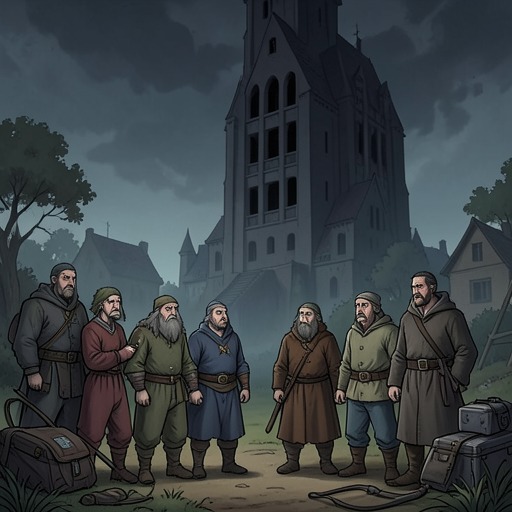
Later, Tirian encounters a column of Dwarfs being led to work in the mines. The Calormene soldiers explain that they are taking the group to the Tisroc’s mines, while the Dwarfs themselves say they are obeying Aslan’s orders because, as they understand matters, he has sold them. Their grim expressions accompany a resigned account of their supposed powerlessness. Tirian asks whether the Tisroc has conquered their land in battle that they should go to their deaths in the salt pits of Pugrahan. One Dwarf spits at the suggestion that the Tisroc could simply impose such a conquest, but the group still attributes its predicament to Aslan’s command.
After the Ape’s authority is challenged, Jill tells the Dwarfs that the Ape will no longer rule Narnia and that they can return to ordinary life. Tirian, despite admitting that he feels little affection for them that day, agrees to try at Jill’s request. The Dwarfs do not take the news as deliverance. After a pause of nearly a minute, one asks who Jill is. She identifies herself as the Jill who helped rescue Rilian, says that Eustace helped too, and explains that they have come from another world after hundreds of years at Aslan’s sending. The Dwarfs treat this account as another attempt to deceive them.
Griffle speaks for their suspicion: the Dwarfs believe they have already been taken in and will not accept another story about Aslan. He dismisses the apparent Aslan as an old animal with long ears, and when Tirian explains that it is the Ape’s imitation rather than the real Aslan, Griffle assumes Tirian is offering a better imitation. The Dwarfs’ experience of the false claim has not equipped them to distinguish the fraud from the truth; instead, it has made every claim of Aslan’s presence suspect.
Their refusal becomes a declaration of independence from all authority. Griffle says that they want no more kings, if Tirian is truly the king, and no more Aslans. The other Dwarfs affirm that they will look after themselves, answer to nobody, and have no use for stories about other worlds. They begin arranging themselves to march away. Eustace asks whether they will even thank their rescuers for saving them from the salt mines, but their answer remains that the Dwarfs are for the Dwarfs.
The same posture returns in battle. After the Calormenes have been driven back, the Dwarfs jeer at them rather than joining Tirian’s side. Tirian calls them to use their swords, reminds them that they can fight well, and urges them to return to their allegiance. They refuse again, calling both sides humbugs and repeating that they want no kings. Their rejection has consequences beyond their own safety: as Tirian and Jewel begin to hope they might win, the Calormene drum sounds. Tirian understands that it signals further troops summoned by Rishda Tarkaan, making their refusal to fight a turning point in the resistance’s worsening position.
The prison of distrust
After the Dwarfs have been captured and brought into the final gathering, Lucy asks Tirian to see whether he can do something for them. They sit tightly in a small circle, facing one another. The cords that had bound them are gone, yet they neither move about nor rest; they seem absorbed in listening and guessing at what is happening around them. When Lucy and Tirian come near, a Dwarf warns them not to walk into the circle’s faces. The group behaves as though its isolation has become a place of safety, even when there is no visible restraint keeping them there.
When Aslan appears, the Dwarfs dismiss his low growl as a noise produced by a machine at the other end of the Stable. Aslan then gives them a feast: pies, tongues, pigeons, trifles, ices, and wine. They eat and drink, but interpret the food as stable scraps, describing it as hay, an old turnip, a raw cabbage leaf, and dirty water from a trough. They do not recognize the gift for what it is. Their mistrust also turns them against one another: each suspects that the others have received something better, and they begin grabbing, quarrelling, and fighting until the feast is ruined.
Even after this, they insist that no one has fooled them and repeat their claim that the Dwarfs are for the Dwarfs. Aslan explains that they will not let him help them: they have chosen cunning instead of belief, and their prison exists only in their own minds, yet they remain imprisoned in it. The episode completes the reversal begun in the mines. The Dwarfs were first told that they had no choice but to accept a false command; later, having rejected the Ape’s deception, they are unable to accept genuine help. Their independence protects them from being persuaded by another false story, but it has hardened into a refusal to recognize truth even when it stands before them.
Place in the ending
The Dwarfs’ repeated refusal places them beside the novel’s final division between creatures who turn away from Aslan and those who enter through the Door. As the creatures approach Aslan, those who look at him with fear and hatred turn aside; Talking Beasts among them cease to be talking animals. Others, including some who are frightened, look at him with love and enter. The narrative names a Dwarf who had helped shoot the Horses among the creatures who recognize Aslan and come in, showing that the Dwarfs do not all share one final fate. The group’s earlier distrust is consequential, but it does not erase the possibility of an individual Dwarf responding differently.
This judgment follows the destruction of the old Narnian order. Aslan calls the stars home, and the sky empties as they fall; after Aslan says it is time to make an end, the Time-giant extinguishes the sun and darkness falls. The Dwarfs’ refusal of help is therefore not merely an episode in the struggle against the Ape. It occurs at the threshold of a cosmic ending, where the story distinguishes between self-protective disbelief and the ability to recognize the offered good. The Dwarfs make that distinction painfully visible: liberation from the mines does not by itself restore trust, and safety in a circle of one’s own making can become another kind of confinement.