Rishda Tarkaan
The Last BattleRishda Tarkaan is the Calormene captain who helps transform the false-Aslan deception into a plan for political control of Narnia. Working with Ginger behind Shift’s back, he exploits the Ape’s scheme while denying that either Aslan or Tash exists. His strategy depends on secrecy, fear, and reward: he hopes to make Narnia a Calormene province, but when the god he has invoked appears in earnest, the commander who had manipulated others cannot face him.
Identity and Political Position
Rishda commands Calormene soldiers and holds authority within the army of the Tisroc. The difference between ranks is audible in the soldiers’ forms of address: common soldiers call officers “My Master,” while officers address their seniors as “My Father.” Emeth, a young Calormene warrior, uses the latter form when asking Rishda for permission to enter the stable. Rishda dismisses him as a boy who has not been called to counsel, asserting his right to decide who may approach the supposed Tashlan.
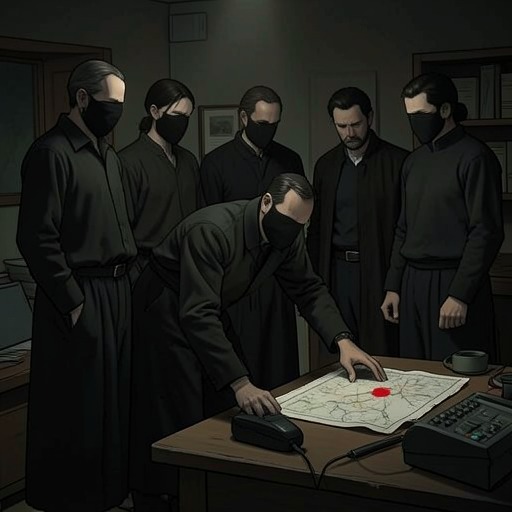
He is not simply Shift’s subordinate. Although the Ape appears to preside over the deception, the conspirators’ real balance of power has shifted. Poggin reports that Shift has taken to drinking and suspects that Ginger or Rishda now carries most of the plot. In the whispered conversation he overhears, Rishda calls Shift a stupid, greedy brute whom they must use for the present. The apparent ruler is therefore also a tool: Rishda and Ginger mean to direct the scheme in secret while allowing Shift to remain its public face.
The Conspiracy with Ginger
Rishda’s political partnership with Ginger rests on shared unbelief, not on devotion to either side of the supposed religious conflict. Ginger asks whether Rishda’s claim that Aslan means no more than Tash means that neither god exists. Rishda confirms that this is the understanding of the enlightened. Their talk exposes the Tashlan formula as a cynical fabrication: the two names are joined to make the Ape’s imposture easier to impose, not because either conspirator believes the beings are one.
The pair plan to recruit Narnian collaborators selectively. Ginger argues that creatures who truly believe in Aslan might turn against them if Shift’s foolishness exposes the secret. Those concerned only with personal advantage, and with whatever reward the Tisroc might offer once Narnia becomes a Calormene province, will be more dependable. Rishda approves the proposal but insists that recruits be chosen carefully. His objective reaches beyond managing the stable’s nightly ceremonies: the deception is meant to prepare a political annexation, and loyalty is measured by self-interest.
Rishda also choreographs the performance that sustains the deception. At a midnight meeting, he and the unwell, complaining Shift approach the bonfire with Ginger. Rishda quietly tells the Cat to take his post and play his part; Ginger then goes to sit among the assembled Beasts, posing as an audience member. The exchange gives Ginger a concealed role inside the gathering while Rishda directs the scene from alongside Shift. The political fraud depends not only on the false object presented at the stable but on assigning each participant a convincing place before the watching crowd.
Command, Threats, and the Stable
Emeth’s demand to enter tests Rishda’s authority in front of both Calormenes and Narnians. Rishda initially calls him a fool and asks who invited him into the council. When the Dwarfs challenge him—asking why Narnians are allowed in while his own people are kept out—Rishda yields, but carefully distances himself from what may happen. He says that everyone should bear witness that he is guiltless of the young man’s blood, then tells Emeth to enter. The disclaimer lets him preserve the appearance of a commander granting permission while disclaiming responsibility for the danger he knows awaits inside.
After the plot breaks into open violence, Rishda tries to turn fear into an offer of submission. He promises that the Boar and Dogs will be spared if they surrender: the Boar will be caged in the Tisroc’s garden, the Dogs confined to the Tisroc’s kennels, and Jewel will have his horn sawn off and be made to draw a cart. The conditions make clear that “mercy” means captivity and the destruction of the creatures’ freedom and defining capacities. Rishda reserves a different fate for the Eagle, the children, and Tirian, who are to be offered to Tash that night. When the animals answer only with growls, he orders his warriors to kill the Beasts but take the two-legged captives alive.
This command is an especially sharp expression of his double standard. Rishda has privately dismissed Tash as nonexistent, yet publicly invokes Tash’s wrath to intimidate those who might resist and announces sacrifices in Tash’s name. His use of religious language is tactical: disbelief does not stop him from exploiting the fear and obedience that belief can produce.
Emeth and the Exposure of Rishda’s Faithlessness
Emeth’s later account reveals how Rishda’s private unbelief became visible to someone inside his own command. Emeth had rejoiced at the prospect of marching on Narnia and had long desired to see Tash, whom he had served since boyhood. But he was dismayed to learn that the expedition would disguise its soldiers as merchants and proceed by lies and trickery. The claim that Tash and Aslan were one made the deception darker still for him.
At the nightly gatherings outside the straw-roofed stable, Emeth watched Rishda’s face and listened to his exchanges with Shift. He first thought the Tarkaan had been deceived by the Ape; then he realized that Rishda did not believe the false god himself. Emeth concluded that Rishda did not believe in Tash at all: if he did, he would not dare to mock him. For Emeth, this discovery turns the conspiracy from a mistaken religious claim into a deliberate profanation. He hides his anger and waits, expecting the true Tash to punish both conspirators.
When the Cat enters the stable and comes out in terror, Emeth takes that reaction as confirmation that the true Tash has arrived to avenge himself. His desire to see the god is stronger than his fear, and he forces his trembling knees and chattering teeth under control before volunteering to enter. Rishda reluctantly lets him go. Emeth’s decision is not evidence that Rishda’s interpretation is correct; it exposes the gulf between the captain’s calculated unbelief and the young warrior’s sincere devotion.
Collapse Before Tash
Rishda’s courage is real but limited by the kind of danger he expects. When Tirian and his companions appear, he leaps beyond the King’s sword and calls for the warriors of the Tisroc and loyal Narnians to rally to him. The account distinguishes this retreat from simple cowardice: Rishda would fight Tirian and the Dwarf if necessary, but recognizes the combined danger of the Eagle and Unicorn. His military judgment is quick, and he uses the crowd as cover while calling on loyalty and fear of Tashlan to gather support.
That confidence fails when Tash actually appears. Rishda gives a great wail, points toward the figure, covers his face, and falls flat on the ground. He had been brave in battle, but his courage had already begun to ebb when he suspected that a real Tash might exist; in the presence of the being he had invoked, the remainder deserts him. Tash addresses him directly as the one who called him into Narnia and asks what he has to say. Rishda answers with silence and terror.
Tash pounces on him and tucks him beneath one of his arms. The narrative gives no later return for Rishda: the captain who engineered a conspiracy around a god he claimed did not exist is carried away by that god. His end reverses the terms of his power. He had arranged who could enter the stable, threatened captives with sacrifice, and spoken in Tash’s name; at last he has no command, argument, or military force with which to answer Tash himself.
Narrative Role and Significance
Rishda’s arc makes the fraud’s political purpose explicit. The conspiracy is not merely Shift’s foolish impersonation of Aslan: Ginger and Rishda understand the deception, exploit it to manage the Narnians, and envision Narnia becoming a province of Calormen. Their confidence depends on treating belief as something to be manipulated in others while remaining untouched themselves. Emeth’s testimony exposes that division, and Tash’s arrival destroys the illusion that invocation carries no risk for the invoker.
The wider ending places Rishda’s punishment within a judgment that separates creatures according to their response to Aslan. As the summoned stars fall and the inhabitants of Narnia pass before Aslan, some meet his face with fear and hatred and turn aside; others look at him with love, even if they are afraid, and enter through the Door. The passage does not identify Rishda as one of those creatures, but its contrast clarifies the moral pattern around his story: neither a borrowed religious formula nor a claim of enlightened disbelief can substitute for the truth disclosed by actual encounter. After the old world ends, the Pevensie children learn that a real railway accident has killed them and their parents; the close frames death as the end of one order and the beginning of the Great Story. Rishda’s disappearance belongs to the novel’s severe account of the old order’s end, where political power and cynical disbelief prove powerless before realities they tried to use.