Talking Horse
The Last BattleNarnia’s Talking Horses are not merely animals used for transport or labor: they are free Narnians who can speak, judge their treatment, and choose whether to join a cause. Their encounters with Calormen’s timber workers and the Dwarfs make that personhood a test of Narnia’s political and moral order. First, their voices expose the abuse concealed by the assumption that a harnessed horse is a dumb beast; later, their attempted rescue ends in betrayal by those who refuse allegiance to either side.
Identity and Recognition
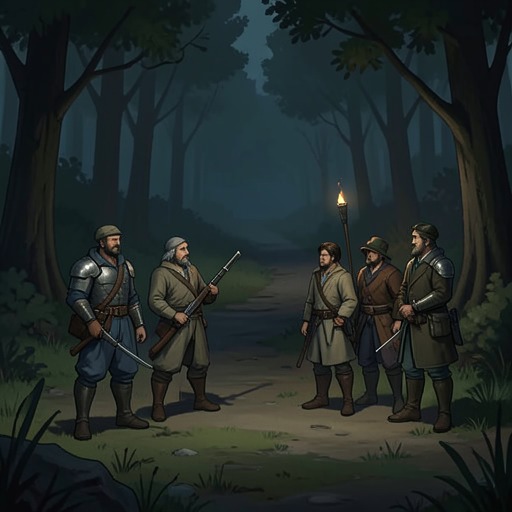
At the beginning of Tirian’s reign-crisis, the King sees Calormenes cutting down a Narnian forest and assumes that the horses pulling their timber belong to them and are ordinary, speechless animals. His attention is fixed chiefly on the destruction of the trees. That mistaken assumption collapses when a log catches in mud and the workers berate the horse for failing to pull it. Although the horse is already exerting itself, a Calormene strikes it with a whip. The horse answers, “Fool and tyrant! Do you not see I am doing all I can?” Its protest tells Tirian that the animal is one of Narnia’s free Talking Horses, and that the timber operation has violated not only the forest but the freedom of a Narnian subject.
The recognition changes the meaning of the scene. What Tirian had understood as an offense against the trees now includes the enslavement and mistreatment of a speaking member of his people. He and Jewel rush at the two Calormenes, who are killed in the confrontation. The episode establishes the Horses’ speech as decisive evidence of their identity, while also showing that recognition comes only after violence has made their subjection impossible to overlook.
Forced Labor Under the False Aslan
The Ape presents the exploitation of Narnia’s animals as an official policy. He says that horses, bulls, and donkeys will be sent to Calormen to pull and carry loads, while digging animals, including moles, rabbits, and Dwarfs, will be sent to work in the Tisroc’s mines. He rejects the Beasts’ description of this as slavery, claiming instead that they will receive wages paid into Aslan’s treasury for everyone’s benefit. His account therefore disguises coercion in the language of employment and public good: the animals are told that their labor and movement have already been decided for them.
The Horses’ circumstances at Stable Hill confirm that this is not an abstract threat. When Tirian asks where they are, the Mice report that the Ape has made them work and that they are tied at the bottom of the hill. Tirian sends the small creatures to find out whether the Horses are on his side and, if so, to gnaw through their ropes and bring them to him. Their task is both practical and political: the Horses must be freed before they can act, and their willingness to come will establish their choice rather than the Ape’s claim to speak for them.
Rescue and Betrayal
The Mice succeed. While Calormene reinforcements are being summoned by a drum, more than twenty Talking Horses charge up the hill, freed by the gnawers and nibblers. Their arrival briefly offers Tirian’s side the force of a mounted charge. The scene turns abruptly, however, when the Dwarfs shoot at them. The Horses fall before any reach the King, and the hoped-for rescue becomes a massacre.
The Dwarfs explain their refusal plainly: they do not want the King’s side to win, but neither do they want the opposing faction to win; “The Dwarfs are for the Dwarfs.” In that declaration, the Horses are denied help not because their freedom is in dispute, but because the Dwarfs will not join a common cause. The episode sharply contrasts their direct effort to reach Tirian with the Dwarfs’ deliberate withdrawal from solidarity. It also makes the attempted rescue a reversal: the small animals successfully release the Horses, yet freedom from the ropes cannot protect them from their allies’ arrows.
Narrative Significance
The Horses’ role links two stages of the conflict. At the forest, one Horse’s protest makes the hidden reality of Calormen’s labor system visible to Tirian; at Stable Hill, the Mice’s report and the Horses’ charge show that the Ape’s policy has continued to bind them. Their speech and chosen action mark them as participants in Narnian society rather than livestock whose treatment can be settled by rulers without their consent.
Their fate also measures the collapse of cooperation among Narnia’s defenders. Tirian’s attempt to organize a rescue depends on whether the Horses will choose to help, and they do come. But the Dwarfs’ refusal to distinguish between the King’s cause and its enemy destroys that prospect before the Horses can reach him. Across both episodes, the Horses’ exposed vulnerability is produced by opposing forces: Calormene exploitation first, then the Dwarfs’ rejection of collective allegiance. Their brief, independent voices and their thwarted charge make the cost of treating free speaking beings as labor or expendable outsiders unmistakable.