Tash
The Last BattleTash is the god worshipped in Calormen and the feared power invoked by the Ape’s regime to control Narnia. The regime’s claim that Tash and Aslan are the same being is exposed as a deliberate deception: Tash does appear, but the narrative insists that he and Aslan are opposites. His arrival turns a manufactured religious authority into a real presence, and his encounter with Emeth gives the book its clearest account of the difference between the name under which a deed is done and the moral character of the deed itself.
Identity and the Counterfeit Doctrine
In Calormen, Tash is represented as a being with four arms and a vulture’s head, to whom people make offerings at an altar. The Lamb’s question about how Aslan could be friends with Tash gives voice to the contradiction the Ape’s propaganda is designed to suppress. Rather than answer, the Ape humiliates the young questioner and declares that Tash is only another name for Aslan. The gathered animals recognize the Lamb’s question as the strongest challenge yet, but the Ape substitutes forced agreement for explanation.
The claim serves political ends. The Ape controls whether the animals may approach the supposed Aslan, says that their questions must be passed through him, and orders the squirrels to bring nuts despite their dwindling winter stores. In the same climate of command, the animals hear that Aslan has ordered the felling of the Wood-Nymphs and the enslavement of Narnia’s people. Some conclude that Aslan must have changed or be punishing them for an unknown wrong; they had hoped for his return and cannot reconcile that hope with the cruelty attributed to him. The confusion is not evidence that Aslan and Tash are one, but a consequence of the Ape’s appropriation of Aslan’s authority and the false doctrine that erases the difference between them.
Appearance and Arrival in Narnia
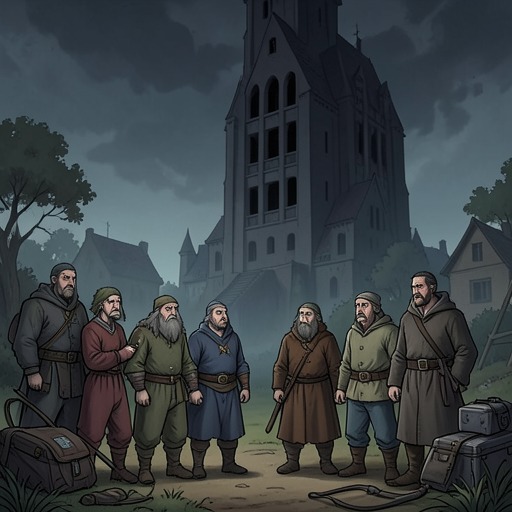
Before Tash enters the stable, his presence is glimpsed near the trees as a grey, man-shaped figure with a bird’s head and four raised arms. He floats rather than walks, and the grass beneath him appears to wither. Puzzle flees into the Tower, Jill shields her face, and those watching remain motionless until he disappears into the trees and the sun returns. Tirian recognizes the figure from a memory of his youth: at the Tisroc’s court in Tashbaan, he had seen Tash carved above the altar in the great temple. Eustace asks whether the figure is Tash, but Tirian turns first to reassure Jill, who has been shaken by the sight.
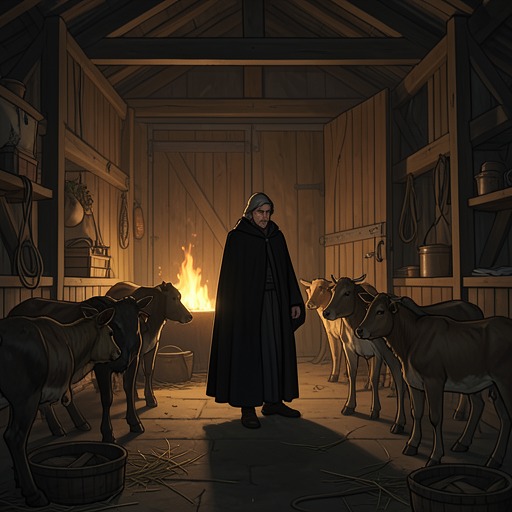
Later, inside the stable, Tash appears in a form smaller than the figure seen from the Tower but still much larger than a man. Rishda Tarkaan has called him into Narnia; Tash addresses him as the one who summoned him and demands to know what he has to say. Rishda, who had been brave in battle, cannot answer. The narrator connects his fear to his earlier suspicion that a real Tash might exist, after he had helped use the god’s name as part of the political deception.
Tash seizes Rishda and turns to fix Tirian with one terrible eye. A calm voice then commands the monster to leave and take its lawful prey to its own place, in the name of Aslan and the Emperor-over-sea. Tash vanishes with Rishda beneath his arm. The intervention distinguishes Aslan’s authority from the regime’s false invocation of him: the one who had manipulated Tash’s name is delivered to the power he presumed to use. The episode is brief, but it confirms that Tash is not merely a scare-story invented by the Ape or an alternate name for Aslan.
Emeth’s Testimony and the Meaning of Service
Emeth, a Calormene nobleman and devoted servant of Tash, explains how he came to enter the stable. He had joined Rishda Tarkaan’s force expecting battle, but lost his enthusiasm when the expedition instead relied on disguise and trickery and placed it under the Ape’s influence. The suggestion that Tash and Aslan were one especially troubled him: he had long wanted to know Tash, while the name of Aslan was hateful to him. When he observed Rishda speaking to the Ape, he concluded that Rishda did not believe in the supposed god represented by the figure brought from the stable—and then inferred that Rishda did not truly believe in Tash either.
Emeth concealed his anger and waited. When the Ape announced that those who wished to see Tashlan must enter the stable one by one, Emeth initially suspected another deception. The Cat’s terrified return persuaded him that the true Tash had come and would avenge the mockery. Though afraid, Emeth chose to enter because his desire to see Tash was stronger. Inside, he found himself in sunlight rather than the dark space visible from outside, then had to fight one of his own men. He understood that the man had been placed there to kill anyone who was not in on the conspiracy. After defeating him, Emeth set out across the country beyond the stable in search of Tash.
Emeth instead meets Aslan, whose golden appearance and scale overwhelm him. Expecting death because he has served Tash, Emeth falls at the Lion’s feet; Aslan welcomes him and touches his forehead. When Emeth objects that he is Tash’s servant, Aslan explains that the service Emeth has done to Tash counts as service done to him. He rejects the Ape’s doctrine that the two gods are one: he accepts Emeth’s service not because he and Tash are identical, but because they are opposites. A good deed done under Tash’s name can be received by Aslan, while cruelty done in Aslan’s name serves Tash. The test is therefore not the label a person invokes but the moral nature of the act.
Emeth admits that he had sought Tash all his life. Aslan answers that he could not have sought so truly for so long unless his desire had been for Aslan, concluding that all find what they truly seek. He steadies Emeth and tells him to go further in and further up. Emeth later recounts this encounter among the Kings and Queens, describing his happiness as so great that it weakens him. His testimony supplies the personal counterpart to Tash’s punishment of Rishda: the two men approached the same religious confusion differently, and their ends distinguish cynical deception from sincere seeking.
Judgment and the End of the Old Narnia
Tash’s appearance belongs to the book’s final movement from political disorder to judgment. After Aslan opens the stable door, the creatures who come before him separate according to their response to his face. Some show fear and hatred; Talking Beasts among them cease to be talking animals, and the group disappears into Aslan’s shadow. Others look on with love, sometimes mixed with fear, and enter through the door. Tash does not preside over this judgment or share Aslan’s role: his earlier appearance and removal with Rishda instead establish the opposition between the two powers.
When Lucy asks Aslan whether he can help the Dwarfs who refuse to believe what they see, he makes his power evident to them, but they dismiss even his growl as a trick. Aslan says that they will not let him help them and that their prison is in their own minds. The episode echoes the earlier dispute over Tash and Aslan: a false account can make reality seem like a trick, but the Dwarfs’ refusal differs from Emeth’s sincere effort to understand. The narrative does not present Tash and Aslan as interchangeable names; it shows how deception, distrust, and moral choice shape the creatures’ responses to truth.
Aslan then calls for an end. The Time-giant throws his horn into the sea, reaches across the sky, and squeezes the sun until darkness falls over Narnia. The survivors mourn the world that has ended. Lucy says that it is right to grieve for what lies dead and frozen behind the door, and Tirian likewise insists that it would be discourteous not to mourn the land he has known. Digory explains that the old Narnia had a beginning and an end and was a shadow or copy of the real Narnia, into which its beloved creatures have been drawn. The final revelation that there has been a real railway accident and that the children are dead places the passage beyond the stable within a larger transition from one life to another. In that ending, Tash is a real but opposed power; he is neither Aslan’s hidden identity nor the source of the lasting country into which Aslan’s followers enter.