The Battle of Stable Hill
The Last BattleThe Battle of Stable Hill is the last stand of Tirian, the last King of Narnia, against the forces of Rishda Tarkaan. What begins as a sudden rescue attempt becomes an organized but badly outnumbered defense of the Stable, where the false rule of the Ape and the threat of sacrifice to Tash converge. The Narnians’ brief gains are real, but so are their losses; the arrival of fresh Calormene troops turns the battle into a doomed struggle, while a handful of animals choose allegiance at the last moment.
Causes and Stakes
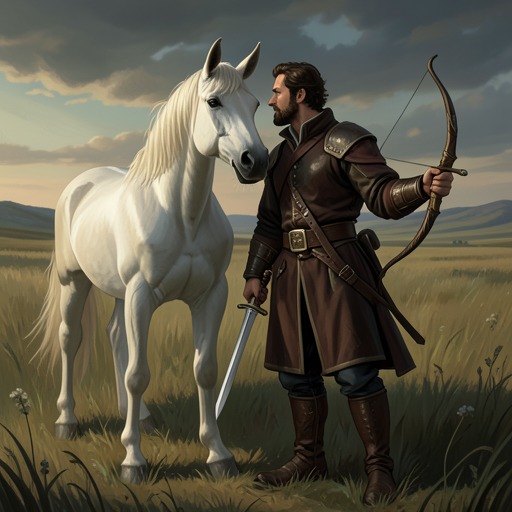
The immediate crisis begins when Tirian sees a brave Beast about to be attacked by Calormene soldiers while no one comes to help. He decides that waiting is no longer acceptable, whispers for swords and arrows, and leads seven figures out in front of the Stable. In his public challenge, he invokes Aslan and declares that Tash is a foul fiend, the Ape a traitor, and the Calormenes deserving of death. His appeal asks the Narnians to resist before their new masters kill them one by one.
The stakes have been prepared by the Ape’s claim that the Narnians’ lives and labor have been arranged with the King of Calormen. The horses, bulls, and donkeys are to be sent south to work; digging animals, including moles, rabbits, and Dwarfs, are to labor in mines. When the Beasts protest that Aslan would not sell them into slavery, the Ape denies the word while describing wages diverted to Aslan’s treasury. He calls coercive obedience “True freedom,” and declares that it means doing what he tells them. The battle therefore opposes not only an invading army but a political deception that recasts subjection as service.
The Stable itself is the focal point of the danger. Rishda orders his troops to seize the defenders alive and put them inside, where they will be offered to Tash. His command makes plain that the apparent religious settlement is enforced by violence and that the prisoners’ fate is at stake in the fighting outside the door.
The First Counterattack
Rishda Tarkaan avoids Tirian’s sword by retreating into the crowd. He is willing to fight Tirian and the Dwarf, but recognizes the danger posed by the Eagle and the Unicorn as well. He calls on his own warriors and on Narnians to remain loyal to “Tashlan,” while Tirian seizes the Ape by the scruff of the neck and throws him through the Stable door. As the door is shut, a strange light and sound emerge from within. The assembled Beasts cry out to “Tashlan” for protection; Farsight notices that Rishda is as surprised and nearly as frightened as the others. The episode unsettles the authority on which the false allegiance depends without immediately ending the battle.
The response from the defenders is not uniform, but the welcome they receive from the Talking Dogs is unambiguous. All fifteen dogs in the gathering rush to Tirian’s side, pledge to help, and crowd around the humans. Mice, moles, a squirrel, a Bear, and a Boar join them. The Dogs’ arrival gives Eustace a first reason to hope that events might turn in their favor, though Tirian sees that most of the gathered animals have not moved. He sends the small animals to find the Horses and chew through their ropes if they will fight with him. Their task links the eventual arrival of the Horses directly to a practical act of rescue.
Tirian arranges his small force with the speed the situation requires. Jill is placed on the left to shoot; the Boar and Bear stand beside her; Poggin takes Tirian’s left, Eustace his right, and Jewel the right wing. Puzzle is told to stand by Jewel and use his hooves, while Farsight is to strike from the air and the Dogs to enter the fighting after the swordplay begins. The order makes the defenders’ mixed company a coordinated force, each participant assigned a distinct role rather than left to face the attack alone.
The first Calormene line includes fifteen soldiers, along with a Talking Bull, Slinkey the Fox, and Wraggle the Satyr. Jill’s arrows bring down a Calormene and then the Satyr before the enemy reaches the defenders. Eustace is frightened by the approaching men, and afterwards can scarcely remember the next two minutes. When the Calormenes fall back, the defenders have killed two soldiers, the Fox, and the Bull; Tirian and Jewel have struck down soldiers, while Jill’s arrow and the Boar’s tusk have brought down the Bull. Their success comes at a cost: three Dogs are dead, another is injured, and the Bear dies bewildered, still saying that he does not understand. The first attack has failed, but the victory is neither complete nor painless.
Reinforcements and Reversal
After the first attack, Tirian calls on the Dwarfs to put their swords to use and return to their allegiance. They refuse, insisting that they want no Kings and that “The Dwarfs are for the Dwarfs.” Their refusal leaves the defenders short of potential allies at the moment when unity matters most. Some Narnians remain with the Calormenes, whether from treachery or fear of “Tashlan”; others sit still, and several animals have quietly left. The resistance’s weakness is therefore not just numerical: the appeal to shared allegiance cannot overcome distrust and division.
A Calormene drum changes the battle’s prospects. Tirian recognizes its meaning: Rishda is calling additional troops. He and Jewel, who had begun to hope they might win that night, understand that fresh enemies could make the outcome decisive. Soon the Horses charge up the hill, released after the small animals have gnawed through their ropes. Their arrival confirms that some of Tirian’s instructions have succeeded, even as the drum announces a larger danger.
Tirian then plans a second attack around a white rock that gleams in the firelight. Jill is to shoot from the left and withdraw to the rock when her allies approach; Farsight is to attack the enemy’s faces from the right; Tirian and the others will charge, then retreat to the rock when he calls. Jill’s first arrow misses, but she shoots quickly, and Farsight’s attack makes Calormene soldiers turn to defend their eyes. Their pressure helps the Narnian charge break into the enemy line. Jill sees Jewel tossing men aside and the Dogs attacking; even Eustace appears to her to be fighting well. For a moment the counterattack seems to be succeeding.
The apparent victory reverses when Jill sees that the Calormenes are not dwindling. More are arriving from every side, now carrying spears. Tirian orders a retreat to the rock. The reinforcements make the difference between the earlier attacks and the final one: the newcomers can fight from beyond the reach of the Boar’s tusks and Jewel’s horn. The organized withdrawal preserves the defenders’ position briefly, but it cannot restore the balance of force.
The Last Stand and Aftermath
Rishda offers conditional mercy to the Boar, Dogs, and Unicorn if they surrender: the Boar would be caged, the Dogs sent to the Tisroc’s kennels, and Jewel’s horn removed so he could draw a cart. He says the Eagle, the children, and Tirian will be offered to Tash. The defenders answer only with growls. Rishda then orders his troops to kill the Beasts but take the two-legged defenders alive, and the last battle of the last King of Narnia begins.
The spears make the fighting especially dangerous. Tirian sees the Boar fall and Jewel fighting beside him, and notices Jill being pulled away, but he cannot protect everyone. He understands that the group is doomed together and can only sell their lives as dearly as possible. The battle thus closes the movement from rescue and counterattack to a last resistance in which Tirian’s command endures even after victory has become unattainable. His title as the last King is not made meaningful by military success, but by his refusal to abandon the defense when the others’ lives are at stake.
The battle’s defeat is not the final fate of the dead. Later, when the creatures pass before Aslan in the new world, the narrator identifies among those gathered around Tirian the good Boar, the good Bear, Farsight, the Dogs, the Horses, and Poggin, as well as Roonwit and Jewel, whom the defenders had believed lost. This later reunion revises the battle’s apparent finality: its losses remain part of the old Narnia’s ending, but the faithful are restored in the real Narnia. The contrast between the defenders’ physical defeat and their reunion beyond the Stable gives the battle its larger consequence without undoing the suffering and division that shaped it.