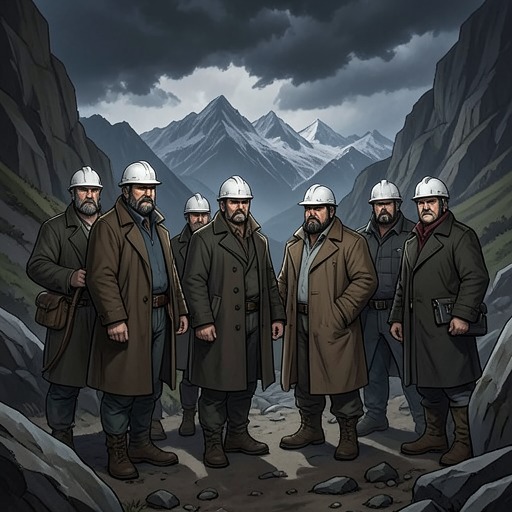
The Capture of the Dwarfs and Their Sacrifice to Tash
The Last BattleThe capture and sacrifice of the Dwarfs turns the fighting at Stable Hill into a grim, immediate demonstration of the violence surrounding the stable. After the Calormenes overpower them, Rishda Tarkaan has eleven bound Dwarfs thrown inside as an offering to Tash. The episode appears to settle their fate, but the ending overturns that expectation: the Dwarfs are later seen among the creatures who emerge into Aslan’s country, and their survival becomes part of the story’s larger distinction between outward rescue and inward refusal.
Causes and Background
The Dwarfs’ capture follows the defeat of the Horses and the breakdown of the gathering around the stable. Griffle has declared that the Dwarfs want Narnia for themselves, rejecting both Calormenes and the forces opposing them. They remain to fight rather than flee to safety, intent on killing members of either side when the fighting gives them the chance. Their decision leaves them exposed when the Calormenes turn against them.
The balance of the fight is unequal. The Calormenes wear mail, while the Horses have no protection; the Calormenes also have a leader who can direct their forces. Rishda Tarkaan orders thirty men to keep watch over the group by the white rock and leads the rest against the Dwarfs. Tirian and his companions, still recovering from their own fight, watch from a short distance. The scene narrows to the Calormenes and Dwarfs as the fire burns lower and the gathering place empties.
The Capture and Offering
The confrontation is brief. Its sounds die away, and Jill sees Rishda returning to the stable with eleven men dragging eleven bound Dwarfs. The narrator leaves the rest of the Dwarfs’ fate unresolved: it is not known whether they were killed or escaped. That uncertainty matters. The capture is exact in its number and outcome, but the wider result of the fight is deliberately left open.
Rishda orders the eleven captives thrown into the shrine of Tash. One after another, they are put through the dark doorway, which is then shut. Rishda bows to the stable and presents them as an offering to Tash; the Calormenes strike their swords against their shields and acclaim their god. Their language is now direct and unambiguous: the earlier fiction of “Tashlan” is absent. In the political and religious confusion built around the stable, this act makes the Calormenes’ own allegiance plain.
The capture also exposes the difference between the Dwarfs’ claimed independence and their actual position. They had wanted Narnia for themselves and refused to join either side, but they cannot control what follows when the Calormenes prevail. Their resistance does not prevent them from being treated as captives and offered to Tash. The episode therefore marks the limits of their self-sufficiency in the face of organized force, without making them allies of the cause they rejected.
The Stable and the Uncertain Fate
The stable’s doorway is both a site of violence and a threshold whose meaning the characters do not yet understand. The Dwarfs are taken inside as captives, and the door is closed after them; from the viewpoint of those outside, their fate appears to be sealed. Later, Edmund recounts that about a dozen Dwarfs came through the stable door. Eustace hopes that Tash consumed them, but Lucy corrects him: the Dwarfs are still there, and her repeated attempts to befriend them have failed.
Their survival does not bring reconciliation. When Aslan explains why they cannot accept help, he says that they have chosen cunning instead of belief and that their prison is only in their own minds. The Dwarfs themselves continue to insist that they have not been fooled and that they belong only to themselves. Their earlier capture by Rishda and their later refusal of Aslan’s help are distinct parts of the episode’s aftermath: they survive the apparent sacrifice, yet remain unable to recognize the welcome available to them.
Judgment and Aftermath
At the final opening of the Door, the creatures of Narnia pass before Aslan. Those who look at him with fear and hatred turn away; Talking Beasts among them cease to be talking animals. Those who look at him with love, even when afraid, enter. The Dwarfs appear among the creatures who have helped shoot the Horses, yet at least one of them is recognized among those who come in through the Door. Their appearance confirms that the earlier offering did not end their lives and that the story does not treat all the Dwarfs as having a single final outcome.
The capture and sacrifice thus sits within a larger reversal. Rishda’s gesture presents the Dwarfs as offerings to Tash, but the story later places Dwarfs among those entering through the Door and identifies their deeper confinement as a matter of their own minds. The immediate event remains a forced removal from the battlefield and an act of Calormene worship; its aftermath redirects attention from the captors’ claim over the Dwarfs to the different responses made possible at the end of Narnia.