Readify

Faith in the Wilderness

The Last of the Mohicans

This flow traces how Christian belief, Indigenous spirituality, and the uncertainties of death coexist among the survivors. This flow traces honor from battlefield reputation through surrender, protection, and the judgment of later memory. This flow contrasts book learning with the practical knowledge that allows the rescuers to read and survive the wilderness. This flow explores how colonial conflict divides Indigenous communities and makes political labels unreliable guides to personal loyalty. This flow traces the transformation of the lake and forest from a beautiful setting into a physical record of violence. This flow traces the changing function of David's music, from worship and protection to companionship during captivity. This flow explores the tension between bold action and patient judgment in the rescue mission. This flow explores how names, disguises, language, and ancestry determine who is trusted or condemned in the competing communities. This flow examines the tension between communal law, evidence, mercy, and the suffering produced by decisions that are formally just. This flow traces how Delaware history moves from Tamenund’s fading recollections to Uncas’s recognition and the renewal of collective leadership. This flow explores how language, hospitality, ancestry, and military necessity complicate cooperation among Delawares, Mohicans, Hurons, and English settlers. This flow traces how characters survive by reading expectations, concealing intentions, and turning an opponent’s assumptions into tactical openings. This flow traces how memories of deaths, displacement, and past alliances are repeatedly invoked to justify present decisions and future retaliation.

increasingupBearing stren­gth in each eventdowndecreasing
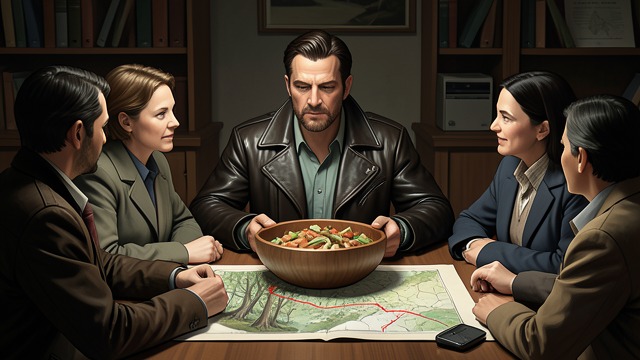
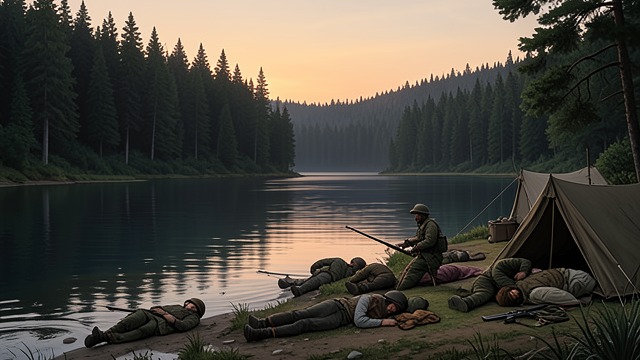
The Still NightThe Still Night from "The Last of the Mohicans". Calm Before Departure A landscape at rest The armies sleep beside the lake while occasional challenges break the silence.
Calm Before Departure A landscape at rest The armies sleep beside the lake while occasional challenges break the silence. The woods make the armed camps seem small within a vast natural setting. Beauty beside danger The stillness offers no assurance of safety. The lake and forest hold the armies, the captives, and the tension of a surrender not yet completed.
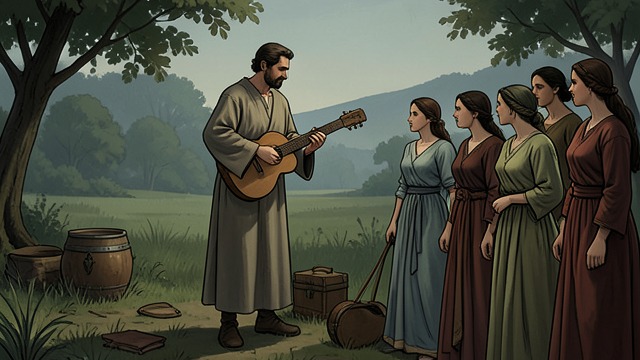
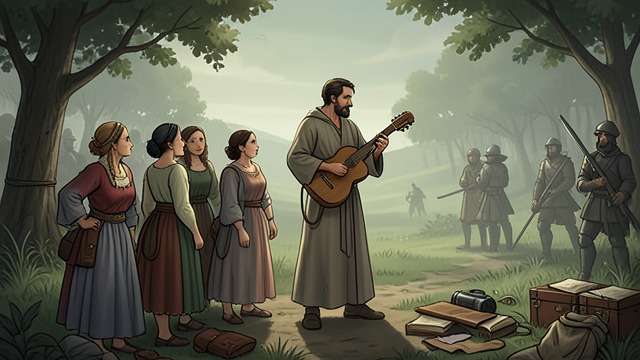
Morning DoxologyMorning Doxology from "The Last of the Mohicans". Music as Devotion A fixed ritual David finishes his morning praise before joining the sisters.
Music as Devotion A fixed ritual David finishes his morning praise before joining the sisters. His insistence on completing the hymn provides order amid military defeat. A promise of service He accepts a protective role after singing, carrying his faith into the practical disorder of the march. His music is part of a larger commitment to remain with the vulnerable.
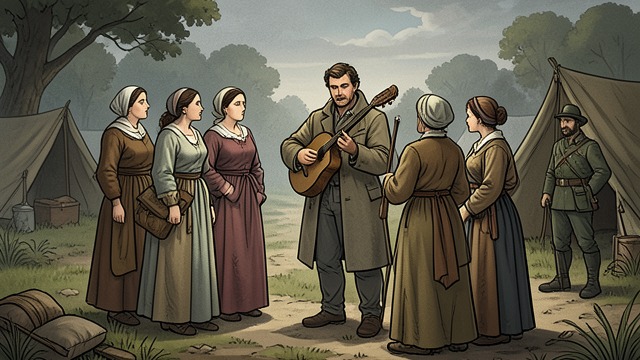
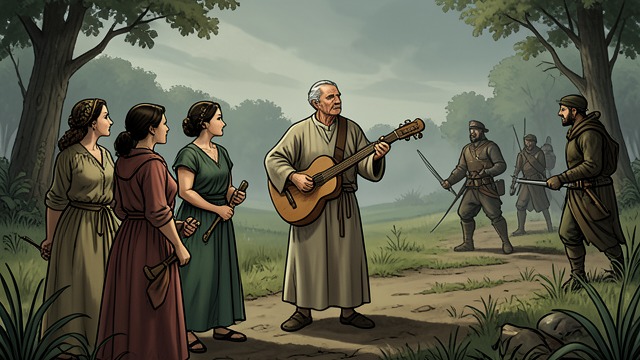
David's Morning HymnDavid's Morning Hymn from "The Last of the Mohicans". Praise Amid Defeat Music as devotion David completes his morning hymn before agreeing to escort the sisters.
Praise Amid Defeat Music as devotion David completes his morning hymn before agreeing to escort the sisters. His religious practice remains ordered even as the fort's inhabitants face displacement. Faith made practical Heyward asks him to use his presence to protect Cora and Alice. David's faith becomes not only private worship but a commitment to serve others.
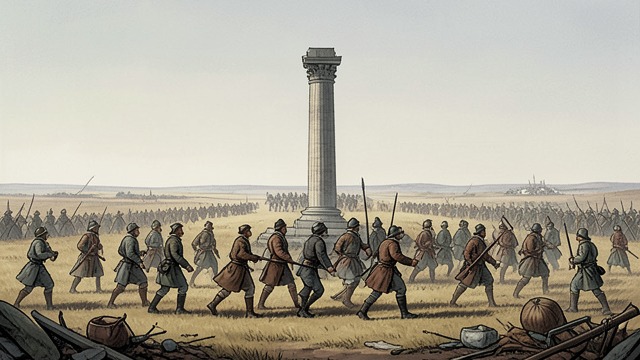
The Bloody PlainThe Bloody Plain from "The Last of the Mohicans". A Place Altered by Violence The open ground The departing column crosses the plain under the gaze of the French army and Native warriors.
A Place Altered by Violence The open ground The departing column crosses the plain under the gaze of the French army and Native warriors. The exposed landscape gives the attack room to gather force. Nature as witness The plain becomes associated with death and the breakdown of the surrender. The violence changes how the surrounding beauty can be seen.
A Song in the MassacreA Song in the Massacre from "The Last of the Mohicans". Sacred Song Under Attack A desperate experiment David sings while Cora stays beside Alice, believing that music may restrain the attackers.
Sacred Song Under Attack A desperate experiment David sings while Cora stays beside Alice, believing that music may restrain the attackers. Some warriors pause to listen, giving the sisters a temporary reprieve. Faith without mastery The song cannot stop Magua or end the massacre. Its limited effect shows both the power of human composure and the limits of spiritual influence over organized violence.
The Death SongThe Death Song from "The Last of the Mohicans". A Voice in the Crowd Singing for protection David sings at full strength while Cora stays beside Alice.
A Voice in the Crowd Singing for protection David sings at full strength while Cora stays beside Alice. Some attackers pause at the unfamiliar sound and pass to other victims. Courage with limits His song creates a moment of shelter but cannot halt the massacre or prevent Magua from taking Alice. The scene tests the difference between spiritual influence and physical power.
Judgment and ResponsibilityJudgment and Responsibility from "The Last of the Mohicans". The Limits of Piety A moral question The narrator considers how a commander with noble qualities can fail when self-interest or policy overrides principle.
The Limits of Piety A moral question The narrator considers how a commander with noble qualities can fail when self-interest or policy overrides principle. Religious and moral language does not excuse inaction. Responsibility before God Montcalm's conduct is measured not only by courage or reputation but by the responsibility he held for the surrendered people. The narrative insists that ethical judgment must reach beyond public fame.
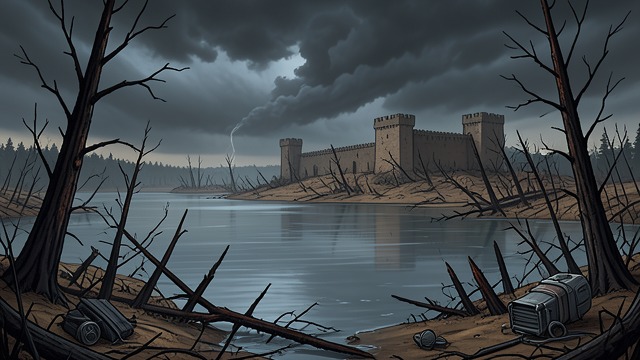
The Storm over the RuinsThe Storm over the Ruins from "The Last of the Mohicans". Weather as Aftermath A sudden change Cold winds and a premature storm replace the warmth of August.
Weather as Aftermath A sudden change Cold winds and a premature storm replace the warmth of August. The lake grows rough, and the fort lies in charred fragments. A landscape of judgment The narration makes the changed weather echo the moral desolation of the massacre. The setting is no longer a picturesque refuge but a harsh record of what happened there.
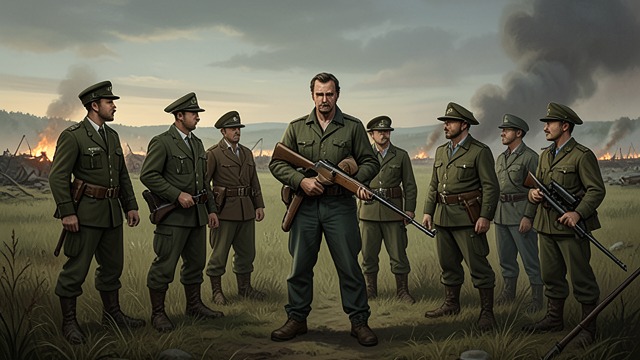
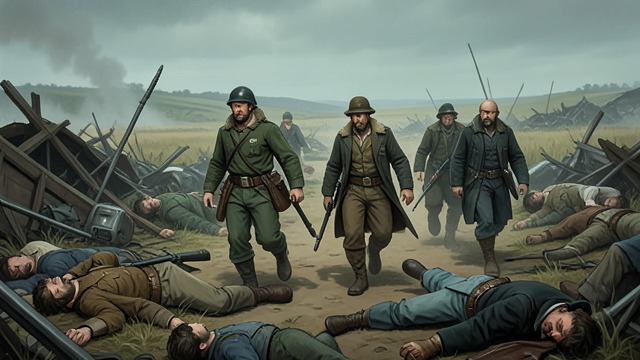
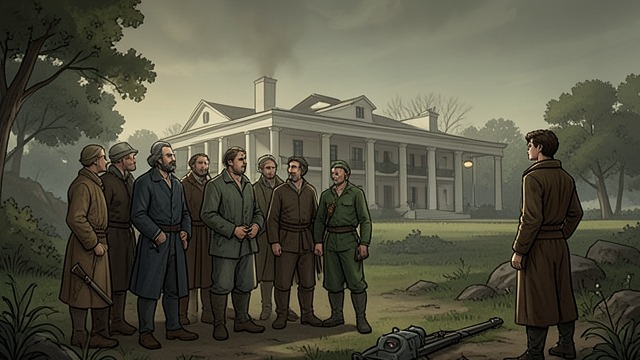
The Charnel PlainThe Charnel Plain from "The Last of the Mohicans". Survivors Among the Dead An altered field Munro, Heyward, Hawkeye, and the Mohicans cross the plain amid bodies and wreckage.
Survivors Among the Dead An altered field Munro, Heyward, Hawkeye, and the Mohicans cross the plain amid bodies and wreckage. Their different reactions reveal individual grief, anger, and practiced endurance. A search for living traces The party must inspect the dead for signs of Cora and Alice. The landscape now carries both the evidence of mass death and the possibility that the sisters escaped.
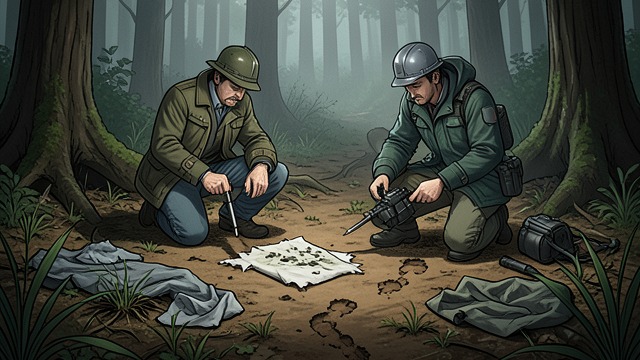
The Trail as TextThe Trail as Text from "The Last of the Mohicans". Learning to Read Signs Tiny evidence Hawkeye and the Mohicans interpret a torn veil, footprints, and broken vegetation as meaningful marks.
Learning to Read Signs Tiny evidence Hawkeye and the Mohicans interpret a torn veil, footprints, and broken vegetation as meaningful marks. The forest becomes a record that can be read by trained observers. Knowledge earned through practice Heyward initially struggles to distinguish one moccasin from another. His dependence on the scouts exposes the limits of abstract confidence in unfamiliar terrain.
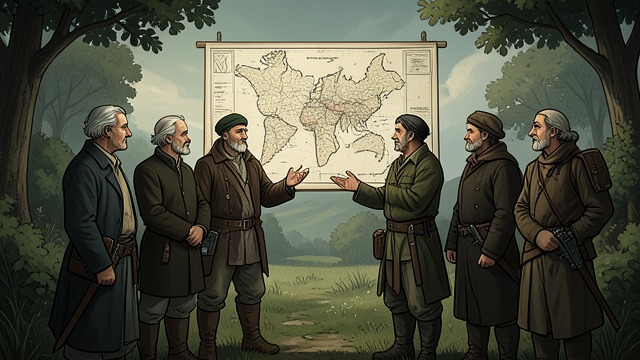
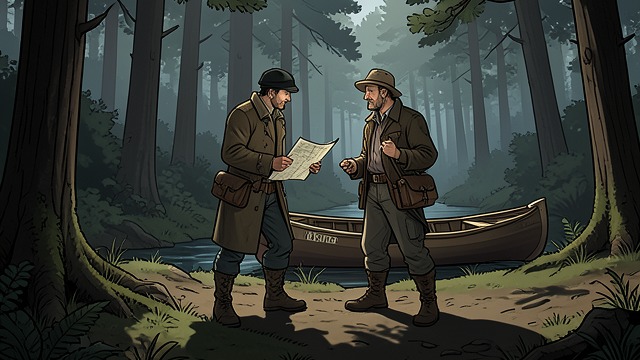
The Council of ExperienceThe Council of Experience from "The Last of the Mohicans". Deliberation Before Action Different judgments Hawkeye favors crossing the lake, while the Mohicans first consider an overland route.
Deliberation Before Action Different judgments Hawkeye favors crossing the lake, while the Mohicans first consider an overland route. Their discussion weighs speed, the old commander's weakness, and the danger of leaving tracks. Experience changes the decision Hawkeye adapts his argument to the others' concerns, and the party agrees to travel by canoe. Practical knowledge emerges through listening and revision rather than unquestioned authority.
The Oneida's ShotThe Oneida's Shot from "The Last of the Mohicans". A Misread Enemy Violence among allies A lone Oneida fires at Chingachgook despite the larger political alignment of the tribes.
A Misread Enemy Violence among allies A lone Oneida fires at Chingachgook despite the larger political alignment of the tribes. The shot reveals that shared service under one crown does not erase older hostilities. The scout's explanation Hawkeye describes a landscape in which tribes who share language may fight each other, while traditional enemies may serve together. The colonial conflict has entangled rather than replaced local rivalries.
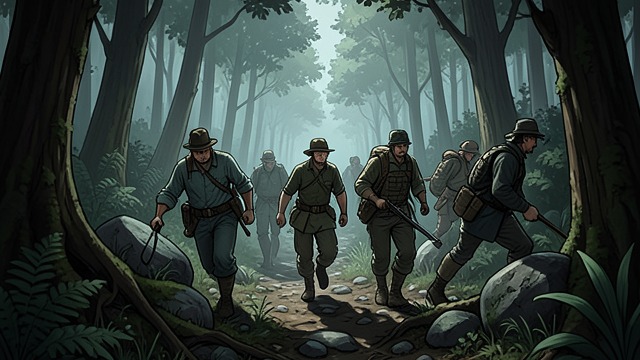
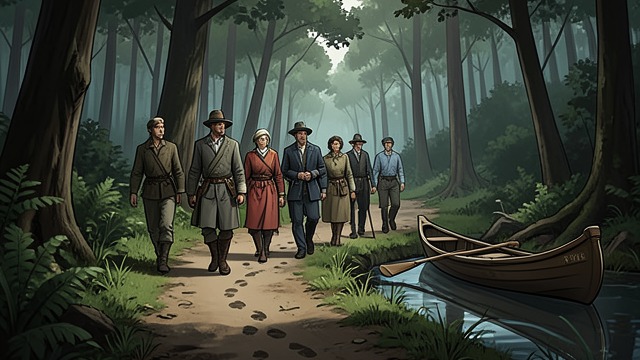
The Forest PassageThe Forest Passage from "The Last of the Mohicans". Wilderness as Route and Refuge Leaving the ruins The rescuers use stone, water, and darkness to conceal their passage from the fort.
Wilderness as Route and Refuge Leaving the ruins The rescuers use stone, water, and darkness to conceal their passage from the fort. The natural world becomes a tactical resource rather than scenery. A difficult shelter The same wilderness that hides the party also exposes it to pursuit, hunger, and uncertainty. Its beauty and danger remain inseparable as the search moves north.
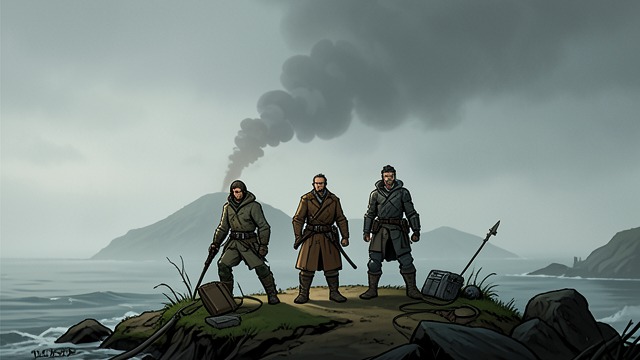
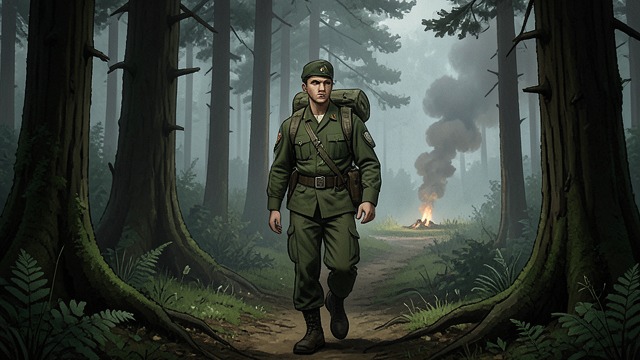
The Island AmbushThe Island Ambush from "The Last of the Mohicans". Seeing What Is Not Obvious A suspicious mist Heyward sees only a peaceful island, while Chingachgook notices an irregularity and Hawkeye identifies smoke.
Seeing What Is Not Obvious A suspicious mist Heyward sees only a peaceful island, while Chingachgook notices an irregularity and Hawkeye identifies smoke. Their expertise turns an apparently calm view into a warning. Knowledge becomes survival The party changes its course before the enemy can close in. The scene privileges careful attention over the confidence of a visitor who sees beauty but misses danger.
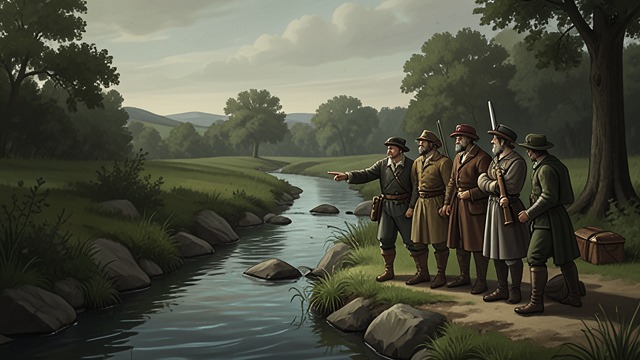
The Hidden WatercourseThe Hidden Watercourse from "The Last of the Mohicans". The Search Beneath the Surface A concealed route The captors hide their tracks by moving the women along a watercourse.
The Search Beneath the Surface A concealed route The captors hide their tracks by moving the women along a watercourse. The trail seems to end until Uncas drains the spring's narrow channel. Observation over force A small physical detail reveals the direction of travel. The episode shows that patience and trained attention can overcome deliberate deception.
The Huron SentenceThe Huron Sentence from "The Last of the Mohicans". Custom Used for Revenge Collective reasoning Magua invokes the dead and the tribe’s beliefs to justify Uncas’s execution.
Custom Used for Revenge Collective reasoning Magua invokes the dead and the tribe’s beliefs to justify Uncas’s execution. A private grievance is presented as an obligation owed by the whole community. Justice distorted The decision is orderly and culturally framed, but its purpose is vengeance. The scene asks whether a recognized procedure can still serve an unjust end.
The Huron Dead InvokedThe Huron Dead Invoked from "The Last of the Mohicans". Grief Recruited Names and virtues recalled Magua describes the dead Hurons as brave, generous, and skilled.
Grief Recruited Names and virtues recalled Magua describes the dead Hurons as brave, generous, and skilled. He uses each quality to make the losses emotionally present to the assembled warriors. Revenge presented as duty He argues that Uncas should be sent after the dead with the weapons and goods they lack. The speech turns mourning into a mechanism for renewed violence.
The Old Man’s ChildlessnessThe Old Man’s Childlessness from "The Last of the Mohicans". Private Grief Behind Custom A father’s loss An old Huron disowns the son condemned by his people, insisting that the young man’s blood was not truly Huron.
Private Grief Behind Custom A father’s loss An old Huron disowns the son condemned by his people, insisting that the young man’s blood was not truly Huron. His public words conceal the anguish visible in his face. A social demand The tribe’s beliefs about inherited virtue make the father’s grief a public test of stoicism. Custom does not erase his sorrow; it forces him to carry it alone.
The Debate over WaterThe Debate over Water from "The Last of the Mohicans". Choosing a Route Competing plans The Mohicans favor following the land trail, while Hawkeye argues for crossing the lake.
Choosing a Route Competing plans The Mohicans favor following the land trail, while Hawkeye argues for crossing the lake. Their debate considers the distance, Munro's fatigue, and the danger of leaving readable tracks. Judgment through discussion Hawkeye persuades the others by showing how the canoe can reduce time and conceal their passage. The decision is neither reckless nor rigid; it emerges from weighing competing knowledge.
Uncas Named by an EnemyUncas Named by an Enemy from "The Last of the Mohicans". A Name as Reputation Fame precedes the captive Magua’s recognition gives Uncas a name feared and respected among the Hurons.
A Name as Reputation Fame precedes the captive Magua’s recognition gives Uncas a name feared and respected among the Hurons. The prisoner’s reputation shapes the crowd’s response before he can explain himself. Identity contested The title intensifies hostility, but it also confirms that Uncas has earned standing through courage. The name becomes both a threat and a form of recognition.
Duncan’s Cultural PerformanceDuncan’s Cultural Performance from "The Last of the Mohicans". Speaking Across Difference A borrowed identity Duncan uses French and the expected manner of a medicine man to establish credibility.
Speaking Across Difference A borrowed identity Duncan uses French and the expected manner of a medicine man to establish credibility. His survival depends on understanding how the Hurons read language and social role. Communication as risk Every successful exchange gives him access but also increases the cost of exposure. Cultural knowledge functions as a tool, though never a guarantee of safety.
Duncan Reads the OpportunityDuncan Reads the Opportunity from "The Last of the Mohicans". Opportunity in Danger A request repurposed Duncan sees that the request to treat a sick woman might allow him to search for Alice.
Opportunity in Danger A request repurposed Duncan sees that the request to treat a sick woman might allow him to search for Alice. He accepts the role while carefully controlling how much urgency he shows. Intelligence over force He has no weapons or authority to compel the Hurons. His survival depends on recognizing an opening and adapting his conduct to it.
Hawkeye Studies the CaveHawkeye Studies the Cave from "The Last of the Mohicans". Observation Before Action A clue interpreted Hawkeye understands that David’s words may refer to Alice rather than the invalid.
Observation Before Action A clue interpreted Hawkeye understands that David’s words may refer to Alice rather than the invalid. He climbs above the partitions to inspect the adjoining spaces before committing to a rescue. Patience as skill The scout’s success depends on observation and timing, not merely courage. He gathers enough information to direct Duncan without drawing attention to the hiding place.
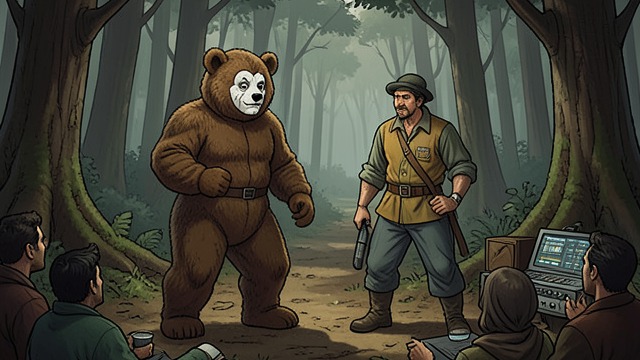
The Bear’s Double UseThe Bear’s Double Use from "The Last of the Mohicans". A Mask Turns Tactical A false assumption Magua sees the bear disguise and assumes the supposed conjurer poses no serious threat.
A Mask Turns Tactical A false assumption Magua sees the bear disguise and assumes the supposed conjurer poses no serious threat. Hawkeye uses that judgment to approach without provoking an immediate attack. Force at the right moment The scout acts only when Magua moves within reach. Deception succeeds because it is paired with restraint, awareness, and precise timing.
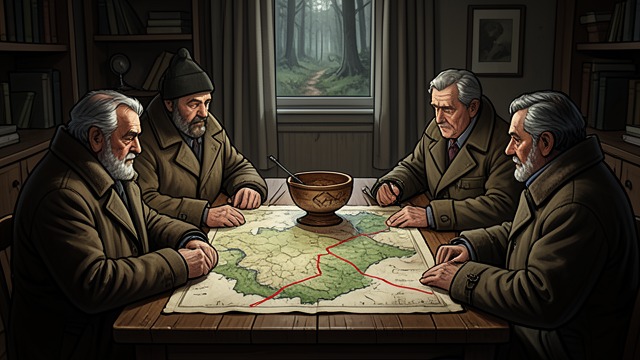
The Delawares’ Reserved AllianceThe Delawares’ Reserved Alliance from "The Last of the Mohicans". Allegiance Held Back A complicated history The Delawares have followed the French but withheld military support, partly because of an older relationship with…
Allegiance Held Back A complicated history The Delawares have followed the French but withheld military support, partly because of an older relationship with the Six Nations. Their apparent neutrality arises from history rather than simple indecision. Dependence and autonomy French power affects their families and lands, yet the Delawares retain their own political judgment. Their position makes them vulnerable to pressure from several sides.
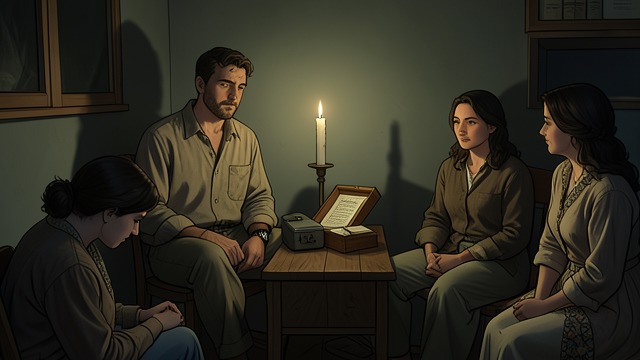
David's TrustDavid's Trust from "The Last of the Mohicans". Comfort in Captivity A captive's account David says that the sisters are physically safe, though distressed by captivity.
Comfort in Captivity A captive's account David says that the sisters are physically safe, though distressed by captivity. He describes hymns and conversation as comfort during their enforced journey. Humility and loyalty He credits his freedom to the captors' belief that he is harmless, not to any personal achievement. His modest faith coexists with a clear willingness to suffer alongside the women.
The Captive's ComfortThe Captive's Comfort from "The Last of the Mohicans". Songs on the Trail Companionship in captivity David says that the sisters have heard his hymns during the journey.
Songs on the Trail Companionship in captivity David says that the sisters have heard his hymns during the journey. Alice still weeps, but there are periods when music and conversation give her relief. A limited refuge The songs do not change the captives' status or their destination. They provide a small shared space of steadiness inside a journey controlled by Magua.
Heyward's ResolveHeyward's Resolve from "The Last of the Mohicans". Risk Chosen Deliberately The bold proposal Heyward insists on entering the Huron settlement to rescue Alice, despite Hawkeye's warnings.
Risk Chosen Deliberately The bold proposal Heyward insists on entering the Huron settlement to rescue Alice, despite Hawkeye's warnings. He understands that the plan is dangerous but refuses to leave the attempt to another. Courage with a cost Hawkeye eventually helps disguise him, recognizing the earnestness behind the decision. The narrative leaves open whether personal resolve will prove wisdom or merely expose him to greater danger.
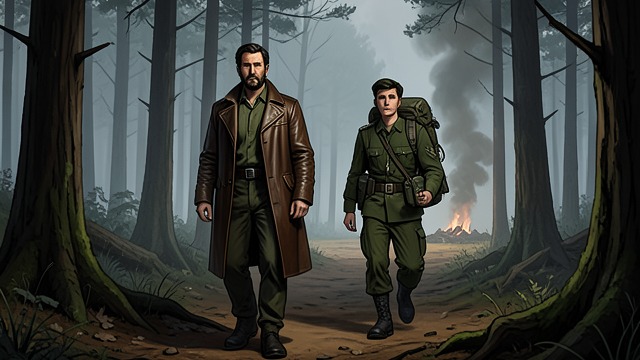
The Scout's WarningThe Scout's Warning from "The Last of the Mohicans". Experience Offered, Not Imposed A final caution Hawkeye warns Heyward that the Hurons require sharper judgment than books can provide.
Experience Offered, Not Imposed A final caution Hawkeye warns Heyward that the Hurons require sharper judgment than books can provide. He also promises that the Mohicans will avenge him if he is killed. Respect for choice The scout does not prevent the young officer from going. Their parting balances practical warning with trust in Heyward's purpose and character.
Magua’s HospitalityMagua’s Hospitality from "The Last of the Mohicans". Courtesy as Politics A welcomed guest The Delawares receive Magua with a meal and formal greetings even while suspecting his purpose.
Courtesy as Politics A welcomed guest The Delawares receive Magua with a meal and formal greetings even while suspecting his purpose. Their hospitality governs the encounter before either side can speak openly. Gifts and leverage Magua uses presents to encourage warmth, then links the sheltering of Englishmen to the Delawares’ relationship with the French. Courtesy and coercion operate in the same conversation.
A Divided Delaware NationA Divided Delaware Nation from "The Last of the Mohicans". Kinship Fractured A people in opposing camps The narrative explains that some Delawares serve the English while many others are allied with the French.
Kinship Fractured A people in opposing camps The narrative explains that some Delawares serve the English while many others are allied with the French. Chingachgook's own community is only one part of a broader divided people. Loyalty beyond policy Hawkeye argues that inherited ties and old enmities do not change whenever colonial commanders change sides. Political alliances cannot simply command personal or communal feeling.
The Tortoise MarkThe Tortoise Mark from "The Last of the Mohicans". An Emblem of Connection A detail in David's account David recalls a tortoise figure painted on a people among whom Cora is held.
An Emblem of Connection A detail in David's account David recalls a tortoise figure painted on a people among whom Cora is held. Chingachgook bears the same emblem, connecting the neighboring group with the Delaware lineage. Hope with a warning The connection may help the rescuers approach Cora, but shared ancestry does not guarantee friendship. The scout warns that a familiar face can conceal a hostile intention.
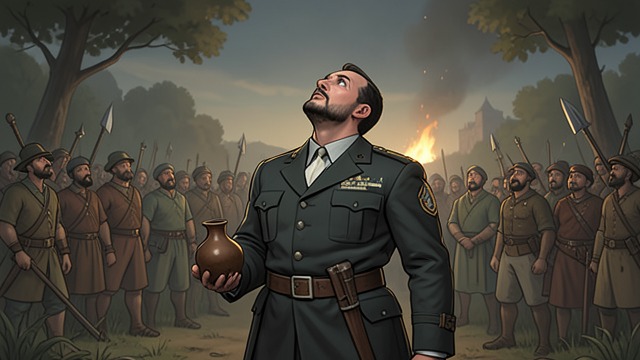
The Marksman’s NameThe Marksman’s Name from "The Last of the Mohicans". Identity Proven by Deeds A disputed title Magua identifies Hawkeye as La Longue Carabine, while Hawkeye disputes the exact names others have given him.
Identity Proven by Deeds A disputed title Magua identifies Hawkeye as La Longue Carabine, while Hawkeye disputes the exact names others have given him. The assembly demands proof rather than accepting reputation alone. Skill settles the matter His shot through the gourd establishes his identity more convincingly than any title. The episode contrasts inherited labels with abilities demonstrated in public.
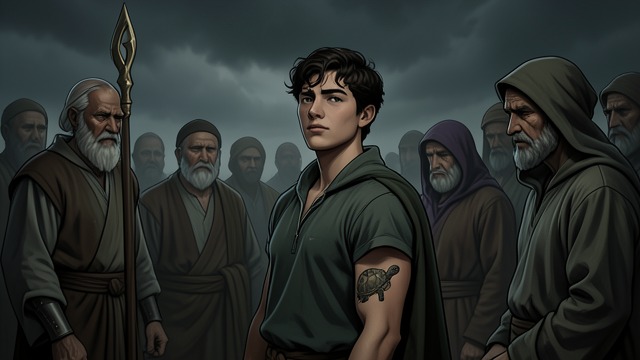
The Tortoise LineageThe Tortoise Lineage from "The Last of the Mohicans". Belonging Revealed An emblem changes judgment The tortoise tattoo identifies Uncas as a descendant of the ancient Delaware line.
Belonging Revealed An emblem changes judgment The tortoise tattoo identifies Uncas as a descendant of the ancient Delaware line. His ancestry becomes visible at the moment the tribe is about to condemn him. Recognition and responsibility The revelation restores his place, but belonging brings obligations as well as honor. Uncas becomes a leader expected to act for the people whose history he carries.
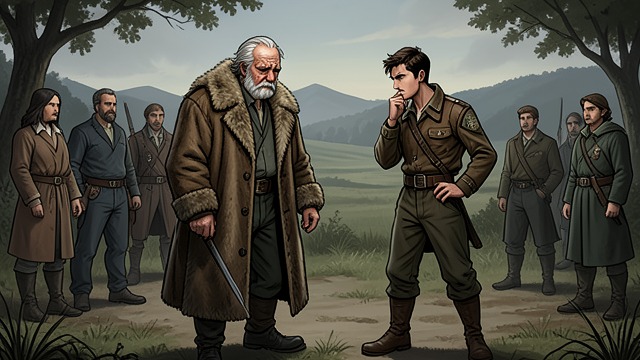
Tamenund’s ArrivalTamenund’s Arrival from "The Last of the Mohicans". Memory Enters the Present A living history Tamenund’s appearance brings generations of Delaware experience into a current political crisis.
Memory Enters the Present A living history Tamenund’s appearance brings generations of Delaware experience into a current political crisis. His people honor him as both judge and representative of their past. Age and uncertainty The patriarch’s great age does not make every memory precise. His recollections sometimes drift across eras, exposing the distance between inherited history and the present needs of the tribe.
Proof Before AccusationProof Before Accusation from "The Last of the Mohicans". Evidence and Reputation A fairer process The Delawares test competing claims about La Longue Carabine rather than immediately accepting Magua’s accusation.
Evidence and Reputation A fairer process The Delawares test competing claims about La Longue Carabine rather than immediately accepting Magua’s accusation. Their demand for proof briefly protects the prisoners from arbitrary judgment. Skill as testimony Hawkeye’s marksmanship supplies the evidence. The contest suggests that deeds can correct false speech, though it cannot resolve every moral question before the assembly.
The Council’s Counter-TestThe Council’s Counter-Test from "The Last of the Mohicans". Suspicion Put to Trial Claims examined The Delawares recognize that Magua may be manipulating them and test the competing identities of Hawkeye and Duncan.
Suspicion Put to Trial Claims examined The Delawares recognize that Magua may be manipulating them and test the competing identities of Hawkeye and Duncan. The rifle contest converts suspicion into observable evidence. Limits of cleverness The test establishes Hawkeye’s identity but does not defeat Magua’s legal claim. Intelligence can expose deception without resolving every conflict that follows from it.
Uncas’s Kinship ClaimUncas’s Kinship Claim from "The Last of the Mohicans". Belonging Across Separation A shared lineage Uncas identifies himself as the son of Chingachgook and a descendant of the Delaware line.
Belonging Across Separation A shared lineage Uncas identifies himself as the son of Chingachgook and a descendant of the Delaware line. His family’s long absence has complicated recognition but not erased kinship. A coalition renewed The Delawares accept Uncas and, through him, recognize Hawkeye as a friend. Ancestral ties create a political relationship that crosses the boundary between Mohican and Delaware identities.
The Old Delaware LandsThe Old Delaware Lands from "The Last of the Mohicans". A Lost Homeland Memory of dispossession Tamenund recalls the Delawares’ former greatness and the lands from which they were driven.
A Lost Homeland Memory of dispossession Tamenund recalls the Delawares’ former greatness and the lands from which they were driven. His account places the immediate dispute within a long history of displacement. Present suffering reframed Cora’s appeal draws on a remembered act of mercy toward Tamenund’s kin. The past is not only loss; it can also establish obligations across generations.
The Delawares Remember LossThe Delawares Remember Loss from "The Last of the Mohicans". A History of Displacement A people’s former place Tamenund remembers when the Lenape ruled their lands and laments the changes brought by successive settlers.
A History of Displacement A people’s former place Tamenund remembers when the Lenape ruled their lands and laments the changes brought by successive settlers. His memory gives the present conflict a long historical depth. Past as moral resource Cora recalls an earlier mercy shown to Tamenund’s kin. The remembered act provides a basis for her appeal, showing that history can impose obligations as well as preserve grievances.
Tamenund’s First RulingTamenund’s First Ruling from "The Last of the Mohicans". Law’s Impersonal Force A rule applied Tamenund orders the Delawares to return Magua’s captives, relying on the authority of established custom.
Law’s Impersonal Force A rule applied Tamenund orders the Delawares to return Magua’s captives, relying on the authority of established custom. His decision is not presented as personal cruelty. People placed at risk The ruling gives Magua control over Cora despite her wishes. The scene shows how a lawful process can protect communal order while failing vulnerable individuals.
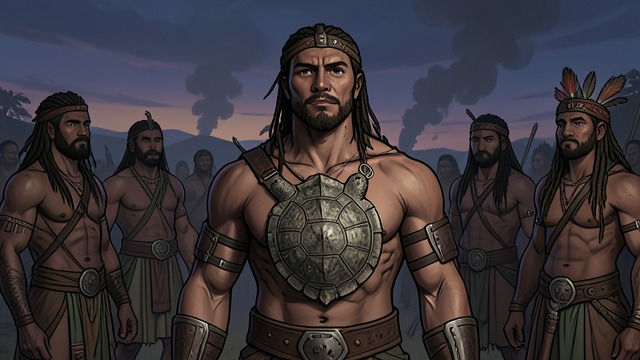
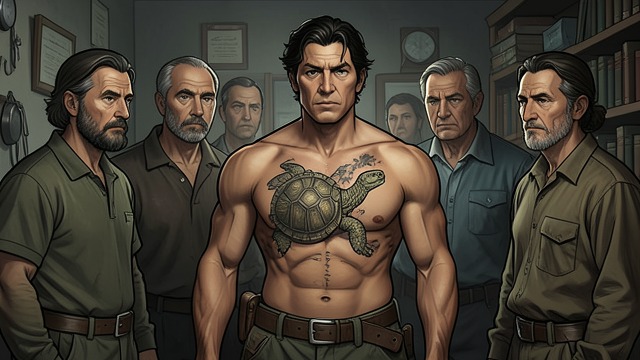
The Tortoise EmblemThe Tortoise Emblem from "The Last of the Mohicans". Ancestry Survives The sign exposed The tortoise tattoo on Uncas’s chest reveals a lineage believed nearly lost.
Ancestry Survives The sign exposed The tortoise tattoo on Uncas’s chest reveals a lineage believed nearly lost. A bodily emblem interrupts the violence and makes the community confront its own history. A living continuation Tamenund sees in Uncas a successor rather than an intruder. The recognition joins an endangered past to a possible future.
Uncas’s ExplanationUncas’s Explanation from "The Last of the Mohicans". The Family’s Chosen Path A history of withdrawal Uncas explains that his ancestors left the old Delaware lands as pale settlers spread along the waterways.
The Family’s Chosen Path A history of withdrawal Uncas explains that his ancestors left the old Delaware lands as pale settlers spread along the waterways. They chose to hunt apart while keeping their attention turned toward the east. Identity without surrender His family’s distance from the council fires has not erased its belonging. The story presents separation as a deliberate response to historical change, not simple abandonment.
Uncas’s Family HistoryUncas’s Family History from "The Last of the Mohicans". Separation Explained The family leaves the old lands Uncas recounts how his ancestors moved away as pale settlers appeared along the streams.
Separation Explained The family leaves the old lands Uncas recounts how his ancestors moved away as pale settlers appeared along the streams. They followed the deer and remained apart from the diminished Delaware people. Memory kept alive The family preserved its identity and expectation of return despite generations of separation. Uncas’s account makes inherited memory a guide to belonging in the present.
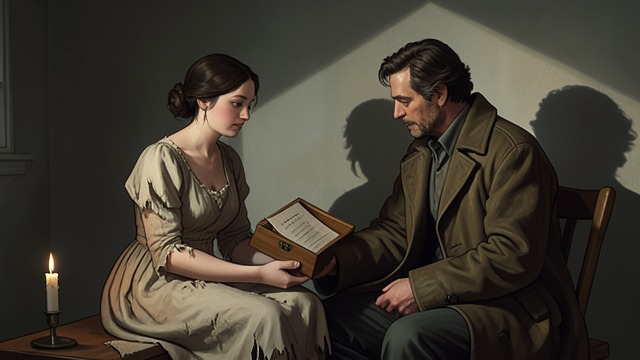
Mercy RequestedMercy Requested from "The Last of the Mohicans". The Appeal Beyond Rules A human claim Cora asks the elder to consider her sister’s dependence and Magua’s motives.
The Appeal Beyond Rules A human claim Cora asks the elder to consider her sister’s dependence and Magua’s motives. Her plea insists that judgment should account for suffering, not only property or status. Attention restored Tamenund listens and permits Uncas to speak. Mercy does not immediately reverse the law, but it expands the hearing and allows concealed facts to emerge.
A Future at the Council FireA Future at the Council Fire from "The Last of the Mohicans". Succession Renewed The elder’s hope Tamenund welcomes Uncas as the one who may fill his place at the council fire.
Succession Renewed The elder’s hope Tamenund welcomes Uncas as the one who may fill his place at the council fire. The aging leader sees the possibility of continuity in a young warrior he had nearly lost. Leadership tested immediately Uncas’s inheritance is not ceremonial only. He must respond to Magua’s departure and guide the Delawares into pursuit, making the future answer to present danger.
A New War’s InheritanceA New War’s Inheritance from "The Last of the Mohicans". The Past Repeats Old divisions mobilized The Hurons and Delawares move toward conflict while carrying memories of earlier alliances, losses, and rivalries.
The Past Repeats Old divisions mobilized The Hurons and Delawares move toward conflict while carrying memories of earlier alliances, losses, and rivalries. Magua’s accusations and Uncas’s ancestry both draw on histories larger than the immediate pursuit. Future shaped by memory The coming expedition may determine more than Cora’s fate. The characters act within inherited conflicts, even as loyalty and cooperation offer a chance to shape a different outcome.
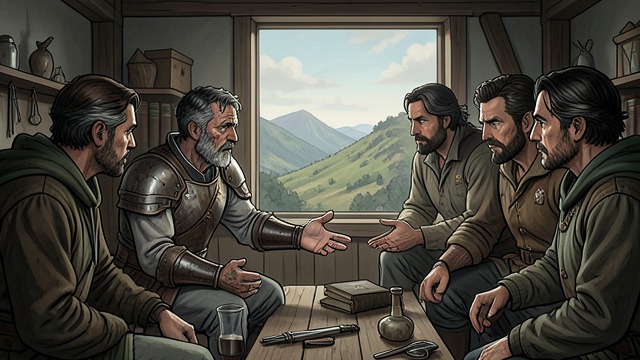
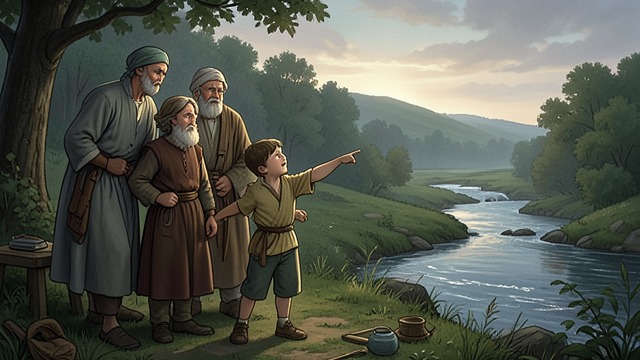
Hawkeye's HeavenHawkeye's Heaven from "The Last of the Mohicans". Different Ideas of Rest A question of belief Heyward asks about the afterlife while the party listens for danger.
Different Ideas of Rest A question of belief Heyward asks about the afterlife while the party listens for danger. Hawkeye imagines that the red and white peoples may understand happiness differently. Faith through disposition The scout doubts that a life of stillness would suit someone shaped by movement and hunting. His reflections treat belief as something formed by lived experience, not a single inherited description.
Munro's StandardMunro's Standard from "The Last of the Mohicans". Honor as a Last Resource Defeat without disgrace Munro feels abandoned by Webb but is reminded that the garrison remains master of its honor.
Honor as a Last Resource Defeat without disgrace Munro feels abandoned by Webb but is reminded that the garrison remains master of its honor. He accepts that conduct under defeat can still define a soldier. Resolve renewed The old commander returns to the fort determined to make resistance costly. Honor gives him a framework for action when military success is no longer possible.
Montcalm's CourtesyMontcalm's Courtesy from "The Last of the Mohicans". Respect for the Opponent A generous victor Montcalm allows the British to keep their arms and colors.
Respect for the Opponent A generous victor Montcalm allows the British to keep their arms and colors. His offer treats defeated soldiers as honorable opponents rather than objects of humiliation. Courtesy tested The terms create an expectation that the departing column will be protected. The value of courtesy will depend on whether the commander can uphold it beyond the negotiation.
Cora's RefusalCora's Refusal from "The Last of the Mohicans". Dignity in Captivity A captor's pressure Magua offers Cora a path away from the immediate battlefield but frames it as submission to his will.
Dignity in Captivity A captor's pressure Magua offers Cora a path away from the immediate battlefield but frames it as submission to his will. His demand seeks control as well as companionship. A moral boundary Cora refuses and tells him to finish his revenge if that is his purpose. Her physical powerlessness does not erase her ability to define what she will accept.
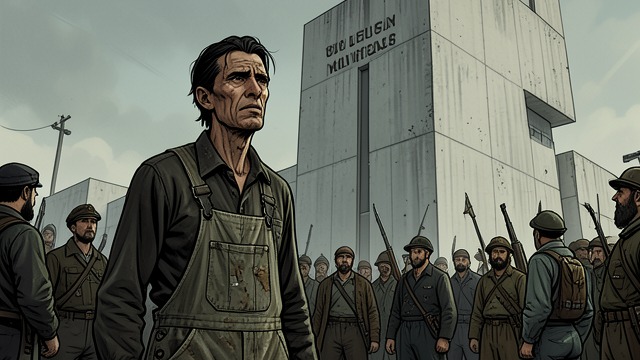
Uncas's DefianceUncas's Defiance from "The Last of the Mohicans". Courage Without Boasting Facing humiliation Uncas endures mockery from the Huron women and warriors without answering every insult.
Courage Without Boasting Facing humiliation Uncas endures mockery from the Huron women and warriors without answering every insult. His stillness becomes an assertion of self-command. Honor returned to the accusers He identifies the cowardice of a Huron warrior, forcing the crowd to confront its own failures. His judgment challenges the assumption that authority belongs only to his captors.
Memory Beyond FameMemory Beyond Fame from "The Last of the Mohicans". The Record of Conduct Fame's selective light The narrator observes that Montcalm may be remembered for heroic defense while the massacre is forgotten.
The Record of Conduct Fame's selective light The narrator observes that Montcalm may be remembered for heroic defense while the massacre is forgotten. Public reputation can preserve only part of a person's story. Honor as accountability The narrative insists that courtesy and bravery cannot replace moral courage at a decisive moment. True honor includes responsibility for the consequences of power.
The False TrailThe False Trail from "The Last of the Mohicans". Deception and Counter-Deception A trail deliberately made The party carries its canoe overland and leaves a conspicuous route, then retraces its steps through…
Deception and Counter-Deception A trail deliberately made The party carries its canoe overland and leaves a conspicuous route, then retraces its steps through water. The false signs are designed for the enemy's expectations. Skill in adaptation Hawkeye and the Mohicans combine observation with deliberate misdirection. Survival depends not only on reading the land but on shaping what another reader will believe.
Magua's French AllianceMagua's French Alliance from "The Last of the Mohicans". Allies with Separate Aims A conditional partnership Magua fights beside the French but does not accept their understanding of peace with the British.
Allies with Separate Aims A conditional partnership Magua fights beside the French but does not accept their understanding of peace with the British. His own reasons and obligations remain distinct from Montcalm's policy. The limits of command Montcalm's appeal to a father-son relationship cannot compel Magua's people to obey. The alliance is tactical, not a complete surrender of tribal judgment.
The Coward's AccusationThe Coward's Accusation from "The Last of the Mohicans". Identity in Conflict A Delaware among Hurons Uncas stands before a community that regards his people as enemies and mocks their reputation.
Identity in Conflict A Delaware among Hurons Uncas stands before a community that regards his people as enemies and mocks their reputation. His captured status gives the Hurons the immediate power to judge him. A challenge to easy categories Uncas's courage and the Huron captive's shame complicate the distinction between worthy and unworthy conduct. The narrative measures character through choices, not merely tribal allegiance.
The Instrument ReturnedThe Instrument Returned from "The Last of the Mohicans". A Tool of Identity The scout's teasing Hawkeye returns David's pitch-pipe after joking about its uselessness in the wilderness.
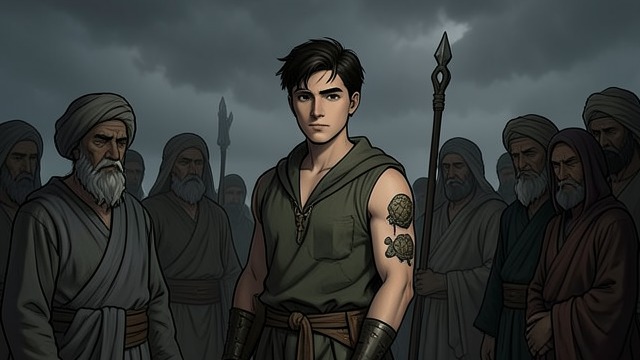
A Tool of Identity The scout's teasing Hawkeye returns David's pitch-pipe after joking about its uselessness in the wilderness. The exchange recognizes David's distinctive nature even as it questions his practical value. The singer's persistence David receives the instrument with evident pleasure and prepares to sing. His devotion survives mockery, travel, and captivity without becoming a performance for approval.
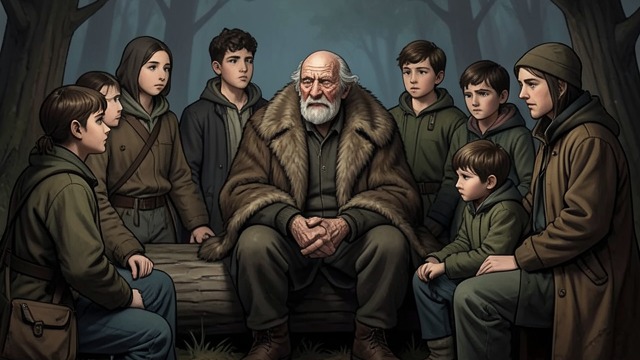
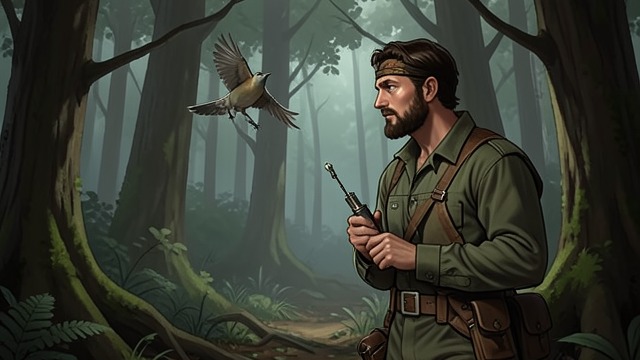
The Whip-poor-will SignalThe Whip-poor-will Signal from "The Last of the Mohicans". Music Becomes a Message A practical signal Hawkeye assigns the call of a whip-poor-will as the sign for David to meet the rescuers.
Music Becomes a Message A practical signal Hawkeye assigns the call of a whip-poor-will as the sign for David to meet the rescuers. A sound associated with birdsong becomes part of a covert plan. Art adapted to danger David must return among the captors and listen for the signal. His musical knowledge now supports coordination as well as worship and comfort.
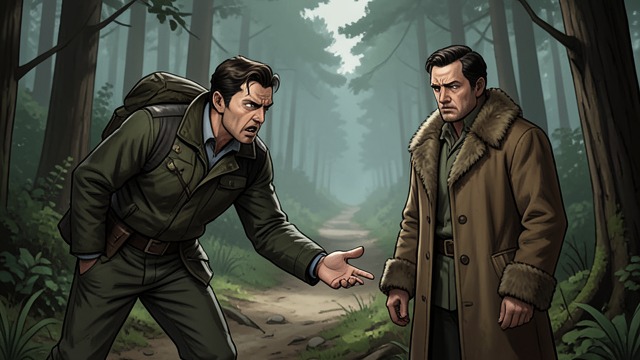
Heyward's ImpatienceHeyward's Impatience from "The Last of the Mohicans". Urgency Against Experience The lover's demand Heyward wants the party to pursue the trail immediately, fearing each pause costs the captives precious time.
Urgency Against Experience The lover's demand Heyward wants the party to pursue the trail immediately, fearing each pause costs the captives precious time. His urgency reflects genuine danger and personal attachment. Hawkeye's restraint The scout insists on examining signs and resting before a long journey. He treats haste as a threat when it risks losing the trail or exhausting the searchers.
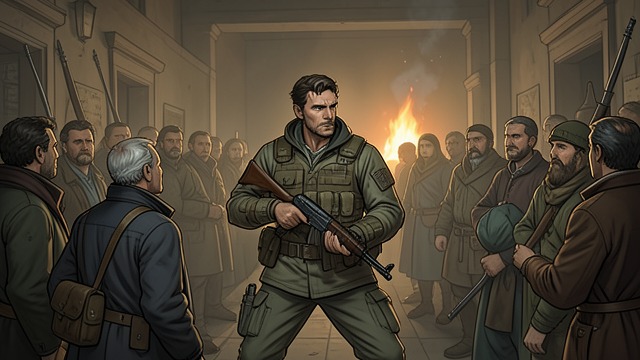
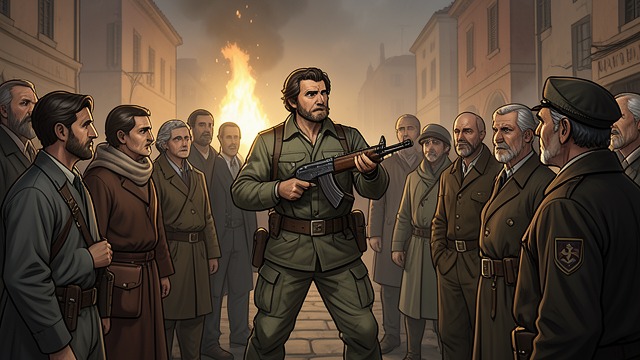
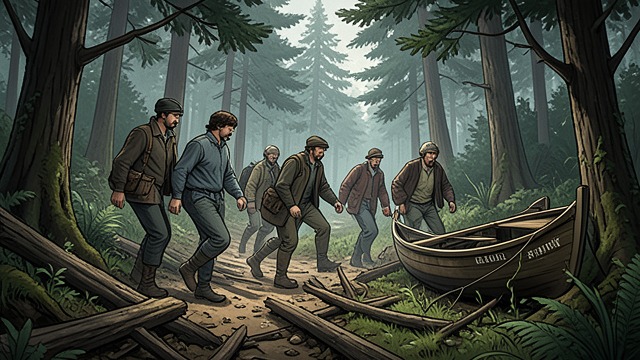
A Deliberate DepartureA Deliberate Departure from "The Last of the Mohicans". Patience as Protection Concealing the route Hawkeye leads the party through broken stone and timber before reaching the canoe.
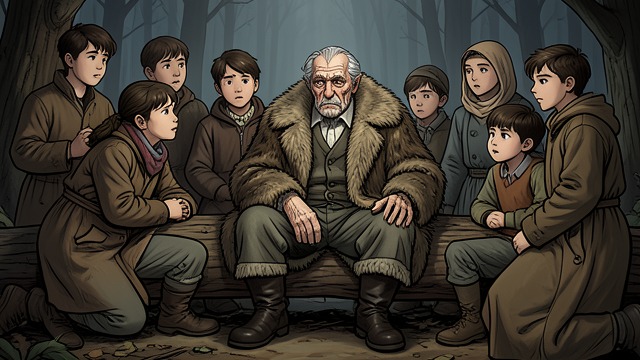
Patience as Protection Concealing the route Hawkeye leads the party through broken stone and timber before reaching the canoe. The slow preparation prevents a careless track from revealing their direction. A calculated risk Heyward questions the need for secrecy, but the scout explains that the slain Oneida may bring retaliation. Prudence is presented as a form of courage that protects the larger mission.
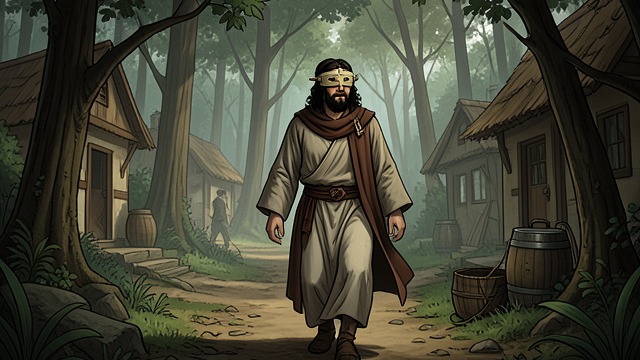
The Medicine Man’s RoleThe Medicine Man’s Role from "The Last of the Mohicans". Borrowed Authority A disguise accepted Duncan’s assumed role as healer gives him access to the Huron village.
Borrowed Authority A disguise accepted Duncan’s assumed role as healer gives him access to the Huron village. His authority depends not on truth but on the expectations the Hurons attach to the figure he presents. Identity as survival The disguise protects him only while his behavior remains plausible. The episode shows how a name or role can conceal purpose without changing the person underneath.
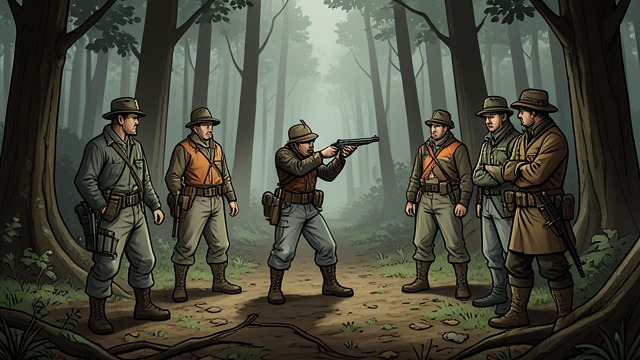
The Bear and the SingerThe Bear and the Singer from "The Last of the Mohicans". Performance and Belief Appearances manipulated Hawkeye and Uncas use animal costumes, while Hawkeye also impersonates David.
Performance and Belief Appearances manipulated Hawkeye and Uncas use animal costumes, while Hawkeye also impersonates David. The Hurons interpret what they see through familiar beliefs and expectations. Limits of deception The tricks work temporarily but leave David exposed when the substitution is discovered. False appearances can create freedom, yet they transfer danger to someone else.
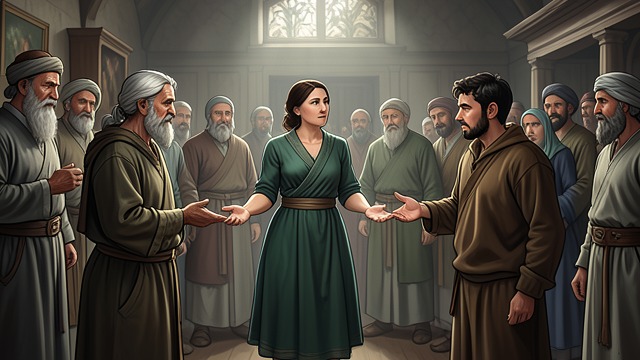
The Final DecisionThe Final Decision from "The Last of the Mohicans". Law Without Reversal Cora remains claimed Tamenund refuses to withdraw his decision after Cora rejects Magua and Hawkeye offers an exchange.
Law Without Reversal Cora remains claimed Tamenund refuses to withdraw his decision after Cora rejects Magua and Hawkeye offers an exchange. The ruling remains authoritative even when its emotional cost is unmistakable. The need for action The Delawares later mobilize after the truce expires. Their conduct suggests that formal justice may settle a hearing without settling the conflict that produced it.
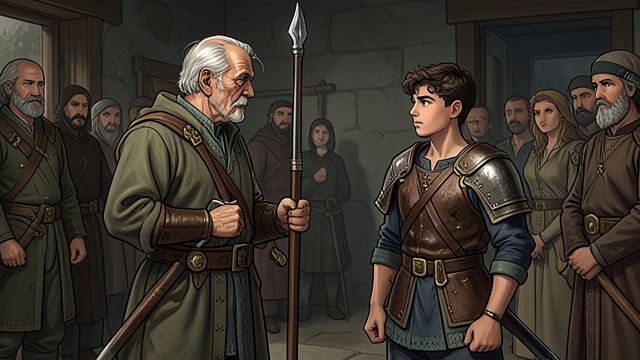
A Mixed Alliance in ArmsA Mixed Alliance in Arms from "The Last of the Mohicans". Cooperation in Pursuit Distinct roles Uncas leads the Delawares, Hawkeye commands a group of warriors, and Duncan chooses to serve as a volunteer.
Cooperation in Pursuit Distinct roles Uncas leads the Delawares, Hawkeye commands a group of warriors, and Duncan chooses to serve as a volunteer. Their alliance respects differences in rank and culture. Common purpose The pursuit of Magua gives these varied people a shared objective. Cooperation does not erase earlier suspicion, but it converts personal loyalties into a collective effort.
The False Healer’s StoryThe False Healer’s Story from "The Last of the Mohicans". A Lie Built to Fit The relatives misdirected Duncan claims the illness has been contained in the mountain and that the woman must be taken away.
A Lie Built to Fit The relatives misdirected Duncan claims the illness has been contained in the mountain and that the woman must be taken away. The explanation draws on the Hurons’ existing fear of a supernatural cause. A temporary passage The story persuades the crowd long enough for the rescuers to leave. Its success depends on matching a lie to what the listeners already expect to be true.
Night of August 9, 1757
Before the sisters leave the fort
Before the surrender march
Morning of August 10, 1757
During the violence on the plain
During the massacre on the plain
In the narrator's reflection after the massacre
Three days after the fort's capture
At sunset during the search party's return
During the search at the edge of the plain
During the first night in the ruined fort
During the night at the ruined fort
Before sunrise on the morning after the search
At dawn in the lake narrows
At the spring along Magua's trail
after Magua persuades the Hurons to condemn Uncas
during Magua’s speech after Uncas is recognized
after the father of the condemned Huron leaves the council lodge
Late on the first night in the ruined fort
when Magua recognizes Uncas as Le Cerf Agile
during his first conversation with the Huron chiefs
when the Huron chief requests a healer
after David’s confused message points toward another chamber
during Magua’s attempt to leave the cavern
before Magua visits, during the French campaign
When he rejoins the rescuers at the beaver pond
During the journey north from William Henry
After David reveals where Alice is held
As Heyward departs for the Huron lodges
during his morning visit to the Delaware camp
During the discussion of the Oneida's identity
When David describes the neighboring community
during the Delaware rifle contest
during Uncas’s threatened execution before the Delaware assembly
at sunrise, as the Delaware assembly begins
during the Delaware assembly’s contest over Hawkeye’s identity
during the Delaware assembly, when Magua accuses Hawkeye
during the assembly, after the tortoise tattoo is recognized
during Cora’s appeal, when she asks Tamenund about his people’s history
during Cora’s appeal to Tamenund
after Magua asks to reclaim the prisoners
during Uncas’s threatened execution
after Tamenund names Uncas as heir
after his lineage is recognized in the Delaware assembly
when Cora kneels before Tamenund after the first ruling
after Uncas is accepted and brought before Tamenund
after Magua leaves and Uncas calls the Delawares to arms
During the night watch at the ruined fort
After he learns Webb will not help
During the surrender negotiations
When Magua urges her to join his people
During the Huron council's deliberations
After the massacre, in the narrator's historical reflection
After the canoe chase, near nightfall
Before the massacre at William Henry
During Uncas's Huron council hearing
When the pursuers reunite with David
After the rescue party reaches the Huron country
At the search party's first trail halt
Before dawn after the first night at the ruins
when Duncan accepts the Huron chief’s request
during the cavern and prison escapes that night
near the end of the assembly, as Magua prepares to leave
after the Delaware war ceremony, as the force enters the forest
as Duncan and Hawkeye leave the cave with Alice