
Chingachgook and a Lost Homeland
The Last of the MohicansThis flow traces Chingachgook's recollection of Mohican dispossession and his effort to preserve his people's dignity through action and memory. This flow traces how stories of land, treaties, punishment, and warfare shape the characters’ understanding of present conflict.
increasing Bearing strength in each event
 decreasing
Bearing strength in each eventdecreasingThe Old Homeland
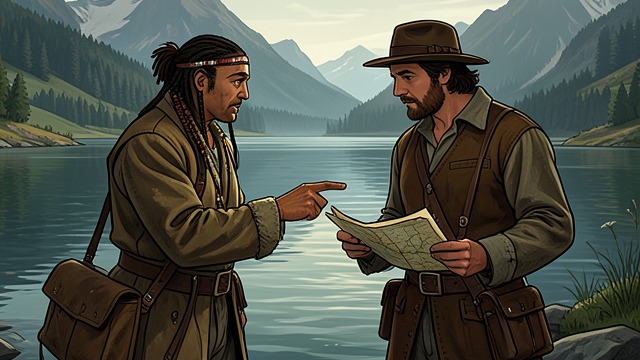
A People's Remembered Land
Ancestral Territory
Chingachgook recounts how his people came east, fought for their territory, and once lived from the lake, forest, and birds. His account describes belonging as a relationship with a sustaining landscape.
A Contested Past
Hawkeye listens but questions inherited stories and compares the histories of Native and European settlement. Their exchange makes clear that the two men interpret possession differently.
The conversation places the immediate war inside a much longer struggle over land and memory.
The Arrival of the Dutch
Contact and Dispossession
A Changed Relationship
Chingachgook remembers the Dutch arriving when the Mohicans were at peace. Trade in alcohol and the surrender of land begin a gradual displacement.
Loss by Degrees
He describes his people being pushed away from the shores until he can see the sun only through trees and cannot visit ancestral graves.
The recollection presents dispossession as a process of accumulated losses rather than a single battlefield defeat.
The Scattered Family
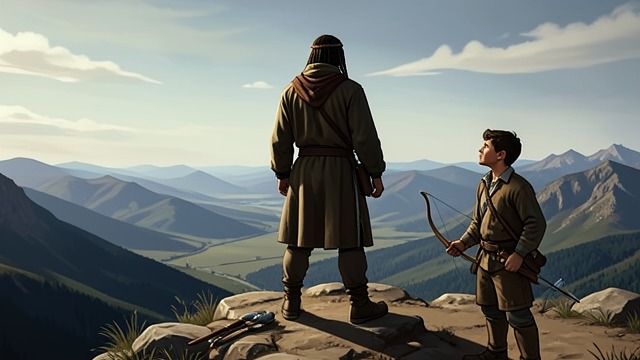
A Line Nearing Its End
Deaths Across Generations
Chingachgook says that the members of his family have departed one by one. His image of standing on a hilltop before descending into the valley makes aging feel like a final passage.
Uncas's Importance
He identifies Uncas as the last Mohican, giving his son's survival a collective significance. The young warrior inherits both a name and the burden of continuity.
The family conversation turns historical decline into an immediate, vulnerable future.
A Warrior's Defiance
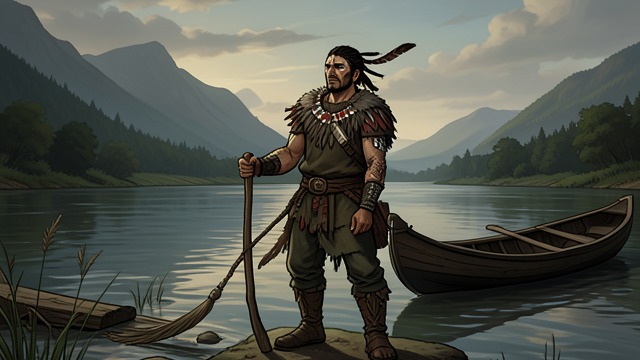
Dignity Under Threat
A Foreseen Defeat
With ammunition gone and the canoe lost, Chingachgook prepares for death rather than plead for safety. His composure reflects a warrior's discipline in the face of apparent capture.
Pride as Resistance
He recalls Hurons he has killed and challenges the enemy to come. His words reclaim agency even when the tactical situation is collapsing.
The scene contrasts physical defeat with the power to define one's own honor.
The Departure Downriver
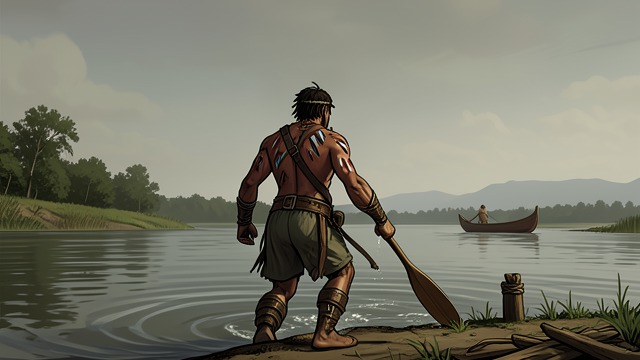
Survival for the People Left Behind
An Altered Decision
Chingachgook accepts Cora's argument that escape may preserve a chance to save the sisters. He puts away the weapons he had prepared to use in a last stand.
The Uncertain Passage
He enters the river and disappears from view. His movement changes the meaning of the earlier farewell: survival becomes an obligation to those still captive.
The account ends without showing whether he reaches help, leaving his personal and communal future open.
A Mohican Past
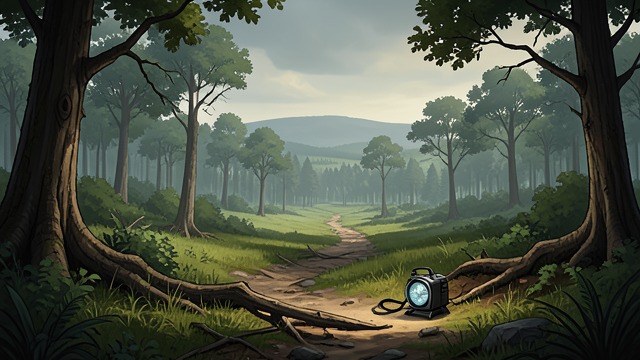
A Mohican Past
Former territory
Hawkeye describes the land once traveled by Chingachgook’s family and contrasts it with the narrow place left to them. The account makes dispossession part of the present journey.
Memory as inheritance
Uncas hears of a larger family and homeland than the one he can see. The wilderness contains evidence of continuity as well as loss.
The Blockhouse Treaty Story
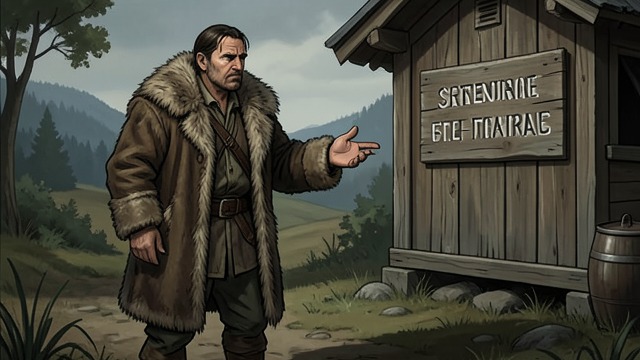
The Blockhouse Treaty Story
A disputed settlement
Hawkeye says an old arrangement weakened the Delawares and served the interests of Dutch settlers. He rejects the claim that the people who accepted the treaty were naturally pacific.
History contested
His account presents treaties as instruments imposed amid unequal power. The conversation reveals that even apparently settled political histories remain open to argument.
Magua’s Exile
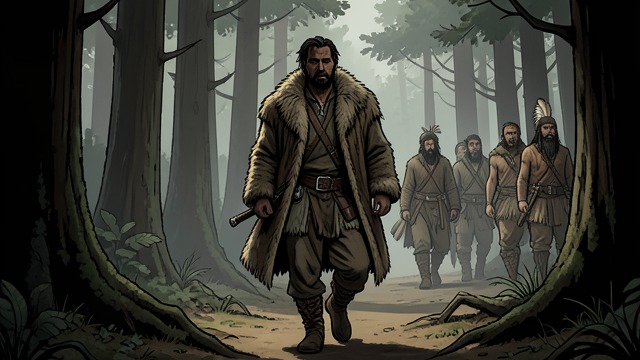
Magua’s Exile
Displacement and blame
Magua recounts being driven from his community and moving between Native groups after contact with white traders and soldiers. He links his life’s course to colonial intervention.
A grievance with consequences
His story exposes the harm of imposed changes but does not excuse his later violence against captives. The novel holds injury and personal responsibility in tension.
The Frontier Battlefield
The Frontier Battlefield
Repeated conflict
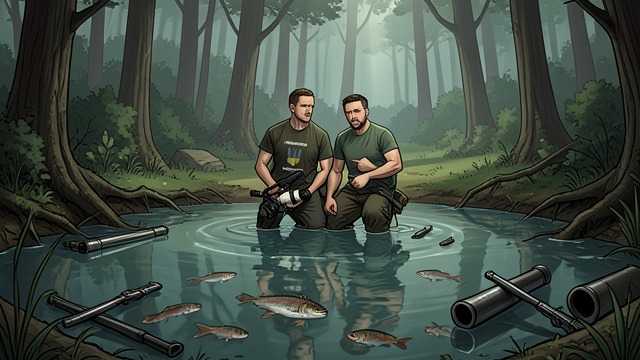
Hawkeye recalls battles between French and British forces and describes the pond as a grave for the dead. The landscape records military action long after the fighting ends.
Human cost beyond victory
The pond’s quiet surface contrasts with the violence buried beneath it. The frontier is not empty territory but a place repeatedly claimed through bloodshed.
A Small Surviving Lineage
A Small Surviving Lineage
Loss made personal
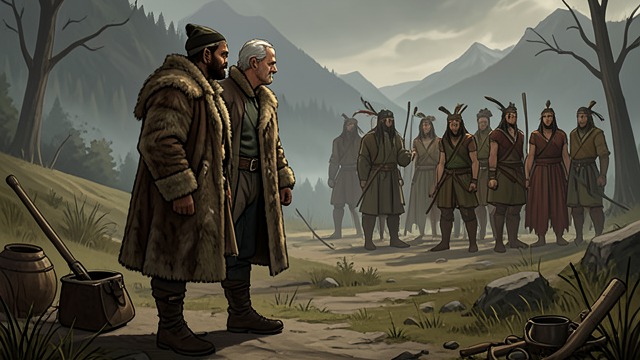
Hawkeye says only Chingachgook and he remain from an earlier group of companions. The Mohicans’ diminished numbers embody a wider history of displacement.
Survival without restoration
The rescue demonstrates strength and continuity, but it cannot restore lost relatives or territory. The living carry memory forward without undoing the forces that produced their losses.
During the streamside conversation before the travelers appear
In Chingachgook's recollection of the earliest European settlement
At the close of Chingachgook's account, before Uncas speaks
During the last phase of the battle at the falls
Moments after Cora persuades the defenders to seek help
During Chingachgook’s account of the old war
After the fugitives stop at the ruined fortification
During his private conversation with Cora
As the party passes the bloody pond
After Hawkeye names the few remaining Mohicans
