
Hawkeye’s Wilderness Leadership
The Last of the MohicansThis flow follows Hawkeye’s judgment as he protects the fugitives, reads the land, and guides them toward the fort. This flow follows David Gamut's reliance on psalmody as identity, consolation, and an imperfect response to a world increasingly governed by violence. This flow traces how David's songs briefly create fellowship and meaning before the violence around the cavern silences them. This flow follows the decline of Heyward's formal authority as local knowledge, danger, and shared vulnerability determine who can lead.
increasing Bearing strength in each event
 decreasing
Bearing strength in each eventdecreasingThe Royal Officer
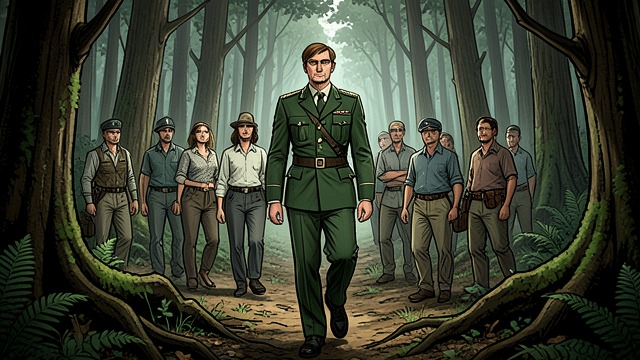
Authority from the Army
Heyward's Position
Heyward serves as a major and is responsible for the sisters' escort. His rank gives him authority within the British military structure.
A Different Environment
The forest is not a parade ground, and its threats do not obey military hierarchy. The journey will demand knowledge that rank cannot supply.
The contrast establishes the limits of formal command before it is challenged.
Magua's Control of the Route
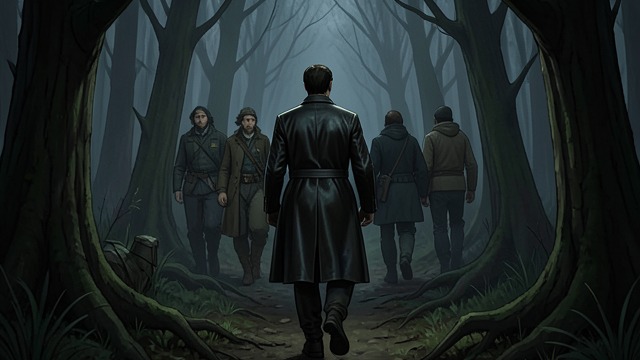
Authority Delegated
The Officer's Choice
Heyward entrusts direction to Magua because he believes the runner knows a faster route. The officer's decision gives practical authority to a man whose allegiance he has not verified.
A Vulnerable Command
Once the path becomes unfamiliar, Heyward cannot easily correct the guide. Military rank does not provide the knowledge needed to navigate the woods.
The delegated power becomes dangerous when trust proves misplaced.
Hawkeye's Conditions
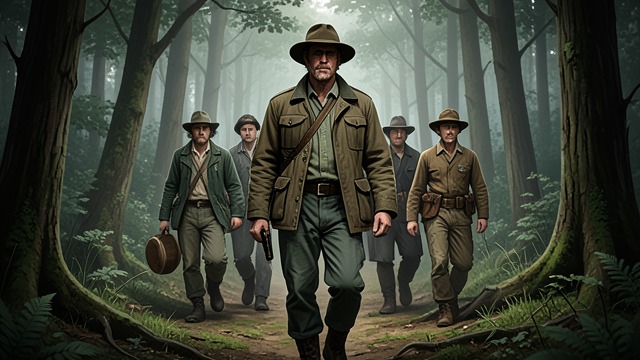
Leadership Through Competence
A New Guide
Hawkeye takes charge because he understands the forest and the pursuing enemy. He requires the party to stay silent and conceal the refuge.
Rank Becomes Secondary
Heyward agrees to follow the hunter's instructions and seeks no privilege beyond the safety of his companions. The party accepts leadership on the basis of skill.
The forest replaces official authority with practical competence.
The Officer Saved by Uncas
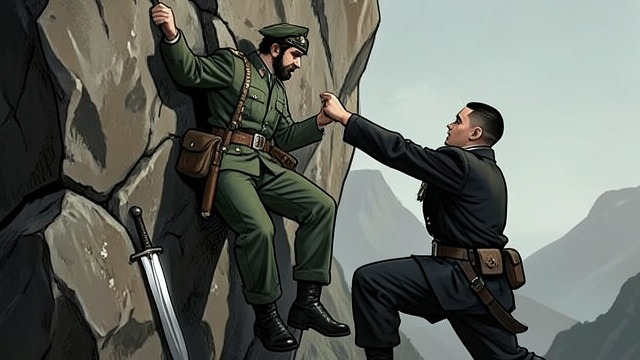
Command Reversed
A Broken Sword
Heyward's weapon fails in the struggle, and he is nearly thrown from the precipice. His military training does not make him invulnerable.
A Mohican's Intervention
Uncas saves him, and Heyward recognizes the debt. Authority gives way to gratitude between two young men who have fought on the same side.
The rescue makes competence and courage more decisive than rank.
No Order Can Decide
Command Meets Moral Ambiguity
Heyward's Impasse
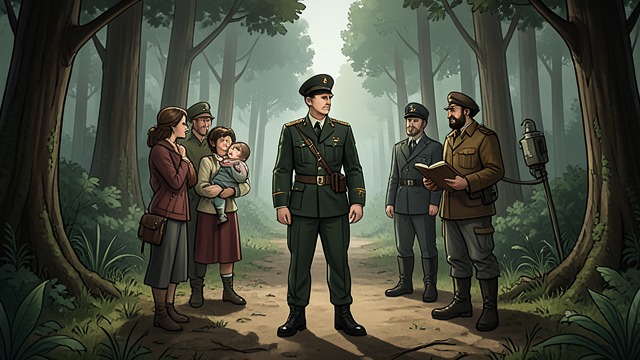
Heyward wants to remain with the sisters, but Cora argues that he should escape to seek help. Neither course is an easy fulfillment of his duty.
Authority Without Certainty
His commission cannot tell him how to balance immediate protection against future rescue. The excerpt ends before he chooses.
The crisis exposes a form of leadership that depends on judgment rather than orders.
The Singing Master
A Calling in Uniformed Company
An Unmilitary Profession
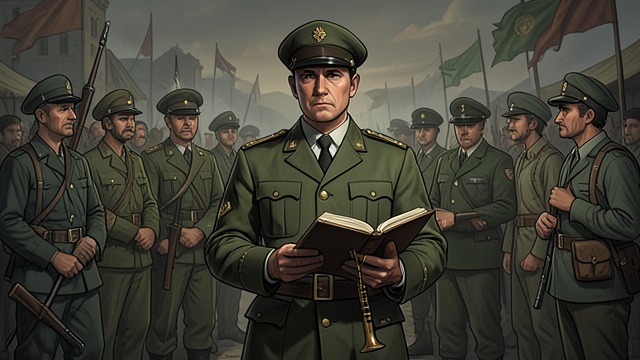
David Gamut appears among soldiers and travelers carrying a psalm book and pitch pipe. He identifies himself as a teacher of sacred music rather than a fighter or scout.
A Comic Contrast
His earnest devotion and ungainly manner set him apart from the military men around him. Yet Alice values his company and persuades Heyward to let him join.
His harmless appearance will soon be tested by a setting in which quietness is protective.
The Pitch Pipe
A Portable Vocation
Sacred Music
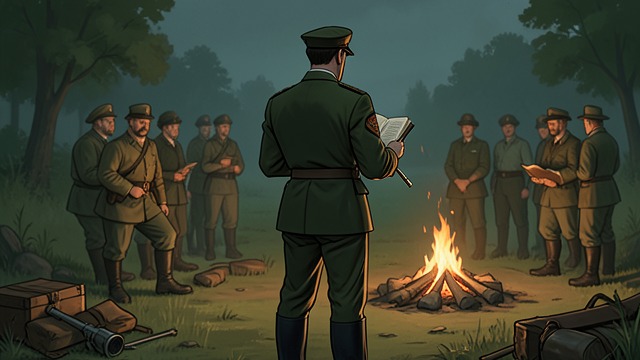
David carries a psalm book and pitch pipe, treating music as the calling for which he was made. He refuses to identify himself as a soldier or guide.
Social Difference
His earnestness amuses Alice and irritates Heyward, who worries about noise. David's musical identity sets him apart from the demands of the military expedition.
The objects he carries make a private religious world portable in the wilderness.
Music on the Trail
A Song Against Silence
Public Psalmody
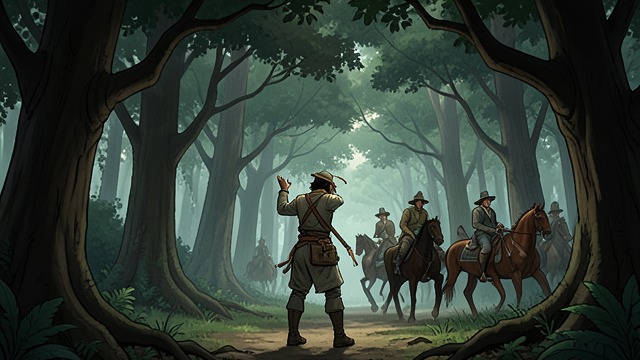
David begins singing as the party rides through the woods. Heyward warns that noise may reveal their position, while Alice enjoys the performance.
A Failed Measure of Safety
David treats music as a spiritual gift to use rather than hide. In a dangerous landscape, however, his sincerity conflicts with the need for concealment.
The episode foreshadows the risk of confusing devotion with practical protection.
Grief for the Foal
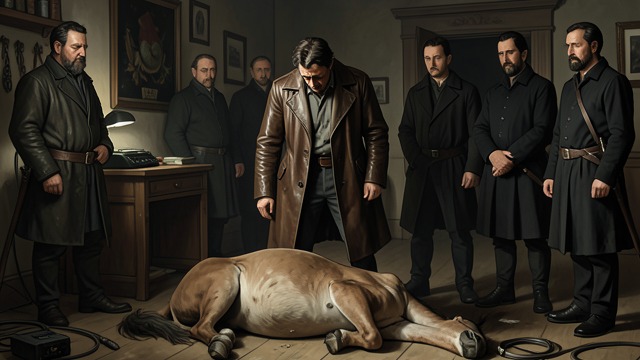
Compassion Under Pressure
A Protest Against Necessity
David objects when Hawkeye orders the foal killed to conceal the party's trail. He regards the animal as innocent and resists treating it as expendable.
Faith and Loss
After the killing, he sings of divine judgment and accepts the event through religious language. His piety gives grief a vocabulary but cannot undo the act.
The episode places humane feeling in tension with survival tactics.
The Cavern Hymn
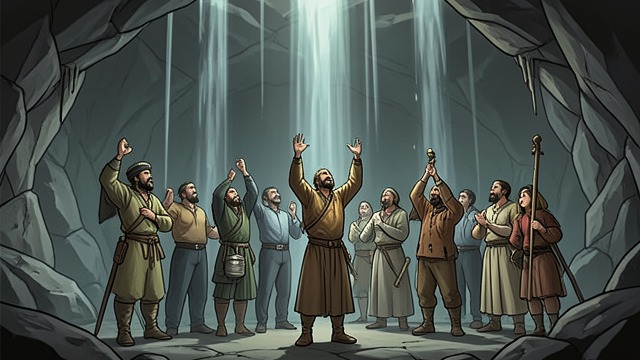
A Moment of Communion
The Evening Song
David leads Alice and Cora in a hymn inside the cavern. The music changes the atmosphere and recalls a world beyond the immediate danger.
A Shared Response
The Mohicans listen, and Hawkeye is moved to tears by memories of similar music in his youth. David's art briefly connects people otherwise divided by language and experience.
The hymn creates a fragile community before the next cry breaks its calm.
The Voice Silenced
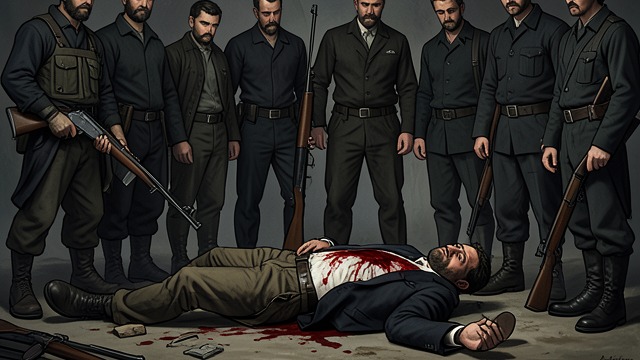
The Cost of Exposure
A Fatal Misreading
David rises during the attackers' cries and asks what has happened. His exposed body draws rifle fire, and he falls unconscious.
Music Cannot Shield Him
Hawkeye judges that David's long tongue has nearly cost him his life and carries him to cover. The singer survives the immediate attack, but his usual means of self-expression has no power against bullets.
His fate beyond the opening siege remains unknown in the supplied narrative.
A Song in the Forest
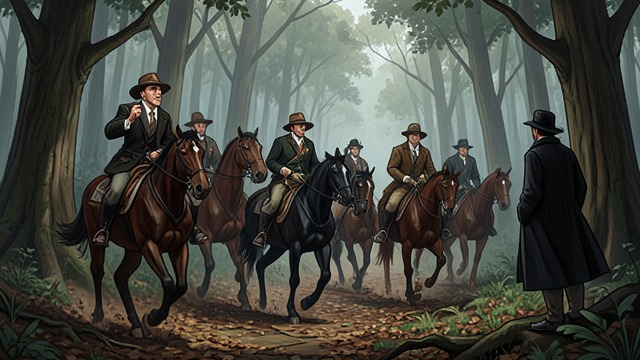
Sound Without Shelter
Unwanted Performance
David sings while the party rides a concealed path. Heyward asks him to stop because the sound may alert hidden enemies.
Art and Prudence
Alice values the music, but the practical danger supports Heyward's caution. David struggles to see why a spiritual gift should be restrained.
The scene introduces the conflict between expressive devotion and tactical silence.
The Psalm of Loss
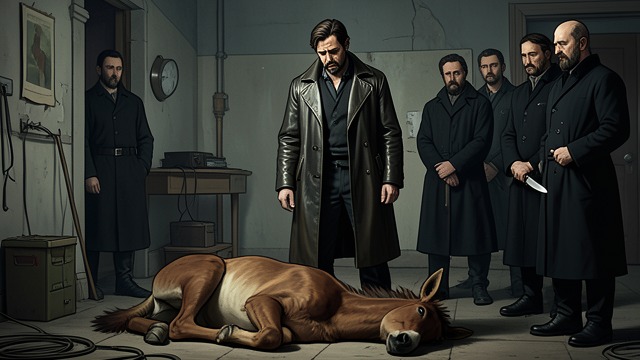
A Religious Answer to Grief
A Mourned Animal
David laments the foal, whose death was ordered to protect the party. He sees the loss through the creature's innocence and his own attachment.
Meaning Through Scripture
He sings of the firstborn of Egypt and treats the event as part of a providential order. His explanation comforts him more than it resolves the group's moral discomfort.
Music gives him a way to process loss without changing the necessity that caused it.
The Shared Hymn
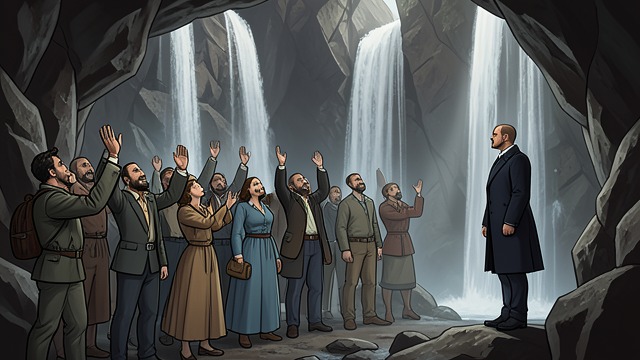
A Brief Common Ground
Voices Together
David leads Alice and Cora in a hymn suited to the cavern. Their voices mingle with the sound of the falls and create a moment of quiet.
The Listener Changed
Hawkeye is moved by memories of music from his youth, and the Mohicans listen intently. The performance connects people who otherwise occupy very different worlds.
The emotional fellowship lasts only until a strange cry interrupts it.
The Broken Melody
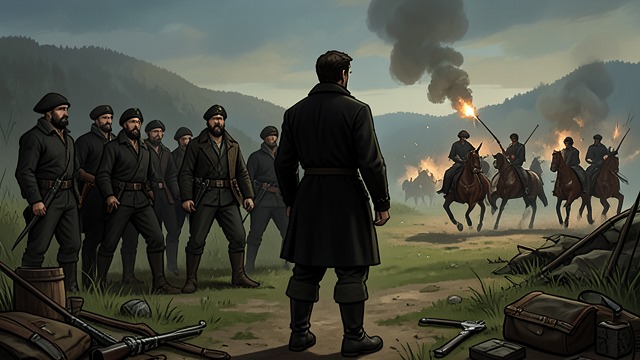
The Limits of Song
A Dangerous Exposure
David stands during the attackers' cries and is hit by rifle fire. His confusion about the noise exposes him to a threat the music cannot explain away.
Silence After the Attack
The defenders move him into cover, and his hymn is replaced by gunfire and shouted warnings. He begins to recover, but no later outcome is given.
The interruption shows how quickly the refuge's fragile culture of song yields to combat.
The Waiting Ambush
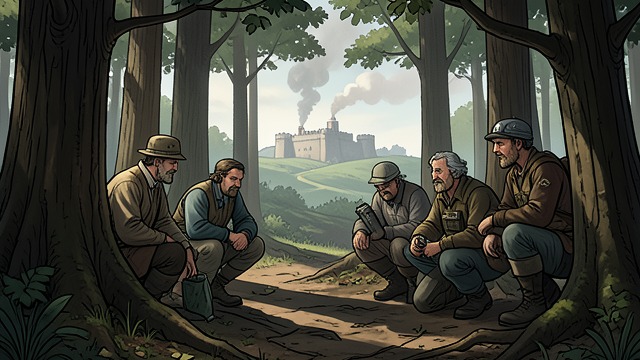
The Waiting Ambush
Choosing concealment
Hawkeye’s party hides near the Hudson rather than rushing blindly toward the fort. The scout understands that the Hurons may reveal their destination through movement and sound.
Restraint as skill
Uncas presses to act, but Hawkeye keeps him concealed. Their patience gives them a chance to follow the captives after the search party departs.
The Horse Tracks
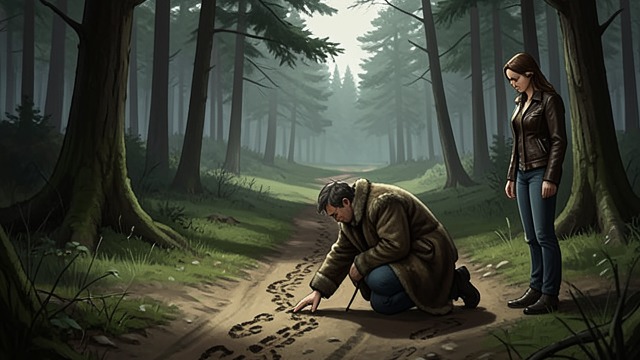
The Horse Tracks
An unfamiliar sign
The trail lacks the expected broken twigs, and the prisoners’ footwear resembles that of the Hurons. Hawkeye recognizes that ordinary tracking has been frustrated.
Uncas’s correction
Uncas identifies the distinctive movement of the horses and helps restore the route. Hawkeye accepts evidence that comes from another hunter’s expertise.
The Silent Spring
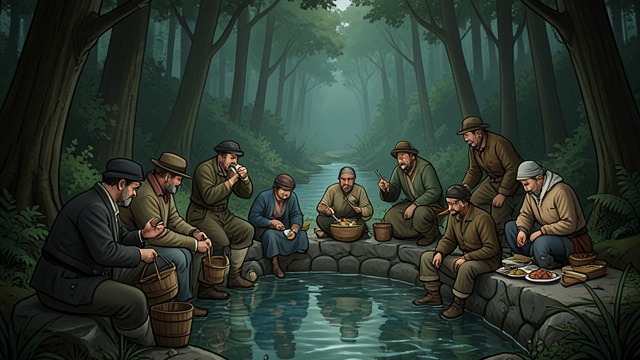
The Silent Spring
A place of rest
Hawkeye leads the party to a secluded spring and arranges food and water after the battle. The pause lets the exhausted survivors recover before the next march.
Practical leadership
His attention moves from combat to bodily needs, supplies, and the route ahead. Careful preparation sustains the group through continued danger.
The Blockhouse Watch
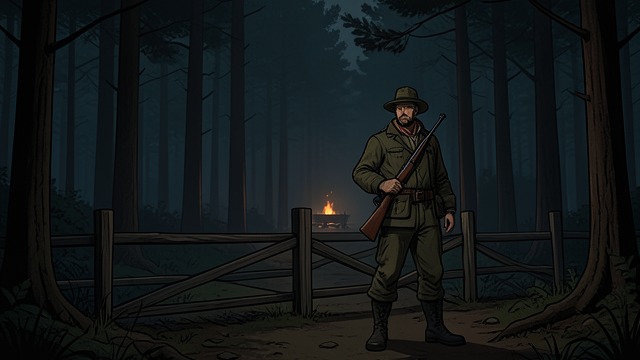
The Blockhouse Watch
A veteran’s judgment
Hawkeye rejects Heyward’s offer to stand watch, arguing that wilderness vigilance requires skills the soldier lacks. Chingachgook takes the sentinel’s post instead.
Confidence and risk
The decision protects the party by relying on specialized knowledge, though Heyward secretly tries to stay awake. The approaching pursuit soon tests the refuge.
The Fog Crossing
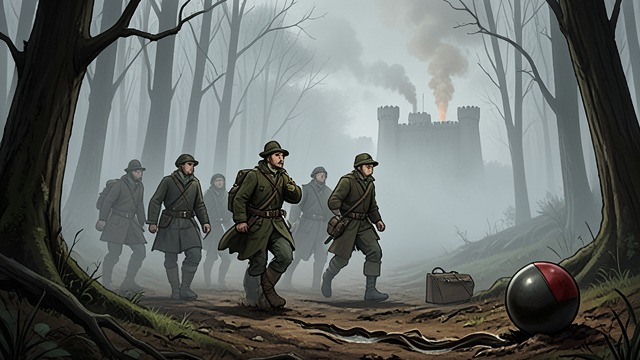
The Fog Crossing
Improvised navigation
Hawkeye uses a cannonball’s furrow as a guide when fog obscures the route. French patrols fire as the party struggles to distinguish the fort from the enemy lines.
A narrow correction
The group briefly moves in the wrong direction, then turns when the fort’s guns reveal their position. Hawkeye’s leadership depends on adapting quickly under pressure.
At the start of the journey from Fort Edward
Morning, after leaving the main road
At dusk, after Magua escapes
During the close fight on the island
After the canoe is stolen, as the defenders consider escape
At Fort Edward, before the party departs
At Fort Edward, before the journey begins
Early in the journey, before Hawkeye warns the party
After sunset, during the flight toward the river
Night, after supper at Glenn's Falls
At dawn, during the first gunfire on the island
Early in the journey, before Magua's betrayal is exposed
After sunset, following the death of the foal
Night, after supper in the hidden cavern
At dawn, when the Hurons attack the island
While the Hurons are searching the island
During the pursuit after the captors leave the island
After the rescue, during the first halt below the hill
That evening at the ruined blockhouse
At dawn, when the group attempts to reach William Henry
