
Fear, Rumor, and Reality
The Last of the MohicansThis flow follows how wartime fear shapes the travelers' expectations, is corrected by practical evidence, and then returns as real violence. This flow traces how the forest is presented as a place of beauty, political contest, ancestral memory, and danger. This flow traces how the opening presents colonial warfare as a conflict that consumes lives, distorts judgment, and rests on disputed claims to land.
increasing Bearing strength in each event
 decreasing
Bearing strength in each eventdecreasingA Landscape in Contention
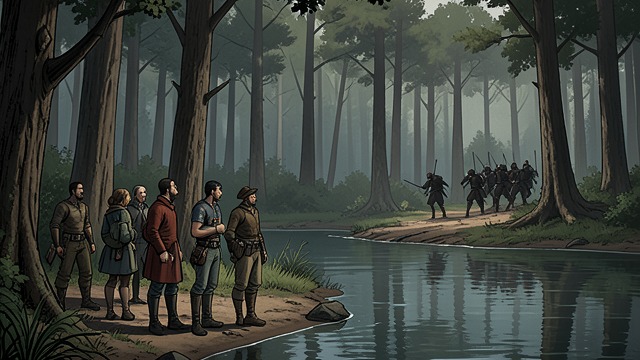
Wilderness and Empire
Natural Routes
Lakes, rivers, and portages shape military movement between the French and British territories. The landscape offers strategic passages that both empires seek to control.
Indigenous Names
The introduction emphasizes that European names displaced Native names for places. Even the geography bears the history of competing claims.
The setting is not neutral scenery but a record of occupation and struggle.
European Policy in the Woods
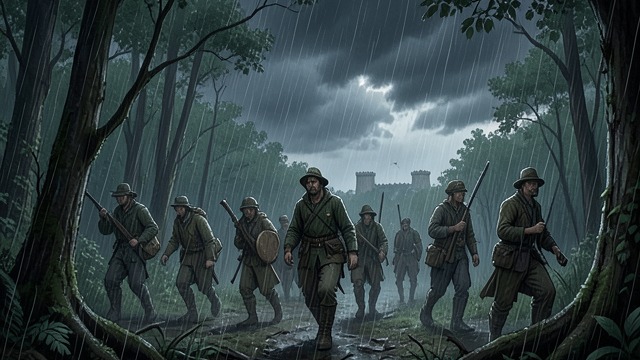
Empires at a Distance
Distant Decisions
The narrative describes colonists risking their lives to support the policies of European monarchs. Soldiers must cross wilderness for objectives determined far from the frontier.
Local Consequences
The region becomes a bloody arena where forts are repeatedly taken, rebuilt, or abandoned. Local inhabitants bear the costs of a contest neither European power is destined to retain.
The opening frames military service as participation in an imperial struggle with unstable rewards.
Fear After Defeat
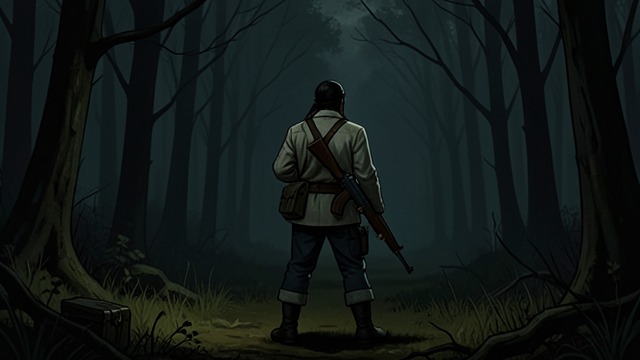
The Spread of Anxiety
Remembered Losses
British defeat leaves the frontier exposed and makes reports of massacre especially powerful. Fear magnifies dangers and weakens confidence.
Conduct Under Pressure
The narrative warns that terror can make people servants of their basest passions. Heyward's journey begins in an atmosphere where fear may shape judgments before evidence arrives.
The psychological cost of war extends beyond the battlefield.
The Dispossessed Mohicans
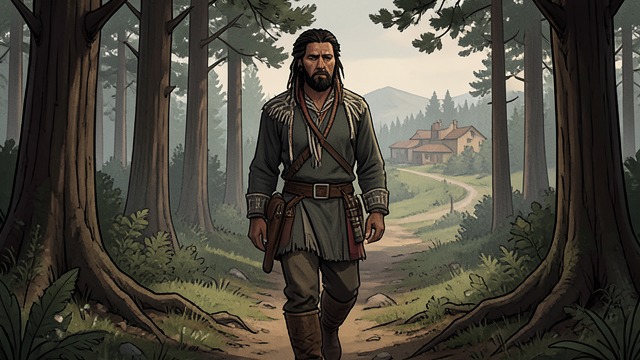
The War Before the War
Land Taken in Stages
Chingachgook recalls settlement, alcohol, and forced retreat from the Mohican homeland. His history complicates the British claim to defend a rightful frontier.
A Living Loss
His inability to visit ancestral graves gives colonial expansion a personal and continuing cost. The present war takes place on ground already shaped by earlier dispossession.
The narrative asks readers to see the frontier from the perspective of those pushed away from it.
Violence as Necessity
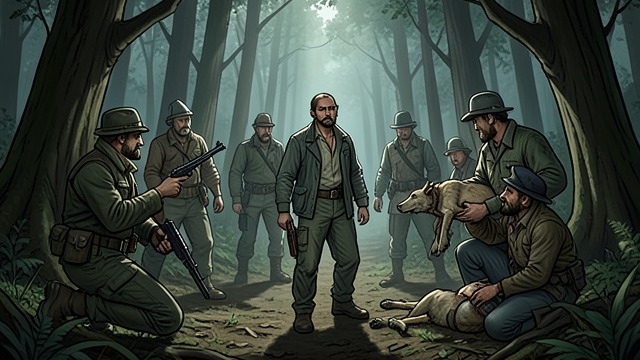
Survival's Brutal Logic
Harm to Avoid Greater Harm
The foal is killed to protect the party's trail, and attackers are killed in defense of the refuge. Tactical necessity offers reasons for violence but does not erase its cost.
Moral Unease
David mourns the animal, Heyward pities a trapped enemy, and Hawkeye weighs mercy against scarce ammunition. The characters do not experience violence as emotionally simple.
The forest war repeatedly forces them to accept acts they would not choose in safety.
A War Without Resolution
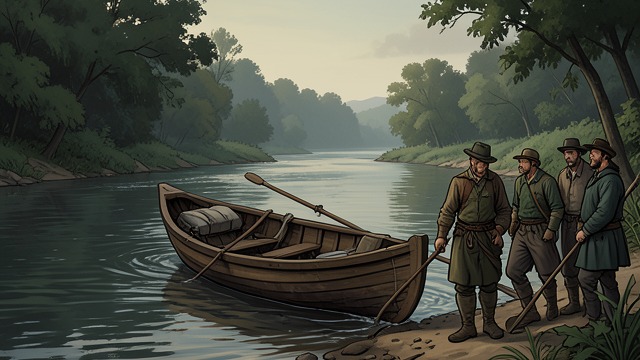
Consequences Still Unfolding
A Broken Refuge
The canoe is gone, the attackers remain a threat, and the party is divided between those escaping and those left behind. No stable victory has been achieved.
An Uncertain Future
The larger campaign, the sisters' safety, and the Mohicans' survival remain unresolved in the supplied account. The opening shows the war's power to disrupt lives before revealing any settlement.
The conflict's moral and personal costs are left active rather than neatly concluded.
A Frontier Afraid
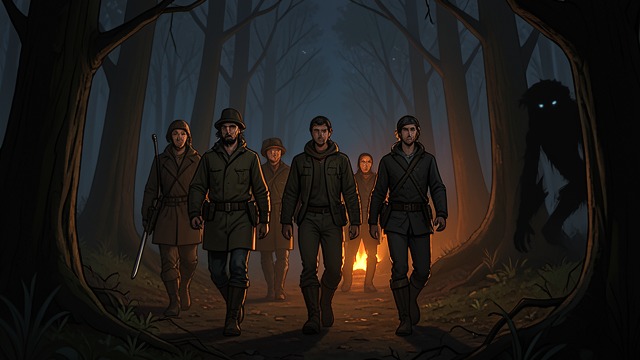
Fear Before Contact
Recent Defeats
British colonists remember the loss of earlier battles and imagine danger spreading through the forests. Rumors of massacre make even distant threats feel immediate.
Reason Distorted
The narrative describes fear growing beyond what evidence can support. Anxiety makes people vulnerable to prejudice and poor judgment.
The party begins its journey in an atmosphere already shaped by imagined catastrophe.
Alice's Fear of Magua
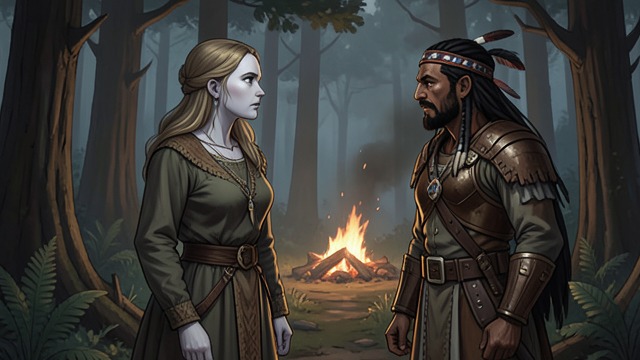
Fear Attached to a Face
Anxious Interpretation
Alice sees Magua as frightening and wants Heyward to test his voice. Her fear expresses a broader colonial expectation that a Native guide may be dangerous.
Cora's Correction
Cora challenges judging a person by skin or unfamiliar customs. Her argument offers a principle of fairness, though it cannot determine Magua's true intent.
The scene distinguishes prejudice from legitimate caution without allowing either to settle the question.
The False Supernatural Cry
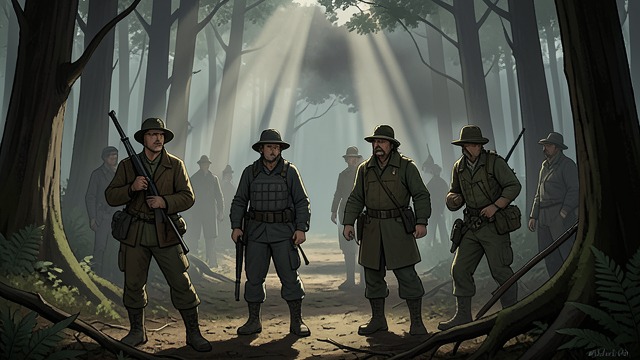
Imagination Under Strain
An Unfamiliar Sound
A cry from outside seems unhuman and overwhelms the party's understanding. Even Hawkeye doubts his long experience of forest sounds.
Evidence Restores Scale
Heyward identifies the sound as his suffering horse, and the group recognizes that fear had magnified the mystery. The correction restores practical attention without making the situation safe.
The episode shows how terror can turn an ordinary sound into a supernatural threat.
The Real Attack
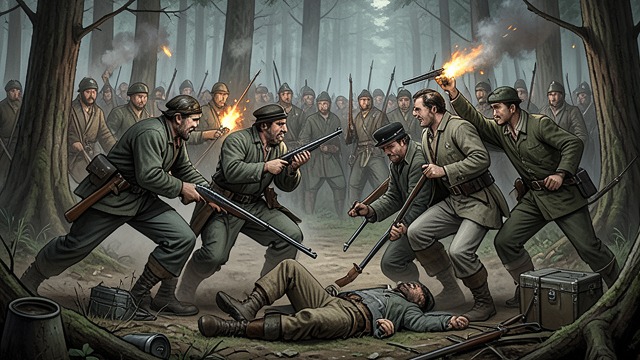
Fear Becomes Fact
Violence Arrives
The Hurons attack, and the party's fears are no longer merely projections. David falls under fire, and the defenders must fight for survival.
No Comfort in Being Right
The earlier dread may have prepared the travelers to recognize danger, but it cannot protect them from the assault. Their actual predicament is more specific and demanding than rumor.
The narrative contrasts imagined threat with the physical reality that follows.
Uncertainty After Battle
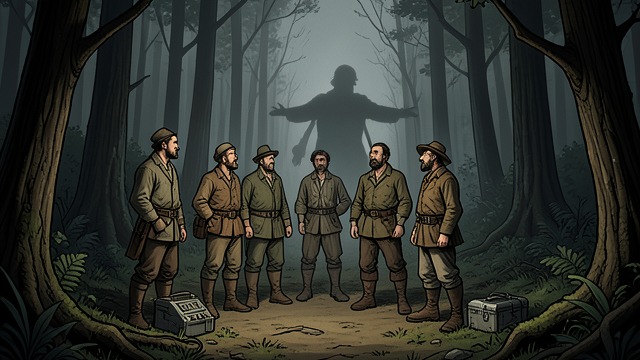
Fear Without Resolution
An Unseen Enemy
The Hurons withdraw from immediate view, but the defenders know they may return. Silence offers no reliable proof that danger has passed.
Hope Kept in Check
Heyward hopes help may arrive, while Hawkeye expects another attack. Both responses arise from uncertain evidence rather than certainty about the future.
The supplied narrative ends with danger still present and fear unresolved.
The Forest's Quiet
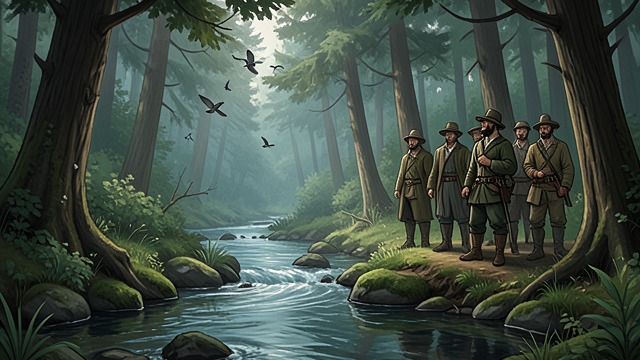
Beauty Before Violence
A Living Environment
The stream, trees, birds, and distant waterfall create a scene of stillness beneath the summer heat. The foresters hear details that travelers overlook.
A Fragile Calm
The quiet is interrupted by the possibility of human movement and hidden enemies. Nature's beauty does not exclude danger; it makes the coming violence more striking.
The forest holds peaceful life and wartime threat in the same space.
The Falls' Changing Shape
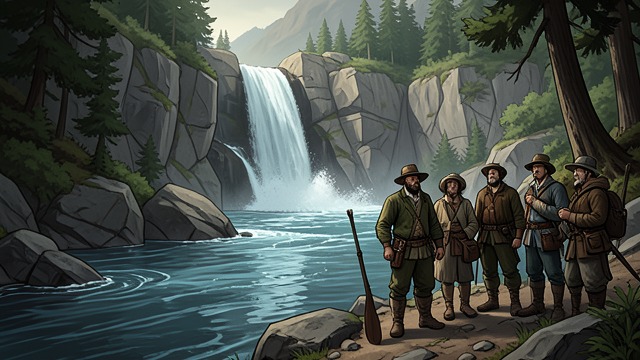
Nature Beyond Human Design
Water Reworks Stone
Hawkeye describes the river carving through soft limestone and shifting the falls from their former shape. The landscape is continually altered by forces larger than human plans.
A Lesson in Order
He sees the river as temporarily unruly but ultimately gathered back toward the sea. His description blends observation with a providential sense of order.
The falls become an image through which the characters interpret change and danger.
The River as a Battlefield
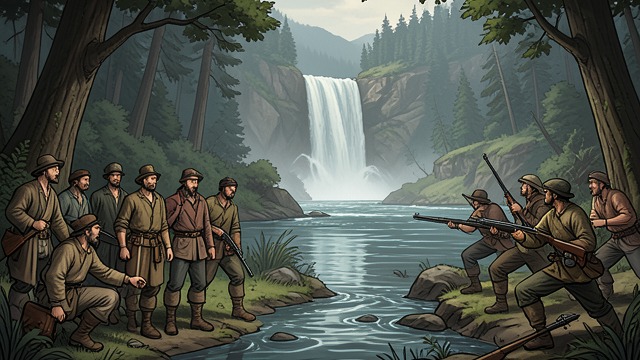
Terrain Shapes Combat
Dangerous Access
The current and waterfall make some approaches impossible and others unexpectedly usable. One attacker is swept to his death, while others use the river to reach the defenders.
Uneven Protection
The rocks shelter the party but also confine it. The same natural formations that prevent an easy assault limit the defenders' escape.
The battle demonstrates that the landscape favors no side consistently.
The Waters Carry the Survivors
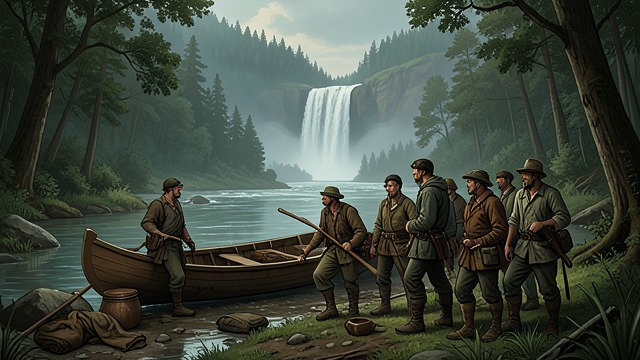
A Route into Uncertainty
Water as Escape
Cora urges the Mohicans to use the river to avoid capture and carry word to Munro. Their departure turns the current from obstacle into a possible path to rescue.
No Guaranteed Arrival
The river has already taken the canoe and threatened swimmers with the falls. The men disappear from view, and the narrative does not confirm their safety.
Nature remains a force that can preserve or destroy the possibility of reunion.
At the opening of the account of the 1757 campaign
At the opening of the 1757 narrative
Before Montcalm reaches the British frontier
During Chingachgook's account of his ancestors
From the foal's death through the island combat
At the close of the opening siege
Before the party's departure, amid reports of Montcalm's advance
Early in the journey, as the party enters the thicket
Night, during the hymn in the cavern
At dawn, when rifles flash across the island
After the canoe vanishes and the attackers pause
Late afternoon, before the party reaches Hawkeye
Night, while Hawkeye explains the caverns to the travelers
During the attack, when Hurons swim toward the island
At the end of the siege, as the Mohicans descend the river
