
The Cost of Survival
The Last of the MohicansThis flow examines how the need to protect the party forces increasingly painful choices, from concealing the trail to debating who should risk escape. This flow traces how speech, silence, and interpretation shape alliances in a forest where characters cannot rely on appearances alone. This flow traces competing appeals to honor, from military resistance to personal revenge and the uneasy judgments of the survivors. This flow traces how politeness, language, and ceremony conceal danger during encounters between enemies.
increasing Bearing strength in each event
 decreasing
Bearing strength in each eventdecreasingAmmunition as Time
Scarcity Shapes Conduct
Deliberate Fire
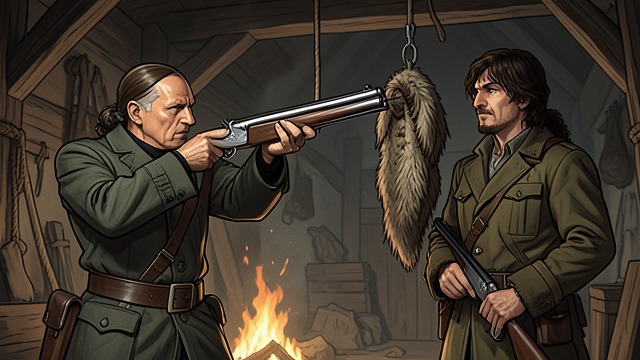
Hawkeye cautions Uncas against wasting powder and insists on aiming carefully. Every shot is valuable because no resupply is available inside the refuge.
Mercy in Doubt
A Huron hangs from a tree above the water. Hawkeye hesitates between ending the man's suffering and conserving his last bullet, then fires as the victim falls.
The limited supply turns mercy, tactics, and survival into competing claims.
The Foal's Death
Innocence Sacrificed
A Tactical Demand
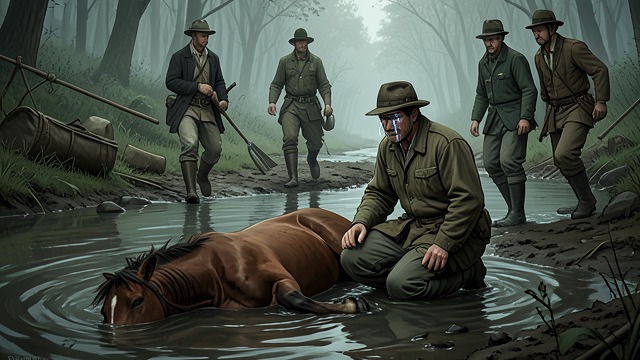
Hawkeye concludes that the foal must die so its noise and trail will not expose the party. David pleads for the animal, calling attention to its innocence.
A Harsh Calculation
Chingachgook kills the foal, and the travelers continue into the river. The act preserves the group's chance to hide but leaves David grieving and the sisters shaken.
Survival here requires a choice that remains emotionally costly even when it is strategically defensible.
The Cry Misread
Meaning in the Dark
An Unexplained Sound
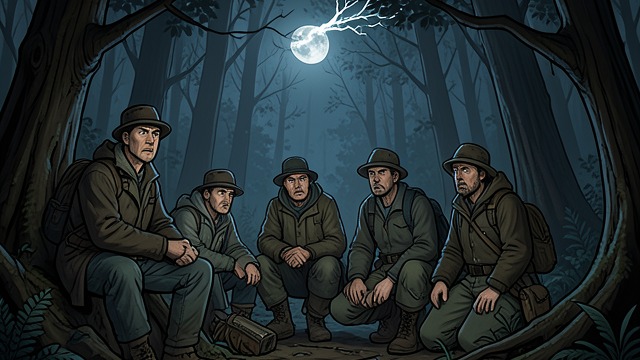
A strange cry interrupts the singers, and the experienced woodsmen cannot identify it. Their inability to explain the sound unsettles the travelers.
Correction Through Listening
Heyward recognizes the cry as a horse in pain, and the others revise their interpretation. Attention to evidence replaces a supernatural explanation.
The episode shows that even seasoned observers can be mistaken when fear fills gaps in knowledge.
Magua’s Injured Honor
Magua’s Injured Honor
Humiliation remembered
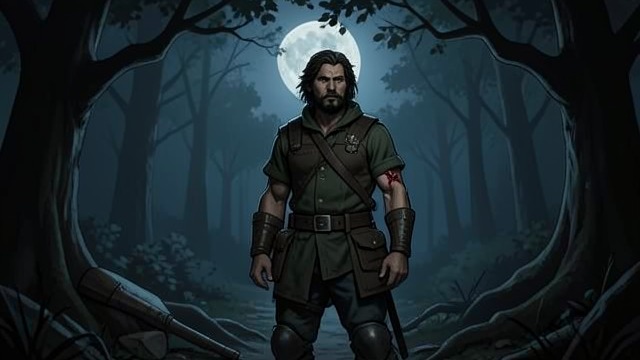
Magua distinguishes wounds earned in combat from punishment he believes degraded him. He sees revenge as a restoration of the honor taken from him.
Justice distorted
His grievance includes genuine injury but becomes justification for coercing innocent captives. The narrative separates the reality of a wound from the morality of retaliation.
The Huron Appeal
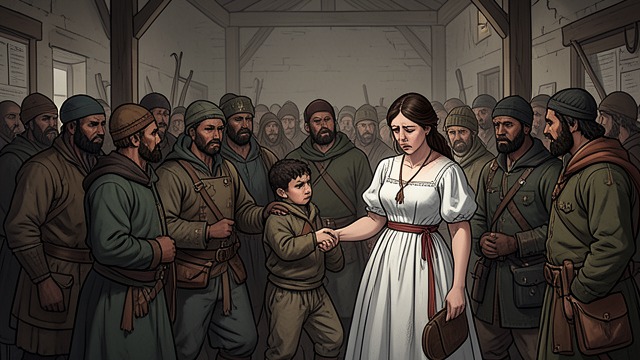
The Huron Appeal
Collective reputation
Magua argues that the band cannot return without answering the deaths of its warriors. He invokes the judgment of widows, mothers, and elders.
Honor mobilized
The appeal moves the Hurons toward violence by making restraint appear shameful. A shared value becomes a tool for directing the crowd against helpless prisoners.
Magua’s Calm Mask
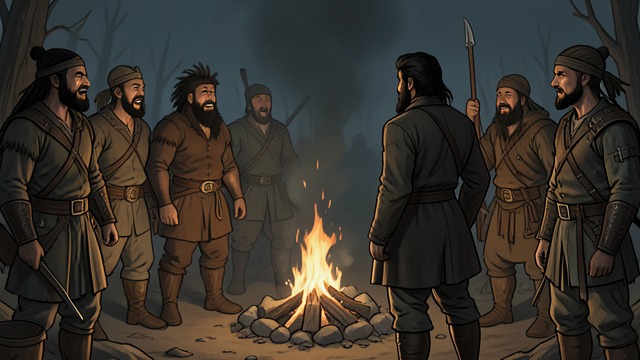
Magua’s Calm Mask
Controlled appearance
Magua stands apart from the excited Hurons with a quiet, satisfied demeanor. Heyward reads his calmness as evidence of a successful betrayal.
Politeness’s opposite
The measured exterior conceals a hostile purpose. The scene prepares for later conversations in which apparent civility also masks pressure.
Heyward’s False Courtesy
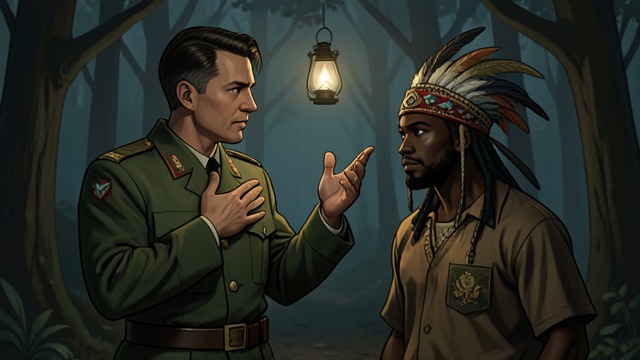
Heyward’s False Courtesy
Praise as strategy
Heyward flatters Magua and promises medals, money, powder, and drink. He presents the offer as recognition of the Huron’s supposed plan to return Munro’s daughters.
Persuasion misfires
The speech briefly captures Magua’s attention but cannot erase his grievance. Courtesy becomes a tactical performance whose limits Heyward does not understand.
French at the Pond
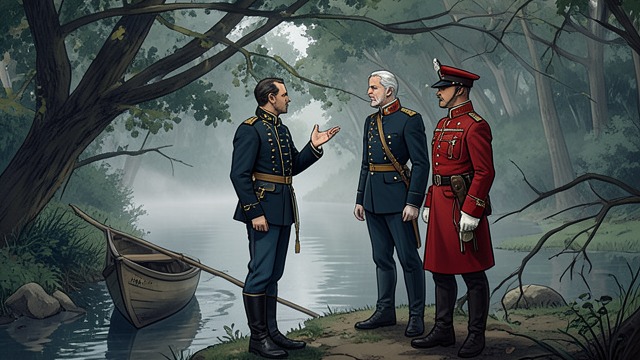
French at the Pond
A practiced disguise
Heyward claims in French to be an officer escorting prisoners. Cora adds a composed farewell that strengthens the story.
Courtesy permits passage
The sentry responds with formal politeness and lets them go. Their safety depends on a shared performance that briefly makes enemies behave as acquaintances.
Montcalm’s Polished Pressure
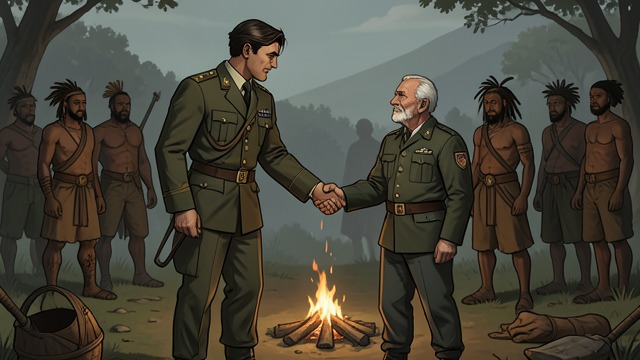
Montcalm’s Polished Pressure
Courtesy and persuasion
Montcalm welcomes Heyward warmly and praises his character before urging him to consider humanity. His manners soften but do not remove the strategic demand for surrender.
The threat beneath civility
Montcalm invokes the difficulty of restraining his Indigenous allies if the fort resists. His politeness makes a warning sound like a reasonable appeal.
The Pledged Word
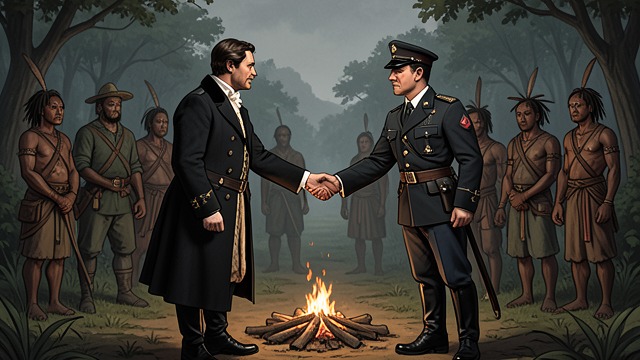
The Pledged Word
A test of confidence
Montcalm offers his personal pledge of safety and asks the British escort to withdraw. Heyward accepts, while Munro remains uneasy about trusting the French nobleman.
Ceremony and suspicion
The formal encounter depends on promises that neither side can fully verify. Military courtesy creates a temporary space for negotiation without ending distrust.
The Last Stand
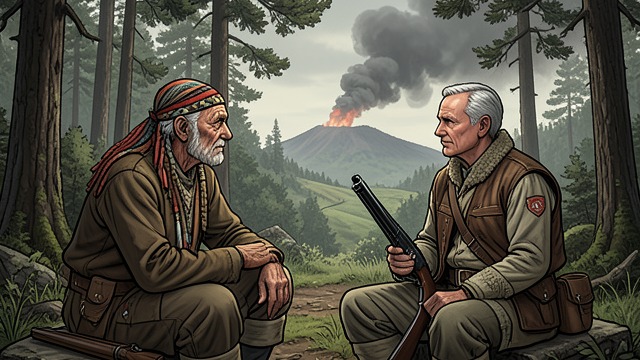
Facing an Apparent End
No Easy Escape
With the canoe gone and ammunition exhausted, Hawkeye sees little hope of holding the position. Chingachgook prepares for death with controlled dignity.
Courage or Prudence
The defenders' instinct is to stay and meet the enemy, but Cora asks them to survive and seek help. Their disagreement exposes the difference between honorable resistance and useful endurance.
The outcome depends on whether survival can be chosen without seeming to abandon those in danger.
Hawkeye’s Uneasy Verdict
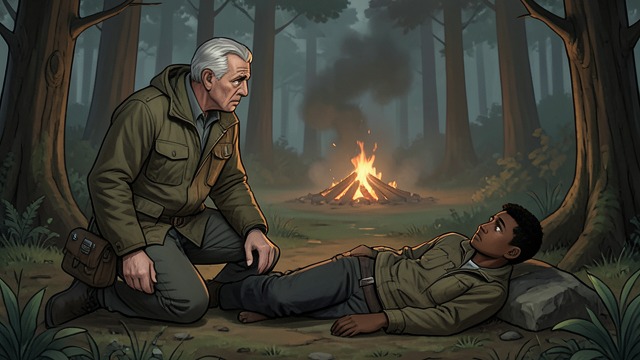
Hawkeye’s Uneasy Verdict
A killing observed
Hawkeye recognizes the young sentry’s death as an act he considers cruel by white standards. He nevertheless explains it through a distinction between white and Indigenous customs.
Moral inconsistency
His response combines compassion with cultural prejudice. The scene complicates the certainty with which he judges other people’s conduct.
The Rescue and the Scalps
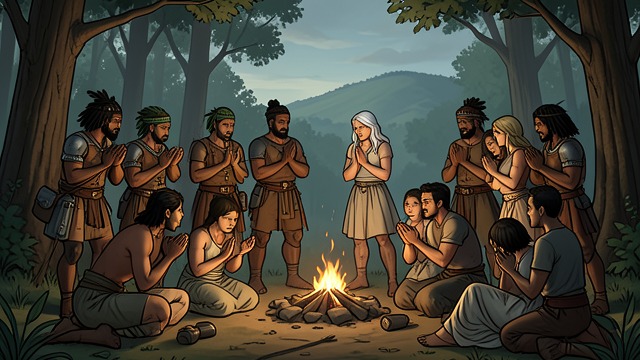
The Rescue and the Scalps
Victory rituals
The survivors kill the remaining Hurons and take scalps, while the rescued sisters turn to prayer and embrace. The aftermath places relief beside acts of violence.
No simple moral closure
The rescue saves the captives but does not produce a peaceful or morally uncomplicated victory. The different responses expose the competing codes through which the characters understand battle.
The Message into the River
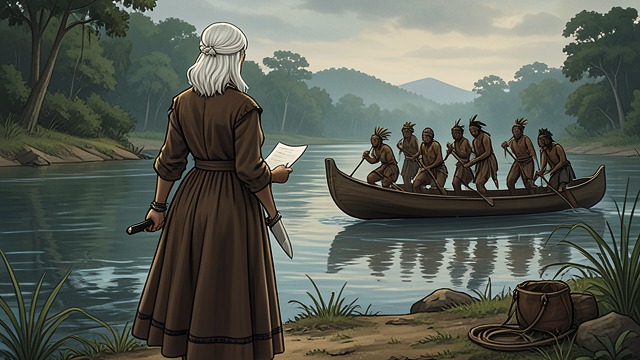
Communication Under Threat
Cora's Instructions
Cora tells the defenders to bring news to Munro and leave marks along the trail if capture follows. Her words turn escape into a plan for communication across distance.
Uncertain Reception
Chingachgook, Hawkeye, and Uncas leave by water, but the excerpt does not show whether anyone receives the message. Speech remains an intention whose success depends on survival.
The story's last movement makes trust in others the party's only remaining link to help.
The Escape Proposal
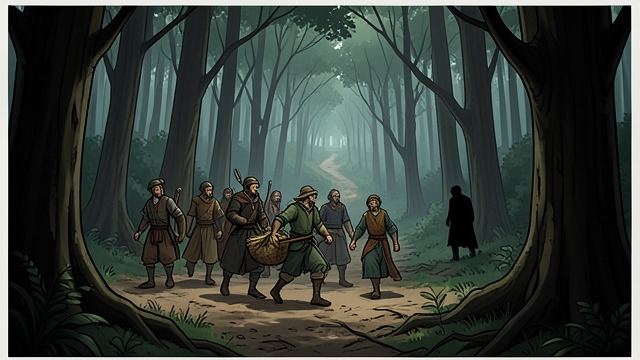
Survival as Responsibility
Cora's Argument
Cora asks the defenders to carry news to her father and, if possible, return with help. She insists that the sisters' worst fate does not justify wasting every potential rescuer.
A Changed Standard
Hawkeye accepts that remaining may be less honorable than acting for a future rescue. Chingachgook follows, while Uncas hesitates before Cora persuades him too.
The excerpt leaves the escape and rescue unresolved, but recasts survival as a duty to others.
Silence as Protection
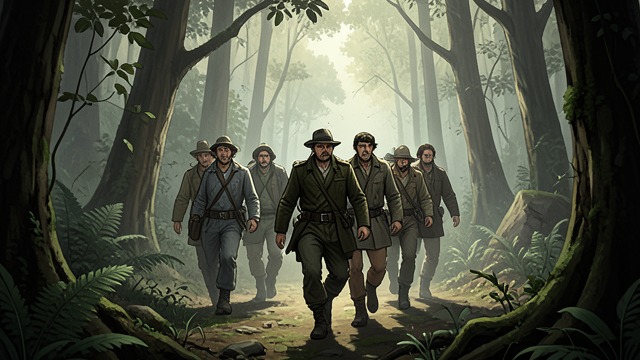
Concealment and Risk
A Changed Journey
Hawkeye warns that the party must move quietly because hostile warriors may be close. The travelers surrender ordinary conversation to avoid giving away their position.
Fear Made Practical
Silence is not merely an atmosphere but a survival tactic. Heyward's earlier confidence gives way to an awareness that sound can invite attack.
The forest makes small acts of expression carry physical consequences.
A Guide Who Says Little
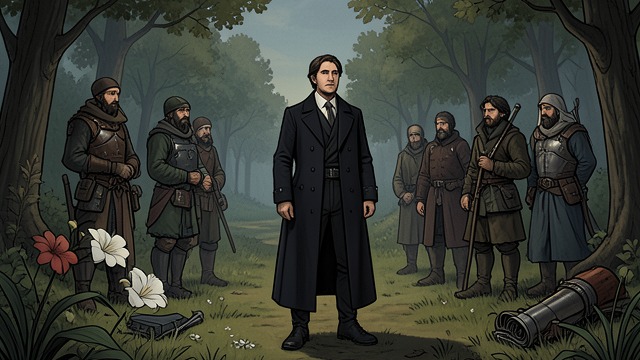
Speech and Suspicion
Alice's Request
Alice asks Heyward to make Magua speak, believing that a voice might reveal character. Heyward says Magua affects ignorance of English and refuses to satisfy her.
Unreadable Signals
The travelers must interpret silence, expression, and conduct without a shared understanding. Their uncertainty gives Magua room to guide them.
The scene makes communication itself a problem of safety and judgment.
Hawkeye's Challenge
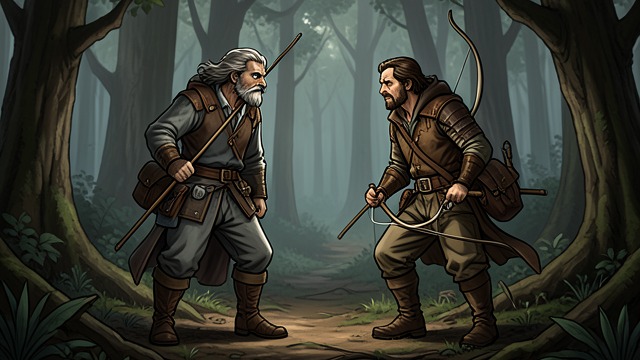
Competing Accounts
Heyward's Explanation
Heyward calls Magua a friend serving with the British and defends his trust in the runner. He relies on affiliation and personal assurance.
Hawkeye's Reading
Hawkeye treats tribal identity, visible behavior, and knowledge of local enemies as crucial evidence. His own certainty is colored by prejudice, but it prompts closer scrutiny.
Neither account alone resolves the question of loyalty; action will decide it.
The Delaware Conversation
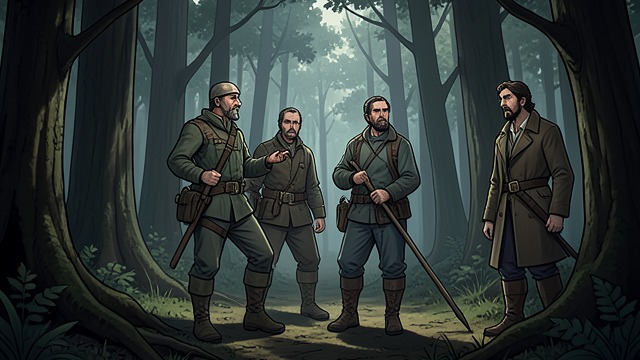
Knowledge Kept Private
A Language of Coordination
Hawkeye, Chingachgook, and Uncas confer in Delaware so they can plan without alerting Magua. Their speech becomes a tool of concealment.
Heyward's Dependence
Heyward cannot fully follow their conversation and must trust the men's judgment. His inability to understand is another limit on his authority.
The forest rewards those who share knowledge discreetly and punishes those who mistake access to speech for control.
Munro’s Military Honor
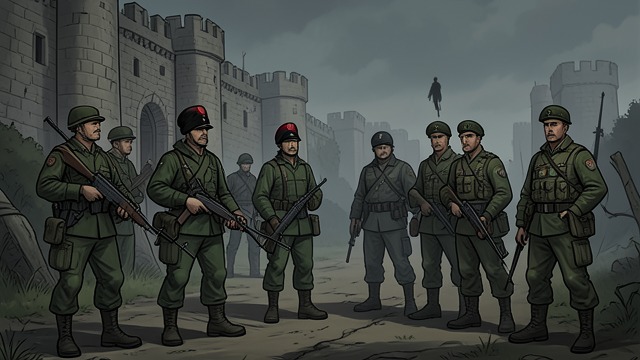
Munro’s Military Honor
Duty to resist
Munro insists that the king’s arms must be defended while hope remains. He refuses to let failing guns and walls erase the meaning of his command.
Honor under material strain
His resolve inspires the garrison, but it also risks prolonging a hopeless defense. The novel places military pride beside the human cost of continued resistance.
During the defenders' fight on the island
After sunset, beside the river crossing
Night, during the hymn in the cavern
During his account of Munro’s punishment
At the climax of Magua’s address to his warriors
After the captives reveal Hawkeye has escaped
During Heyward’s offer to Magua after the island capture
At the French sentry’s post before dawn
During Heyward’s conference in the French marquee
At Munro’s conference with Montcalm
After the canoe disappears downstream
After Chingachgook kills the French sentry by the pond
After the hilltop battle ends
At the end of the island defense, as the Mohicans depart
Moments before Chingachgook and Hawkeye enter the river
Late in the afternoon, after Magua escapes
At the beginning of the journey, before entering the thicket
Late afternoon, during the first meeting at the stream
At dusk, while Hawkeye and the Mohicans plan the capture
During the discussion of the fort’s failing defenses
