Duncan Heyward
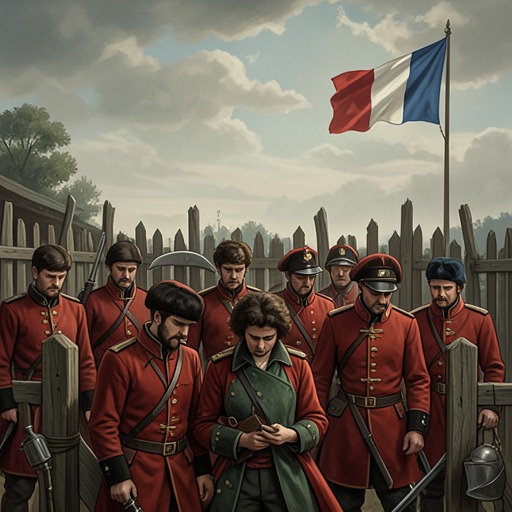
The Last of the MohicansDuncan Heyward is a British officer whose pursuit of the Munro sisters turns military duty into a personal ordeal. Captured, endangered, and repeatedly forced to negotiate across shifting alliances, he nevertheless keeps trying to protect Alice and Cora. His arc is marked not only by courage but by adjustment: at crucial moments he accepts help, chooses a rescue mission, and declines command in order to fight beside Hawkeye.
Identity and Introduction
Heyward is a young officer serving with the British forces and is closely connected to the Munro family. The narrator identifies him as a young man with a deep personal stake in the sisters’ happiness, accompanying Colonel Munro in his search for his daughters alongside Hawkeye and the Mohicans. His military standing matters in negotiations, but it does not insulate him from danger or determine the limits of his actions.
At the outset, Alice teases Heyward about the frightening figures encountered in the woods and the prospect of facing Montcalm, while Cora shares the need for courage she describes. The exchange places him among the sisters as both escort and confidant, at a moment when the journey’s hazards remain uncertain. When Hawkeye examines Magua, Heyward is present as the party’s officer, but the scout’s judgment and knowledge—not rank—shape the encounter.
Captivity and Rescue Efforts
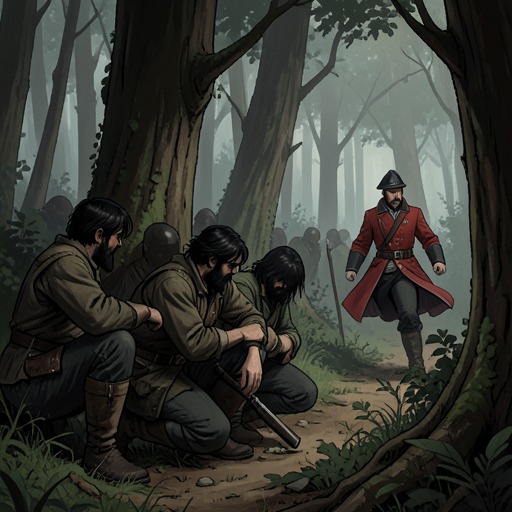
After the party is captured, Heyward observes that the sisters and he have been spared immediate violence, though the captors handle the ornaments of his uniform with interest. The restraint imposed by a commanding warrior suggests that the prisoners are being held for a purpose, leaving Heyward to read the captors’ conduct while unable to control it. In the ensuing danger, he interposes himself between the sisters and an advancing group, briefly checking their attack; Magua’s intervention then creates an opportunity for the prisoners to survive.
Heyward’s own survival later depends on Uncas, who pulls him back from the edge during a struggle with Magua. The rescue makes their alliance concrete: Heyward is not simply a commander directing Indigenous companions, but a man whose life is saved by one of them. During another period of concealment, he reassures the trembling sisters that their friends have escaped and that help from Webb may arrive within two hours, offering a limited hope grounded in what the captors have said.
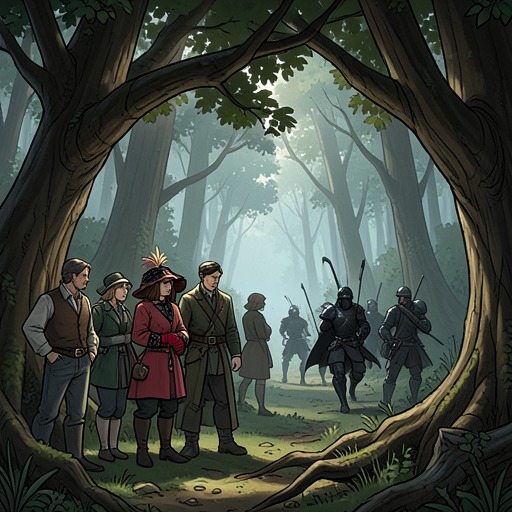
After the prisoners are separated, Heyward learns that Cora and Alice have been sent to different groups. He immediately volunteers to accompany the effort concerning one sister, then insists that he will attempt Alice’s rescue himself, even at the cost of his life. His decision follows a practical division of the mission: Hawkeye and his companions will negotiate for one captive, while Heyward takes responsibility for attempting to free the younger sister held by the Hurons.
Rank, Diplomacy, and Judgment
Heyward’s rank gives him a role in dealings with military leaders, but the story repeatedly places him between competing claims of authority. He explains another party’s meaning to Colonel Munro, and then conveys proposals to his commander; Munro receives them with amazement and is moved by their unexpected generosity. Heyward thus serves as an interpreter of intentions as well as a soldier, translating proposals into terms his commander can consider.
His encounters with Montcalm and Magua expose the limits of formal command. Magua invokes his alliance with the French while asserting that he will not violate his pledge to them; Montcalm, recognizing that influence over his Indigenous allies must be maintained through concession rather than force, reluctantly grants a request. Heyward’s narrative position is adjacent to these negotiations, but his experience as a captive makes their stakes immediate: decisions made by commanders and allies determine whether prisoners are protected or endangered.
Heyward also shows restraint when caution is essential. Among people who could punish the discovery of his real condition, he would prefer silence to an ill-judged attempt to speak or act. His willingness to wait is not passivity so much as an assessment of risk: the officer who elsewhere takes initiative understands that boldness can expose him and defeat the rescue he seeks.
Alliance and Final Campaign
As the Delawares prepare to pursue Magua, Uncas assigns Heyward a position of authority comparable to Hawkeye’s. Heyward declines the command, saying he is ready to serve as a volunteer beside the scout. More than two hundred warriors then set out under Uncas’s arrangements. Heyward’s choice marks a change in how he exercises status: rather than insist on command because of his British rank, he accepts a subordinate place within a campaign directed by Uncas.
When fighting begins, Heyward joins the combatants and fires his rifle, adopting the caution required by the wooded ground. The engagement becomes difficult for Hawkeye’s party as the opposing force grows, and Heyward’s participation is part of a collective effort rather than a solitary officer’s intervention. After Hawkeye meets Chingachgook, he yields authority to the Mohican leader, who leads the party onward; Heyward’s actions belong to this broader transfer of leadership among allies.
Relationships and Narrative Role
Heyward’s attachment to Alice is the most explicit personal motive behind his actions. He volunteers for the mission to reach her, and when he finds her in a chamber set aside for an important prisoner, his arrival fulfills the immediate purpose that has guided his infiltration. His reaction to recognizing Cora later combines horror and delight, underscoring that the sisters’ separate captivity has kept both family loyalty and rescue at the center of his experience.
His relationship with Cora is expressed through protection and shared danger. When a threat is directed at the prisoners, he places himself between the sisters and their attackers; later, he supports the plan to attempt Cora’s release as soon as Hawkeye proposes it. His concern for both women gives his military actions a persistent personal direction, even as he enters a wider conflict involving French, British, Huron, and Delaware interests.
The narrative uses Heyward to connect the conventions of European military rank with alliances whose authority operates differently. He can explain proposals to a British commander and receive a formal position among Uncas’s warriors, yet his most consequential choices involve accepting rescue, restraining his own initiative, and serving as a volunteer. His story therefore presents courage not as command alone, but as readiness to depend on allies and to act within a collective struggle.