Indigenous dispossession and cultural extinction
The Last of the MohicansIndigenous dispossession and cultural extinction names the historical process that shapes the novel’s frontier: Native peoples are driven from their lands as European settlement advances, while the communities and traditions rooted in those territories are portrayed as diminishing or disappearing. The account is most personal in Chingachgook’s recollection of the Mohicans’ former homeland and in his declaration that Uncas is the last of his line; the preface then widens that loss into a regional history and describes the tribes’ disappearance as an outcome of “civilization.”
Land, Naming, and Displacement
The preface links the confusion surrounding Native history to the multiple names imposed or used by Europeans and by Native communities themselves. It explains that Mohicans, Mohegans, and related names have been altered or applied inconsistently, and that the Lenni-Lenape, Delawares, Wapanachki, and Mohicans are treated as peoples of the same stock. Such instability in naming accompanies a deeper loss: the Mohicans are identified as the people who possessed the territory first occupied by Europeans in this part of the continent and were therefore among the first to be dispossessed.
The narrator presents the setting as a landscape where the contrast between settlement and continuing wilderness remains visible. Roads and fashionable watering places have appeared near places once reached only by forest paths, while the sites of William Henry and a later fortress are traceable as ruins. Yet much of the wilderness associated with the story remains little altered, even though Native people have left that part of the state. The land endures as a setting; its original inhabitants are made absent from it.
Chingachgook’s Family History
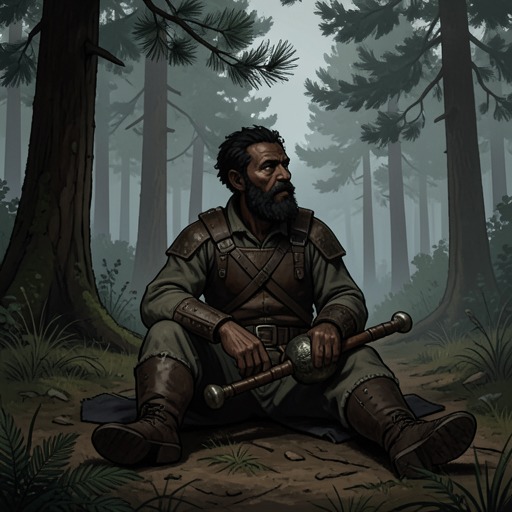
Chingachgook gives dispossession a personal and generational form. He recalls a time when his people were one and happy, drawing sustenance from the lake, woods, and air, worshipping the Great Spirit, and keeping the Maquas at a distance. He then attributes a decisive rupture to the Dutch arrival and the introduction of fire-water: his people drank, he says, and parted with their land. They were driven back from the shores step by step until he, a chief and Sagamore, had never seen the sun except through trees or visited his ancestors’ graves.
His family’s decline is inseparable from that territorial loss. Chingachgook describes his relatives as having gone one by one to the land of spirits, and places himself at the end of the line, with Uncas as the last of the Mohicans. The image of the elder descending from the hilltop into the valley makes the people’s decline both familial and historical: the future of the lineage appears to depend on a single son, while the old chief’s connection to ancestral land and graves has already been severed.
Land Loss as Political Injury
The novel also presents dispossession through disputes about colonial authority and Native political choices. Hawkeye argues that a past treaty, brought about by Dutch interests, was designed to disarm peoples who had the strongest claim to the country where the Dutch had settled. In his account, the Mohicans did not accept the arrangement in the same way as the Delawares, and the latter eventually recognized its folly. He contrasts the vast territories once available to Chingachgook’s family with the small grave-space that might remain to its descendant, making the treaty’s alleged political effect legible as a transfer of control over land.
Magua connects Native service in colonial war to the same dispossession. He says that the pale faces have driven Native people from their hunting grounds and that white leaders direct their fighting. His account of his own conflict with Munro is also framed by colonial discipline: he recalls being punished under a rule that applied to Native warriors who entered the soldiers’ quarters after drinking. Cora calls the punishment justice, while Magua objects that the liquor had acted for him and that the punishment left a mark of humiliation. Their exchange does not settle the dispute; it shows how colonial authority and personal injury are interpreted through incompatible moral frameworks.
Memory, Revenge, and Narrative Tension
Loss persists in the novel not only as memory of territory but as an active political grievance. Magua’s appeal to his fellow Hurons recalls their distant homeland, the long route they have traveled, their service and losses in war, and the hardship of the families left behind. He turns that remembrance toward the demand that the dead be avenged. Chingachgook likewise speaks of the Mohicans’ past victories and the absence of their fallen from their people’s graves, making the present struggle answerable to accumulated history.
The preface’s description of Native disappearance as seemingly inevitable gives the novel’s elegy a troubling limit. Its account recognizes European pressure as the force driving dispossession and acknowledges the historical truth of Native loss, yet it also casts that loss as a natural fate and generalizes Native peoples through broad claims about origin, language, and character. In the scenes themselves, Chingachgook and Magua speak as interpreters of their own histories, with distinct claims about land, punishment, alliance, and revenge. The tension between those voices and the framing language makes cultural extinction both a subject of mourning and a question about who has authority to describe Native history.