Lenape mourning after the battle
The Last of the MohicansLenape mourning after the battle is the communal response to the deaths of Cora and Uncas, and it decisively recasts the Delawares’ victory as a scene of bereavement rather than triumph. The community gathers in disciplined silence around the dead, honoring both through distinct rites while the grief of their companions and the loss of Uncas’s leadership remain inseparable from the aftermath of war.
From Victory to Mourning
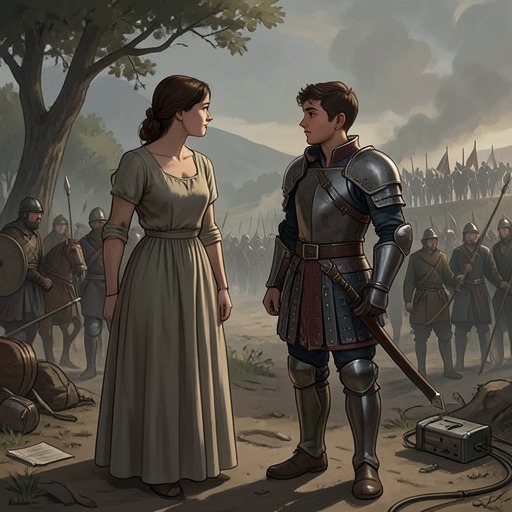
The day after the battle, the Lenape return from a conflict that has destroyed the Huron community. The signs of devastation remain around the former Huron encampment, but the Delawares do not celebrate. Those who return put aside the emblems of warfare and join their people in lamentation; pride and exultation yield to humility and grief. The narrative makes mourning the battle’s defining aftermath, placing the emotional consequences of victory above any public display of success.
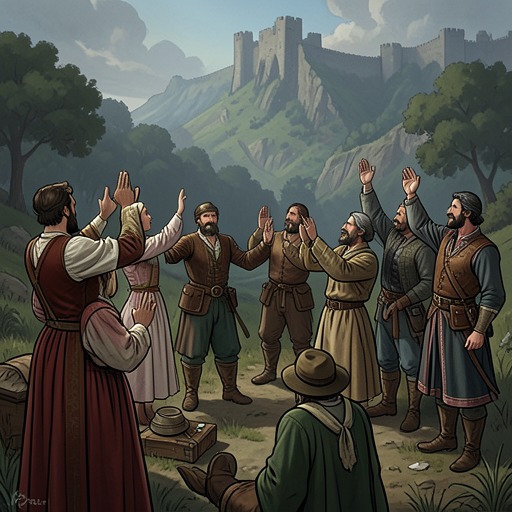
The community gathers in a broad circle near its lodges, with people of every age, sex, rank, and occupation drawn together by a shared emotion. The assembly holds an extraordinary stillness: for a prolonged part of the morning, movement is limited to the offerings made for the dead, and no sound rises beyond restrained sobbing. This ordered quiet gives collective form to grief without erasing its intensity.
Cora and Uncas Remembered
Six Delaware girls tend Cora’s bier, strewing herbs and flowers over the body, which is concealed beneath robes. Near her sits the grieving Munro, while Gamut and Heyward remain close by, each confronting the loss in a different way. The scene places the bereaved visitors within the Delawares’ communal observance, rather than separating their sorrow from it.
Uncas lies nearby, dressed in the ornaments the tribe can provide, including plumes, wampum, gorgets, bracelets, and medals. His ceremonial appearance honors his stature, while his stillness makes clear that the honors cannot restore him. The girls’ praise remembers him as a renowned warrior and son; their lament invokes the grief of the mother who bore him and the tears the Delaware women have shed for him. Thus the funeral speech preserves Uncas’s public identity even as the ceremony registers his absence.
Rites and Shared Grief
Tamenund addresses the people in terms of a clouded Manitou, presenting the deaths as a moment in which divine presence and judgment cannot be plainly understood. The people respond with a soft, changing chant in honor of the dead. Individual women take up the lament in turn, and communal outbursts interrupt the sequence; the girls tending Cora’s bier sometimes remove the flowers in grief, then return them with tenderness. The rites make mourning both personal expression and shared performance.
When the women begin to carry Cora’s bier toward her grave, Gamut asks Munro whether they should follow and see her buried with Christian rites. Munro rises and joins the procession, carrying his parental grief with the bearing of a soldier. His companions follow, including a French officer who joins in sorrow. The Lenape men, meanwhile, close their circle again around Uncas. The two observances proceed alongside one another: Cora is carried to burial, while the community remains gathered around its lost leader.
Loss and Historical Meaning
The mourning follows the mobilization that Uncas himself set in motion. Before the battle, he led the Delawares through a public war rite: a stripped and painted pine represented the enemy, his chant invoked the Manitou, and warriors joined his dance. When he struck the post with his tomahawk, the act declared his authority over the expedition; the young men then destroyed the symbolic tree, and the gathering prepared to move from ritual action to actual combat. The funeral gathering therefore follows a sequence in which Uncas’s leadership first united the community for war and then became the focus of its grief.
The wider frame of the novel’s preface gives this loss a further resonance. It describes the Mohicans as the original possessors of the country in this region, dispossessed as European settlement advanced, and says that the tribes named in the story have largely disappeared from their former lands or from the earth. In that context, the Delawares’ silent mourning for Cora and Uncas is both a response to particular deaths and part of a narrative of Indigenous loss. The scene does not turn the victory into uncomplicated closure: the community survives, but its ceremony is organized around what it has lost.