“I turned my plain into a city”
The Life and Opinions of Tristram Shandy, Gentleman“I turned my plain into a city” names Tristram’s way of making a journey populous: by stopping to talk, joining groups, and greeting strangers, he turns an empty stretch of road into a succession of encounters. The phrase is both a literal description of his travels through Languedoc and a compact statement of the book’s digressive method, in which apparent delay becomes a source of narrative life.
The Phrase in Its Journey
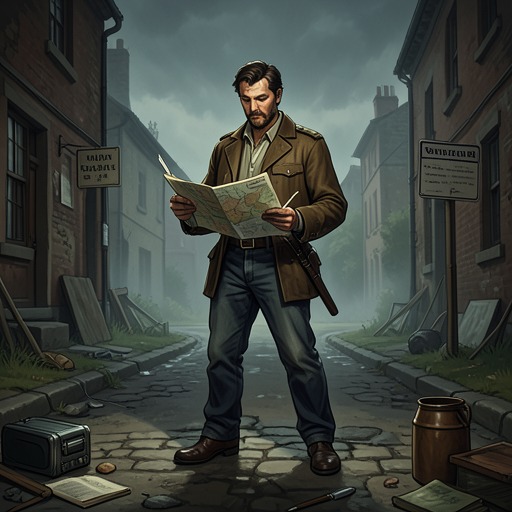
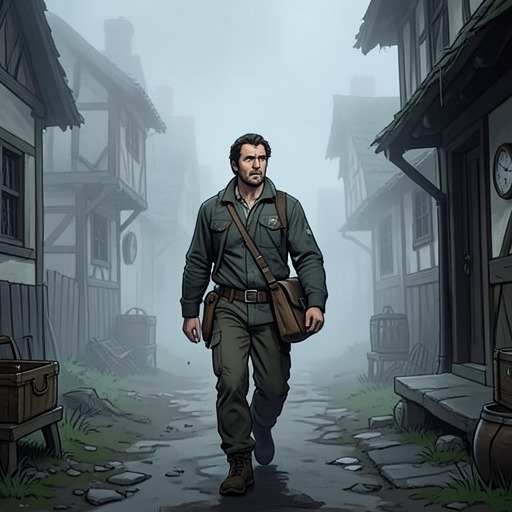
Tristram gives the phrase while recounting his passage across a plain, a stretch of travel he calls his plain stories. He has made no agreement with his gun-bearing attendant about how long the journey should take. Instead, he stops for anyone not moving at a full trot, joins parties ahead of him, waits for those behind, and hails travelers coming through cross-roads. Beggars, pilgrims, fiddlers, and friars all become occasions to pause; he even commends the legs of a woman in a mulberry tree and tempts her into conversation with a pinch of snuff.
The plain becomes a city not through buildings or settlement but through the density of company. Tristram seizes every handle chance offers, whatever its shape, and the road’s scattered passers-by supply the variety that a town would ordinarily gather in one place. His mule shares his sociability, making proposals to every beast it meets. Tristram imagines that the two could pass a month in Pall-Mall or St. James’s Street and still encounter fewer adventures and see less of human nature than they do on the road.
Travel Against the Guidebook
The expression belongs to a narrative that repeatedly exposes the distance between travel-writing’s confident descriptions and the traveler’s actual experience. Between Calais and Paris, three roads compete for consideration, with local deputies’ arguments capable of consuming half a day before a route is chosen. The road by Lisle and Arras is longer but interesting and instructive; the route by Amiens offers the possibility of seeing Chantilly. A journey is already an argument about what deserves to be seen and how much time observation should take.
Tristram makes that problem sharper when he admits that he knows almost nothing of Calais. He arrived at dusk and left in darkness, yet claims that by inference and by piecing together what he has heard he could write a chapter so detailed that readers might mistake him for the town clerk. The mock assurance turns the standard authority of the travel account upside down: a fluent description need not rest on sustained looking. Against the guidebook’s pretense of comprehensive knowledge, “I turned my plain into a city” locates the journey’s real abundance in its contingent meetings and conversations.
Delay, Motion, and the Making of Narrative
The journey also makes rest difficult. Even a traveler eager to sleep is roused by the repeated payments at each stage: he must count three livres and fifteen sous, settle discrepancies over tips or change, and consult a small-print post-road book when the distance charged is a post and a half rather than a single post. A pinch of snuff, a soldier displaying his leg, and other roadside interruptions further wake the mind. Travel does not proceed as uninterrupted distance; its practical incidents continually redirect attention.
Against this taxing rhythm, the plain’s social interruptions are not simply obstacles to progress. Tristram describes them as the busiest and most fruitful period of his life, because stopping gives him company and variety. The contrast between the wearying demands of travel and the pleasure of encountering others makes the phrase more than a boast about sociability: it defines a method of finding value in what a linear itinerary would count as lost time.
A Figure for Digressive Form
The city in the phrase is assembled through narrative attention. Tristram does not merely report arrival and departure; he follows the encounters that interrupt the route, allowing each person or animal to become a possible branch in the account. The open-endedness of the journey mirrors the book’s own willingness to take up chance subjects rather than advance by a single, direct line.
The phrase’s transformation is therefore formal as well as geographical. A plain suggests emptiness and passage; a city suggests multiplicity, company, and accumulated life. Tristram makes the first yield the second by treating chance as an invitation to narration. The journey’s apparent digressions become its substance, and the road, rather than a finished destination, becomes the place where the story gathers its human variety.