Corporal Trim
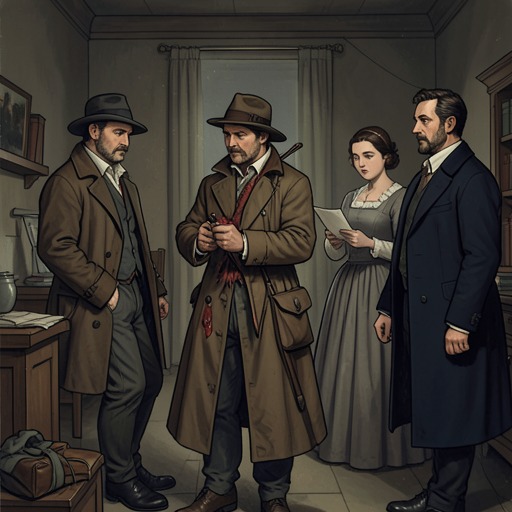
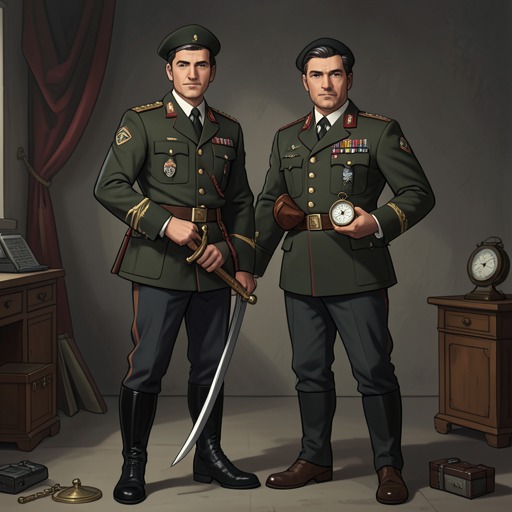
The Life and Opinions of Tristram Shandy, GentlemanCorporal Trim is James Butler, a former corporal in Uncle Toby’s company who becomes his devoted servant and closest military companion. Wounded at the Battle of Landen, he is disabled from further service but brings to Toby’s household a soldier’s skill, practical resourcefulness, and an unusually generous heart. He is at once a working servant, an enthusiastic participant in Toby’s miniature campaigns, a teller of affecting histories, and a man whose own hopes and vulnerabilities emerge through his stories and his courtship of Bridget.
Identity and Background
Trim’s familiar name began as a regimental nickname; Uncle Toby calls him Trim except when anger gets the better of him. His given name is James Butler. The narrator presents him as a well-liked soldier and a capable, versatile man whose military career was cut short by a musket-ball wound in his left knee at the Battle of Landen, two years before the affair of Namur. Uncle Toby takes him into his service after the injury.
The change from soldier to servant does not reduce Trim to a single domestic role. In camp and quarters he acts as valet, groom, barber, cook, sempster, and nurse, attending Uncle Toby with fidelity and affection. He has also served two campaigns in Flanders as clerk to the regimental chaplain. Uncle Toby says he was the best scholar in the company and would have received the next halberd had his misfortune not intervened. Trim’s military background thus remains present in both his practical abilities and his bearing: when asked to offer his opinion, he draws himself upright as before his division and gestures toward a map of Dunkirk like a man addressing a military problem.
His most conspicuous flaw is also a form of sociability. Trim likes to advise, or, as the narrator puts it, to hear himself talk. Once his speech is under way, it can be difficult to stop; yet his respectful manner and repeated forms of address soften the imposition. Uncle Toby rarely takes offense, because he regards a faithful servant as an humble friend and cannot bring himself to silence him. Trim’s loquacity is not merely a comic trait: it makes him a narrator within the household, entrusted with histories, opinions, and performances before an audience.
Service, Ingenuity, and Military Life
Trim’s attachment to Uncle Toby is expressed through action as much as through service. He attends Toby through military life and convalescence, and their shared interest in fortifications gives his soldierly experience a new field. Considering a map of Dunkirk, he argues that the defenses on paper are inferior to what he and Toby could make together in the country. His confidence treats their plans as a partnership: Toby is the master, but the enterprise belongs to both of them.
On the bowling-green, this partnership turns into elaborate military play. Trim devises a plan to maintain something like continuous fire during a mock attack, initially imagining tobacco smoke discharged from one of Toby’s six field-pieces. In another assault, he holds an ivory pipe and an ebony pipe tipped with silver, one for each battery, and works the two cross batteries against the counter-guard. What begins as a few puffs carries him into the excitement of the attack. The scene makes his imaginative and practical capacities inseparable: he can turn ordinary objects into instruments of siege warfare, and the pleasure of carrying out the scheme draws him onward.
His improvisation also appears in the work of preparing for future campaigns. While Uncle Toby sleeps, Trim is converting an old pair of jack-boots into two mortars for the next summer’s siege of Messina, boring their touch-holes with a hot poker. The incongruity of this workshop project belongs to the book’s comedy, but it also expresses a durable habit: even in domestic surroundings, Trim’s attention returns to the materials and procedures of military action.
The narrator extends the same military language to Trim’s love life. After Uncle Toby’s difficult affair with Widow Wadman, Toby resolves to have nothing more to do with the sex, whereas Trim makes no such resolution. The narrator distinguishes Toby’s siege, shaped by a concurrence of circumstances, from Trim’s, which begins simply with Trim and Bridget in the kitchen. Yet Trim’s devotion to his master is so strong that the narrator imagines he would have followed Toby’s example even in the trivial business of tagging points. Later, after nine months of attacks and repulses on Toby’s side, Toby draws off his forces and raises the siege. Trim, meanwhile, takes Bridget by the hand and leads her in to view the fortifications they built together. The contrast sets Trim’s less ceremonious courtship beside Toby’s extended military metaphor, while leaving the precise conclusion of Trim’s romance uncertain: the narrator says that the exact outcome is immaterial, since the affair contains the essence of love romances.
Stories, Learning, and Compassion
Trim’s voice moves easily between military advice, learned performance, and personal testimony. When the household asks him to read a sermon, he explains that his clerical experience came from serving as the chaplain’s clerk during two campaigns. Uncle Toby vouches for his ability and learning. Trim lays his hand on his heart, bows, puts down his hat, and holds the sermon so that his right hand remains free; the small formal preparations make the reading a public performance, not a casual task.
The sermon’s account of the Inquisition abruptly becomes personal. Trim has already disclosed that his brother Tom has been a captive there for fourteen years, though he has never before told Uncle Toby about it. As the reading evokes a prisoner facing a cruel tribunal, Trim reacts to the imagined victim with visible emotion and recognizes him as his brother. The passage collapses the distance between a sermon’s general indictment and the family history Trim has kept private. His grief interrupts the performance, revealing the cost concealed beneath his usual cheerfulness and talk.
His compassion is not confined to his own family. Remembering an innocent grenadier whipped nearly to death at Bruges over ducats, Trim recalls that he and Uncle Toby and Tom had all been schoolfellows, and says the memory of the two young men’s misfortunes makes him weep. Uncle Toby tells him that tears are no proof of cowardice and admits that he too often sheds them. Their exchange makes tenderness compatible with military identity rather than its opposite. Trim agrees that he is not ashamed to cry because he knows his master does the same.
The story of Trim’s injured knee similarly presents suffering as an experience made worse by circumstances. He recalls the pain of the wound, the discomfort of the cart, the rough roads, blood loss, inadequate care, and the fever he felt coming on. He describes the combined burden as more than he could bear. The account gives his disability a concrete history rather than treating it only as a reason he leaves the army: his body’s limits are shaped by the journey, the lack of care, and the conditions in which he is transported.
Loyalty and Mutual Support
Uncle Toby’s affection for Trim is repaid by a devotion that is both intimate and deferential. Trim speaks with ceremonial respect, but the narrator makes clear that the relationship has the substance of friendship. Toby listens to his advice, gives him space to speak, shares the same capacity for tears, and turns his own concern toward Trim’s future security. When Toby imagines the corporal growing old, outliving his friends, and suffering poverty after he can no longer serve, Trim responds cheerfully that there is no need to fear.
Toby answers that fear with a promise of lasting material support: while his master is worth a shilling, Trim will never have to ask elsewhere for a penny. He gives this assurance after recalling Trim’s long fidelity and goodness of heart, and rises from his chair as he speaks. Trim tries to thank him but cannot manage it; his tears come too quickly. The moment reverses the ordinary direction of service. The servant who has spent his life attending to his master is assured that his own old age will be attended to in turn.
Trim also helps Toby care for other people, though Toby sometimes expects a more expansive generosity than Trim has been ordered to offer. In the case of the poor and sick Lieutenant Le Fever, Trim carries intelligence back to Toby and offers the lieutenant his master’s services. Toby later points out that Trim could also have offered his purse, since Le Fever was supporting a son on a small military income. Trim replies that he had no orders. Toby accepts that the corporal acted correctly as a soldier but says he acted wrongly as a man. The exchange exposes a tension between obedience and independent benevolence: Trim’s loyalty makes him cautious about speaking for his master, while Toby’s moral standard asks him to recognize need without waiting for instructions.
That care extends to Le Fever’s son. When Toby’s brother seeks a tutor characterized by gentleness, generosity, and goodness, the description brings Le Fever to Toby’s mind. Toby rises at once and asks permission to recommend the young man; Trim adds that he is brave as well as good-hearted. Trim’s intervention is brief, but his memory and esteem help keep the father’s character present in the son’s prospects.
Character, Love, and Narrative Role
Trim’s judgments often reveal a plain, practical alternative to the abstractions that occupy the Shandy household. When Uncle Toby explains his brother’s conviction that Christian names bear heavily on character and destiny, Trim dismisses the claim as fancy and points to his own experience: he fought just as well under the name Trim as he had under another. His response brings the debate back from speculation to lived identity. The nickname that marks his place in the regiment has not prevented him from courage, learning, or affection.
The same ground-level outlook shapes his comic explanation of radical heat and moisture. He reduces radical moisture to ditch-water and radical heat to burnt brandy; for an ordinary man, he says, ditch-water and a dram of Geneva, with a pipe of tobacco to raise the spirits and drive away the vapours, are enough to banish fear of death. The formulation is irreverent and bodily practical, but it also reveals how Trim translates learned theories into the materials of everyday life.
His romance with Bridget is narrated through Toby’s military imagery but remains distinct from his master’s courtship. Trim and Bridget share the kitchen rather than a siege front, and Trim’s willingness to lead her by the hand into the fortifications shows his social confidence and gallantry. In the later plan for an assault on Widow Wadman and Bridget, Trim proposes that Toby engage Widow Wadman in the parlour while he attacks Bridget in the kitchen. He proposes to wear the regimental coat Toby gave him in memory of Le Fever, with his Montero cap restored for the occasion. The plan turns courtship into coordinated military maneuver, but it also links Trim’s own hopes to the bonds of service and remembrance that define him.
As a character, Trim brings several strands of the novel together. His disability connects military history to everyday dependence without erasing his skill; his service makes the master-servant relation a genuine bond of care; his speech carries the household from comic argument into grief; and his military hobby transforms domestic objects and spaces into scenes of action. The narrator’s account of his character includes his vanity as a talker, but places that flaw within a relationship of affection that prevents it from becoming a breach. Trim’s final significance lies in this combination: the man who talks too much, improvises mortars from boots, and stages attacks with tobacco pipes is also the steadfast attendant who remembers suffering, mourns the vulnerable, and is finally promised that he will not be left to poverty in old age.