Death
The Life and Opinions of Tristram Shandy, GentlemanDeath is the personified pursuer whom Tristram tries to outrun in the closing travel narrative. The chase gives bodily urgency to the narrator’s awareness of mortality, but it never becomes a simple scene of terror: Tristram’s spirits defy Death’s approach, and flight becomes both a practical escape and a comic performance of continued life.
Identity and Narrative Function
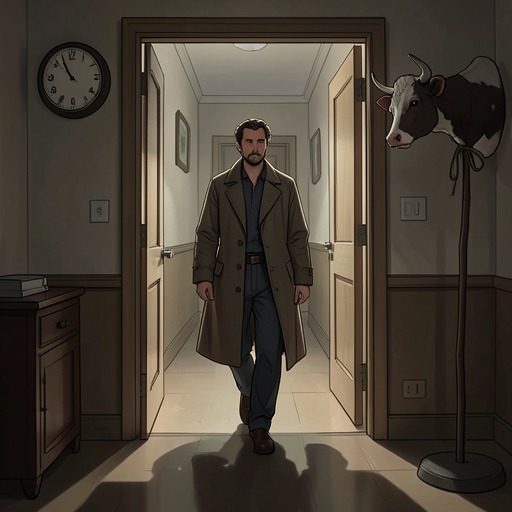
Death enters the episode as a figure who can knock at a door, discover a lodging, pursue a traveler, and appear to question whether his own commission is in order. He is at once a mortal certainty and an intruder in the narrator’s story. Tristram presents him not through a solemn meditation alone, but as a pursuer whose authority can be challenged, delayed, and made faintly ridiculous.
That double role shapes the episode’s tone. Death remains dangerous enough to make flight urgent: Tristram says that Death has got him by the throat, and his legs are reduced to “two spider legs.” Yet he can also talk back, plan his route, and enlist Eugenius in the decision to flee. The figure’s power is real, but the narration refuses to grant it an uncontested, grave manner.
The Narrator’s Spirits and the First Encounter
Tristram credits his spirits with carrying him cheerfully along life’s path, leaving its burdens on his back except for its cares. In dangers, they gild his horizon with hope; when Death knocks, they tell him to come again. The image makes resilience less a victory over mortality than a habitual refusal to let its approach determine the tone of every moment.
The encounter is interrupted by a story Tristram is telling Eugenius: a nun who imagines herself a shellfish and a monk damned for eating a mussel. Death’s grave question about having got into such a scrape catches Tristram in mid-performance. The comic digression does not dispel the threat; instead, it places Death inside the narrator’s unruly storytelling, where even the interruption becomes material for another turn of wit.
Eugenius takes Tristram by the hand and warns him that his escape has been narrow. Tristram answers that life cannot continue at this rate now that Death has found his lodging. He fears that he has forty volumes to write and forty thousand things to say and do that no one else will do for him except Eugenius. The prospect of unfinished work sharpens the meaning of the chase: what he resists is not only dying, but being cut off from the acts and words he still believes only he can accomplish.
Flight and the Changing Pace of Pursuit
With Eugenius’s agreement, Tristram resolves to flee while his remaining spirits and frail legs can support him. His proposed route leaps from the banks of the Garonne to Mount Vesuvius, then to Joppa and the world’s end. The extravagant geography makes escape sound at once desperate and exhilarating. Eugenius punctures its bravado by observing that Death would run greater risk there than Tristram would.
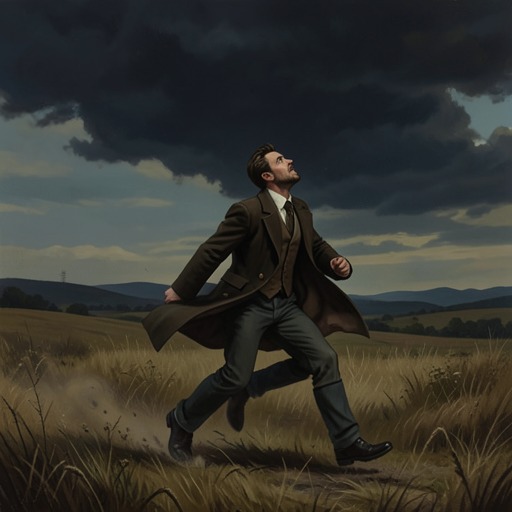
Eugenius’s wit and affection bring color back to Tristram’s cheek after it has been absent for months. The farewell is therefore also a scene of companionship: Eugenius leads him to his chaise, and Tristram departs at speed, the post-boy cracking his whip. In half a dozen bounds he reaches Dover. The body that had seemed barely able to stand is set in motion, and the threat of Death provokes not paralysis but a new journey.
The French journey extends the same pursuit at a different tempo. Tristram has the south of France, from the Rhône to the Garonne, to cross on his mule at leisure, having left Death far behind—or so he supposes. Death is still following, but now the chase stretches across the landscape. Tristram says that he continues to flee cheerfully, while Death pursues like a hunter without hope; with every step he loses, his expression softens.
Pursuit, Travel, and the Unfinished Story
Even after the rapid dash to Dover, Tristram changes his mode of travel once more. Against the post-office commissary’s advice, he chooses the mule and imagines crossing the rich plains of Languedoc as slowly as a foot could fall. The contrast between the rattling haste of escape and the mule’s measured pace complicates any idea that flight can simply leave Death behind. The journey continues, but speed is no longer its only answer.
Death’s pursuit is thus both the episode’s threat and its organizing joke. At first the narrator treats the pursuer’s arrival as a reason to flee for his life; later, Death seems to lag and soften in appearance. Yet Tristram does not declare himself safe or say that Death has been defeated. The chase remains open as he travels through France, while the unfinished volumes and unwritten acts that motivate his escape remain in view. Mortality presses upon the narrative, but the narrative answers by moving on: by changing roads, changing pace, speaking to a friend, and insisting that there is still more to say.