Death as Pursuer
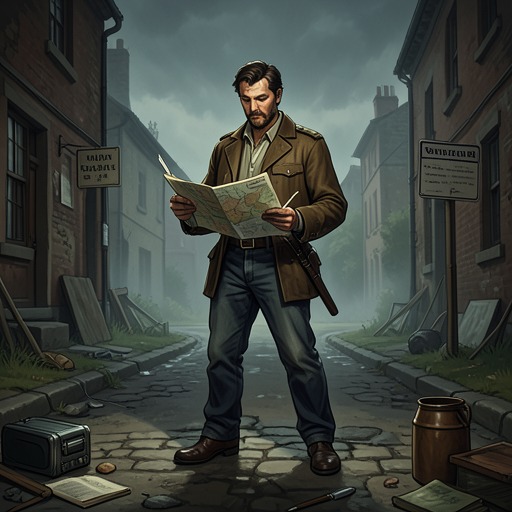
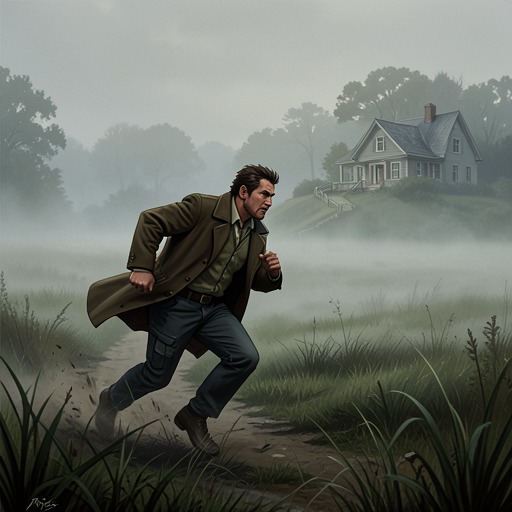
The Life and Opinions of Tristram Shandy, GentlemanDeath as Pursuer is the personification of mortality that follows Tristram through his late reflections and travels. The figure makes the threat of death both intimate and comic: it can arrive at his lodging, interrupt a story, and pursue him across France, yet Tristram answers it with wit, motion, and plans for more writing. Death remains real enough to constrain his hopes, but the narrative repeatedly stages the pursuit as a contest whose delays allow him to keep speaking and moving.
The Pursuer and the Narrator’s Spirits
Tristram credits his spirits with carrying him through life’s burdens, except its cares. They have not, as he remembers it, abandoned him or colored the world with gloom; even when Death knocks at his door, they answer with such careless cheer that Death doubts his commission. The scene gives the personification its governing comic logic: mortality is not denied, but its authority is momentarily unsettled by a narrator who refuses to meet it in the expected solemn manner.
This confidence sits beside physical vulnerability. Tristram recalls a vile cough that tormented him and says he feared it more than the devil. His projected literary productivity is similarly conditional: he had imagined writing two volumes a year, and even keeping his book going for forty years, if health and good spirits lasted. The contrast makes the pursuit more than an abstract conceit. Tristram’s ambition to continue depends on a body he cannot command, while his spirits furnish a temporary resistance to that limit.
Death Interrupts the Story
Death appears while Tristram is telling Eugenius an intentionally tawdry story about a nun who fancied herself a shellfish and a monk damned for eating a mussel. Tristram objects to being interrupted in the middle of a story; Death’s intrusion therefore threatens not only his life but also the act of narration itself. Eugenius remarks that Tristram has narrowly escaped, and Tristram answers that Death has discovered his lodging and can scarcely be kept at a distance.
The interruption turns an ordinary conversation into a scene of pursuit. Tristram says that Death has him by the throat, that he is no match for the pursuer in the open field, and that he has forty volumes to write and forty thousand things to say and do which no one but Eugenius will say and do for him. The imagined unfinished work gives his flight an urgent purpose: he wants time not as an abstract possession but as room for further narration and action. Eugenius advises him to flee, and Tristram accepts the counsel, resolving to lead Death on a long chase.
Flight and the Geography of Escape
Tristram imagines galloping to the banks of the Garonne, then escaping to Mount Vesuvius, from there to Joppa, and onward to the end of the world. The itinerary enlarges a private fear into a comic geography: no destination is presented as a final refuge, only as another stage in the attempt to outdistance the pursuer. Eugenius points out that Death would run more risk at the world’s end than Tristram would, briefly reversing the apparent balance of danger.
The flight becomes action when Eugenius’s wit and affection restore some color to Tristram’s face. Their leave-taking is painful, but Eugenius leads him to his chaise; Tristram gives the order to go, the post-boy cracks his whip, and the vehicle carries him to Dover in half a dozen bounds. The rapid departure converts imagined escape into physical travel. Motion does not defeat Death, but it lets Tristram answer the threat in his own manner: by moving, telling, and refusing to remain still before it.
A Pursuit That Continues Through France
Later, Tristram says that he has left Death far behind, though he admits that only God knows how far. The pursuer is not absent: Death has followed many a man through France, Tristram recalls, but never at such a mettlesome rate. The image keeps the chase active even as the distance between pursuer and pursued grows. Death’s lagging steps soften its looks, and Tristram wonders why he is fleeing at such speed. The question does not cancel the pursuit; it exposes the instability of his response, as fear and cheerfulness coexist.
After travelling precipitately, Tristram changes his mode of travel once more. Despite what the post-office commissary had said, he chooses a mule and imagines crossing the rich plains of Languedoc at the slowest pace. The change from rattling haste to deliberate slowness does not bring the journey to a conclusion. Instead, it alters the rhythm of the escape: Tristram continues south across France, now taking his time, while Death remains the measure against which his pace is imagined.
Mortality, Companionship, and the Terms of Dying
Tristram’s reflections also turn from escaping death to imagining its circumstances. If he could stipulate with Death as he could with his apothecary about a clyster, he says he would refuse to die before his friends. He draws a curtain across serious thoughts about the manner of his death, wishing instead that it would occur in a decent inn rather than at home. He fears that the concern of friends and their final attentions would distress him so much that he would die of a complaint his physician had not recognized; in an inn, he imagines that the few services he needed could be bought for a few guineas and given with punctual attention. He specifically excludes the inn at Abbeville from this imagined arrangement.
The pursuit thus has two complementary forms. On the road, Death is the pursuer Tristram tries to outrun through travel; in reflection, it is the unavoidable end whose place and circumstances he tries to negotiate. Neither form supplies a secure escape. The comedy comes from Tristram’s insistence on imagining terms, routes, and further volumes even as he recognizes the limits imposed by illness and mortality. Death can follow him, interrupt him, and shape his plans, but the narrative keeps turning that pressure into another occasion to speak and move.