Saint Nicholas Gate (Namur)
The Life and Opinions of Tristram Shandy, GentlemanSaint Nicholas Gate (Namur) is the setting of the principal siege attack witnessed by Uncle Toby and the geographical anchor of the wound that shapes his later life. Its gateway, covered-way, counter-guard, demi-bastion, and waterworks form a tightly connected battlefield; for Uncle Toby, explaining that ground is at once a painful recollection and the beginning of an absorbing study of fortifications.
Position and Defensive Ground
The attack focused on the advanced counterscarp between Saint Nicholas Gate (Namur) and the great sluice, or water-stop. The English and Dutch besiegers faced fire from the counter-guard and demi-bastion of St. Roch, while French officers exposed themselves on the glacis with swords in hand. The Dutch established themselves on the counter-guard, and the English captured the covered-way before the gate. The passage presents this outcome as the concise result of a fiercely contested attack, but the ground itself resists concision: the gateway, sluice, and adjoining works have to be distinguished before the action can be made intelligible.
The broader terrain compounds the difficulty. The attack extended from the bank of the Maes to the water-stop, across ground cut by dykes, drains, rivulets, and sluices. The besieging army, divided from sight of much of the others’ operations by the confluence of the Maes and Sambre, could not readily observe the whole siege at once. In this fragmented landscape, even the names of defensive features matter: the scarp and counterscarp, glacis and covered-way, half-moon and ravelin are not interchangeable, though writers themselves are said to confuse them.
Uncle Toby’s Wound and Recollection
Saint Nicholas Gate (Namur) matters personally because Uncle Toby was wounded in one of the traverses during the attack. The spot lay about thirty toises from the returning angle of the trench, opposite the salient angle of the demi-bastion of St. Roch. From his recollection of the position, he believed he could mark on a map the very ground where he had stood when the stone struck him. The remembered battlefield is thus not merely a military diagram: it contains the particular place where an impersonal siege became a lasting bodily injury.
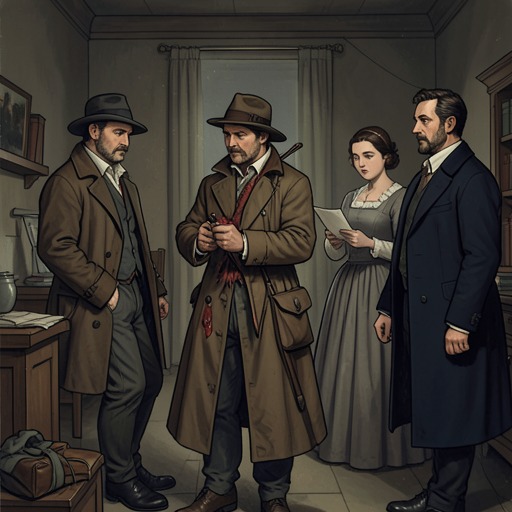
The wound in Uncle Toby’s groin confined him to bed, where he could lie only on his back. For three months he endured its pain while also facing the repeated effort of explaining the siege to visitors brought upstairs by Walter Shandy. His listeners’ misunderstandings, and his own difficulty keeping the positions straight in speech, turned every account into a fresh trial. He could become stranded among the imagined works of the fortification, unable to retreat from one feature without entering another. The narrator connects these inward vexations to worsening paroxysms of the wound, making the difficulty of telling the story part of the continuing physical cost of the battle.
From Battlefield to Map
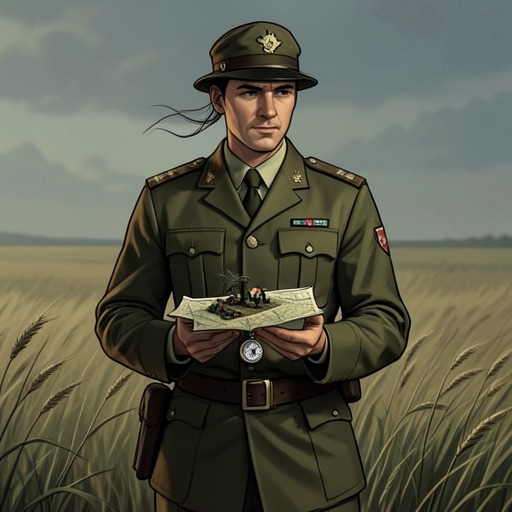
One morning, lying on his back, Uncle Toby hit on the idea of obtaining a large map of the fortifications of the town and citadel, including their environs, and having it pasted onto a board. Including the surrounding ground was essential: without it, the traverse where he had been wounded could not be located in relation to the trench and the demi-bastion. The map promised both a practical aid to explanation and a way to fix his own memory of the injury onto a legible surface.
The plan succeeded. The map relieved Uncle Toby of many confused explanations and gave him a means to point out the attack rather than reconstruct it by speech alone. He then studied the map with care, initially hoping to master the subject well enough to discuss it without emotion and so assist his recovery. After a fortnight of close application, his wound had gained no benefit, but he could explain the attack with reasonable clarity. Before two months had passed, he could describe the attack in order and recount operations beyond the gate, including movements across the Maes and Sambre and diversions toward Vauban’s line and the abbey of Salsines.
A Gateway into Military Study
Saint Nicholas Gate (Namur) consequently marks a change in the scale of Uncle Toby’s attention. What begins as an effort to clarify one painful recollection grows into a sustained appetite for military knowledge. The more he studies the map, the more he likes it; within the first year of confinement, he has obtained plans of nearly every fortified town in Italy or Flanders and reads them alongside histories of their sieges, demolitions, improvements, and new works. The local intricacies that once trapped him in an unsuccessful explanation become an invitation to map and compare fortified places well beyond the scene of his wound.
The location therefore joins the novel’s account of battle to its account of narration and habit. The attack has a definite military outcome, but Uncle Toby’s telling repeatedly falters over the distinctions and routes that make the outcome understandable. The map does not erase the injury or make the terrain simple; it gives him a material structure through which to organize both. Saint Nicholas Gate (Namur) becomes the point where a battlefield memory, a wounded body, and a lifelong military preoccupation meet.