Siege of Lille (1708)
The Life and Opinions of Tristram Shandy, GentlemanThe Siege of Lille (1708) is both a major military episode in the history behind Uncle Toby’s hobby and the model for a carefully staged mock assault on his bowling green. Its counterscarp attack is presented as exceptionally fierce and costly; in the miniature campaign, the same pressure to sustain fire becomes an ingenious but harmless contrivance involving tobacco smoke and Toby’s model cannon.
Historical Setting
The siege enters the narrative through the campaign year in which Lille was besieged and Ghent and Bruges fell into allied hands. Uncle Toby’s miniature fortifications had by then grown from a church and a few field-pieces into a larger artillery arrangement. That expansion made the real siege’s reports consequential to his imagined campaign: his artillery could not bear powder, and the narrator remarks that this limitation spared the Shandy family estate from being consumed by Toby’s increasingly heated military imagination.
The Storming of the Counterscarp
The mock campaign’s culminating operation is tied to the storm of the counterscarp between the Lower Deule on the right and the gate of St. Andrew on the left, between St. Magdalen’s and the river. The narrator identifies it as the war’s most memorable attack, the most gallant and obstinate on both sides, and also its bloodiest. The allies lost more than eleven hundred men that morning. These particulars give the miniature assault a specific historical referent and establish the grave human cost that stands behind Toby’s reenactment.
Toby and Trim’s Reenactment
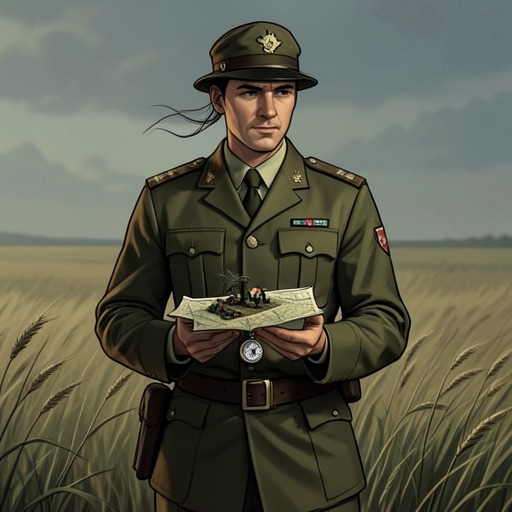
On the eve of the attack, Toby prepared for the corresponding operation on the bowling green with unusual solemnity. Corporal Trim, meanwhile, had been considering how to maintain something like continual fire against the enemy during the assault. His initial idea was to send tobacco smoke toward the town from one of Toby’s six field-pieces, positioned on either side of the sentry-box. The means of carrying out the plan occurred to Trim as he conceived it; although he had pledged his Montero cap, he did not believe it was in danger if his project failed.
Historical Violence and Hobby-Horse
The episode sets the language and scale of an actual siege beside the modest materials of a private military pastime. The counterscarp assault’s toll—over eleven hundred allied casualties—cannot be reduced to Toby’s play, yet its campaign reports stimulate the hobby and furnish its sequence of operations. Trim’s tobacco-smoke device makes the contrast especially clear: the desire for incessant firing is preserved, while powder and real destruction are absent. The mock siege thus turns military history into a domestic performance, exposing both the imaginative force of Toby’s hobby and the distance between its contrivances and the consequences of war.