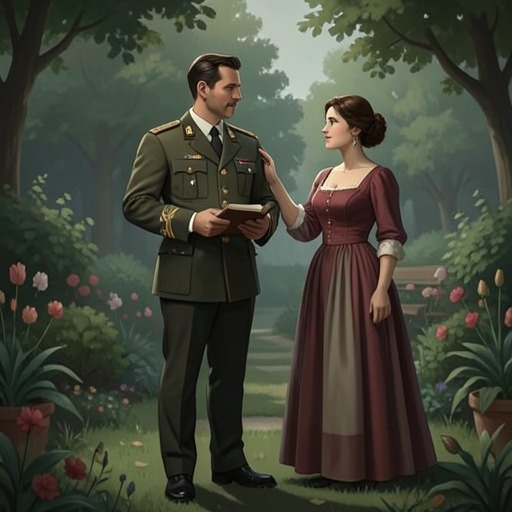
Tom and the Jewish widow of Lisbon
The Life and Opinions of Tristram Shandy, GentlemanTom and the Jewish widow of Lisbon are joined in a marriage that begins as a practical offer of help with her sausage shop and is remembered by Corporal Trim as a cautionary tale about the price of marriage. Its comic courtship ends in a stark reversal: Tom is taken from his bed and dragged to the Inquisition, where Trim fears that confinement will last for life. Told while Uncle Toby approaches Widow Wadman’s house, the episode places the possibility of a new union beside the danger Trim associates with Tom’s own.
Background and Circumstances
Tom is Corporal Trim’s brother. In Lisbon, he has an easy position, and the warm weather encourages him to think seriously about settling down. When a Jewish sausage-shop keeper dies, his widow inherits a thriving business. Tom sees an opportunity to establish himself by offering his services to carry on the trade.
He approaches her without an introduction beyond having bought a pound of sausages at her shop. His calculation is practical and hopeful: even if the offer fails, he will have received sausages for his money; if it succeeds, he may gain a wife and a shop as well as a livelihood. The household servants wish him success, and Trim recalls him walking cheerfully through the street in a white dimity waistcoat and breeches, his hat slightly askew, greeting passers-by. That bright image becomes painful in retrospect: after describing Tom’s fate, Trim imagines him no longer smiling but in a dungeon.
Courtship and Marriage
Tom begins their conversation by discussing the work in front of them. He asks about the ingredients, skins, and sizes of the sausages, keeping his remarks measured so that the subject leaves room for a closer acquaintance. The scene makes the shop both workplace and meeting place: rather than arriving with a formal introduction, Tom enters the widow’s life through the ordinary business she is carrying on.
As the conversation warms, he helps her make the sausages. He first holds the casing while she fills it, then assists with the strings, and gradually takes on more of the work. Their growing ease is expressed through this shared task. Trim says the widow’s choice of a second husband was influenced by how unlike her first husband Tom was; in his telling, her decision was already more than half made before Tom directly raised the subject of marriage.
The proposal is staged as a playful contest. The widow makes a show of defending herself by taking up a sausage, and Tom takes up another. Trim says Tom’s has more gristle; the widow then accepts, and Tom seals the agreement. The comedy makes the outcome feel swift and mutual within Trim’s account, but the lightness of the scene is sharply at odds with what he later reveals about the consequences of the marriage.
Imprisonment and Its Consequences
During Uncle Toby’s approach to Widow Wadman’s home, Trim invokes Tom’s experience to caution that a widow might receive a suitor as the Lisbon widow received his brother. He connects Tom’s marriage to the subsequent calamity, explaining that, had Tom not married her—or had pork been put into their sausages after the wedding—Tom would not have been taken from his bed and dragged to the Inquisition. The telling establishes the danger Trim associates with the marriage, though it does not further explain the circumstances or proceedings that led to Tom’s arrest.
Trim describes the Inquisition as a place from which a person, once taken in, may never return. He sets lifelong confinement against liberty, calling the former profoundly sad and the latter sweet. Uncle Toby listens gravely as Trim speaks while looking toward Widow Wadman’s house. The story therefore does more than recount Tom’s misfortune: it interrupts and darkens the present courtship, making the prospect of marriage inseparable, for a moment, from the threat of losing freedom.
The Relationship in Its Narrative Frame
The relationship reaches the reader through Trim’s spoken story, not through an independent account from Tom or the widow. Its details reflect the corporal’s affectionate remembrance of his brother: the cheerful walk through Lisbon, the modest commercial scheme, and the gradual courtship through work. His grief becomes visible when he breaks from the tale’s playful tone and imagines Tom in prison; Uncle Toby responds with sympathy.
The episode also places family affection beside the legal and religious peril Trim attributes to the Inquisition. The evidence gives no account of Tom and the widow’s later married life or of their relationship after his imprisonment, so the marriage’s long-term course remains unknown. What the story does establish is a contrast between the promise of a household built around shared work and the threat of permanent confinement. In the immediate conversation, that contrast gives Uncle Toby reason to regard his own approach to Widow Wadman more gravely.