Uncle Toby's military hobby-horse
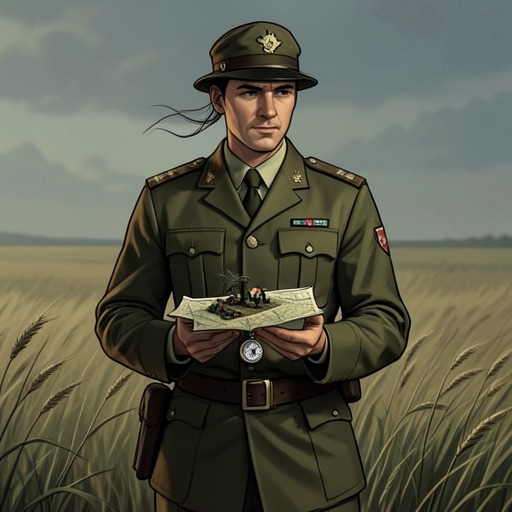
The Life and Opinions of Tristram Shandy, GentlemanUncle Toby’s military hobby-horse is the consuming interest that gives his days their shape and repeatedly converts ordinary affairs into sieges. It is at once a costly private pursuit, an expression of sincere public-mindedness, and a narrative pattern: the language of fortifications and campaigns extends from his military preparations to his courtship, while his brother’s attempts to reason with him become another contest of entrenchments.
Identity and Character
The hobby-horse is more than an occasional pastime. Uncle Toby commits money and attention to military operations, and the narrator describes his devotion as generous even while acknowledging its eccentricity. Its appeal lies partly in the way it gives him a practical world of plans, strongholds, and campaigns. In the family’s account, this absorption is not simply mocked: Toby’s zeal and simplicity help disarm anger and draw his brother into good humor.
That combination of earnestness and comic excess defines the interest. Toby does not treat the cost of his military projects as a sufficient reason to abandon them. When warned that his operations exceed his means, he answers that their value lies in serving the nation. His position makes the hobby-horse an ethical conviction as well as an expenditure, though the text also makes clear that his generosity does not protect his finances from its consequences.
Expenditure and Family Dispute
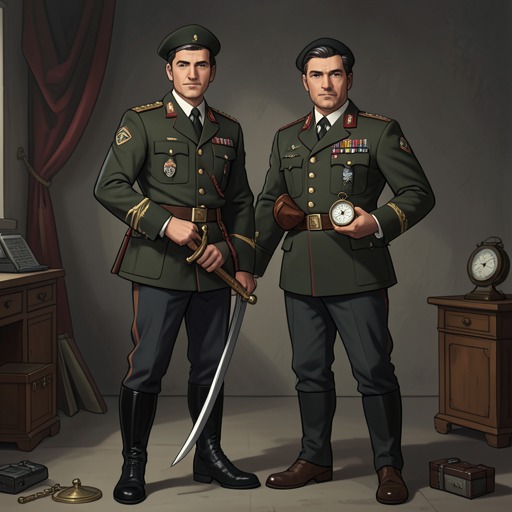
The scale of Toby’s preparations emerges through a concrete inventory. His brother cites ten pounds for a pair of jack-boots, twelve guineas for pontoons, half as much for a Dutch drawbridge, and a train of little brass artillery ordered in preparation for the siege of Messina. These purchases are presented as part of a larger pattern of military spending, not as isolated extravagances.
Toby defends himself by pointing to an income of one hundred and twenty pounds a year in addition to his half-pay. His brother counters that the military operations have carried him into expenses beyond what he first understood and may ultimately ruin his fortune and leave him a beggar. The dispute turns on a clash of measures: financial prudence counts the accumulating costs, while Toby measures them by the national good he believes they serve.
The exchange does not end in a lasting rupture. His brother’s anger never rises beyond a spark, and the combination of Toby’s ardor and Corporal Trim’s zeal restores him to good humor. The scene makes the hobby-horse a source of domestic friction, but also of affection: the very traits that invite admonition are what make the two men difficult to remain angry with.
The Siege as a Pattern of Courtship
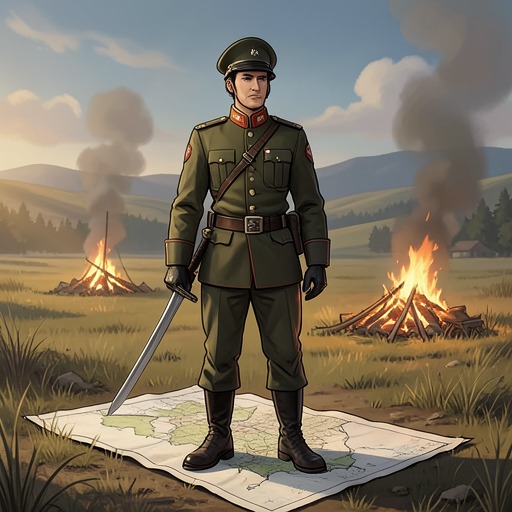
The military metaphor follows Toby beyond his campaigns. After the demolition of Dunkirk, his affair with Widow Wadman leads him to resolve that he will think no more about women or what belongs to them. Yet circumstances gradually draw him into laying siege to her. The narrator describes their courtship as a series of attacks and repulses lasting nine months, after which Toby finds it necessary to withdraw his forces and raise the siege, somewhat indignantly.
Corporal Trim’s courtship of Bridget develops alongside his master’s, but on a different basis. The narrator contrasts the circumstances that drew Toby toward Widow Wadman with the simple fact that Trim and Bridget were together in the kitchen. Trim’s devotion to Toby is so strong that he imitates his master; when Toby sits down before the mistress, Trim takes ground before the maid. The parallel makes the hobby-horse a model for interpreting intimacy, even as the two pursuits remain distinct.
Toby’s withdrawal does not lead Trim to enter Bridget’s house. Out of fidelity to his master, who has forsaken the house in disgust, Trim keeps his part of the siege to a blockade: he stays away but continues to greet Bridget kindly when they meet in the village, sometimes nodding, smiling, taking her hand, or asking after her. Military language thus extends beyond Toby’s own pursuit and gives the narrator a comic framework for contrasting retreat, loyalty, and continued regard.
Narrative and Thematic Significance
The hobby-horse also supplies an image for the way opinions are defended in the Shandy household. The narrator says his father clings to opinions he has labored to collect, cook, and digest, and fortifies them with circumvallations and breastworks as Uncle Toby would a citadel. The comparison transfers Toby’s military vocabulary from material projects to argument: the structure of a defense can describe an idea as readily as a stronghold.
The family’s conversations about long noses provide another setting for this pattern. In the Shandy family’s theatrical world, the chapter of long noses repeatedly produces diverting scenes, especially when the father’s imagination is heated by inquiry and he tries to heat Toby’s as well. Toby listens patiently for hours, smoking his pipe while his brother attempts to press the solutions of Prignitz and Scroderus upon him. Here, military-minded attention becomes the ground of a family performance: the brother builds an intellectual case, and Toby gives him patient room to conduct it.
Across spending, courtship, and conversation, the hobby-horse supplies a recurring form rather than a single episode. Its siege vocabulary organizes how Toby acts and how the narrator renders relationships around him. The resulting portrait holds comic excess beside real generosity: Toby’s devotion can threaten his fortune and leave him indignant after retreat, yet the same earnestness makes him an object of familial affection and gives the household a durable language for its disputes.