“So much motion is so much life”
The Life and Opinions of Tristram Shandy, Gentleman“So much motion is so much life” is Tristram’s exuberant answer to a traditional condemnation of restless movement. By opposing motion to stagnation and death, he makes the wheel an emblem not of punishment but of vitality, and links that preference to the practical frustrations and imaginative pleasures of travel through France.
The Wheel Reversed
The expression emerges from a contrast between two interpretations of the wheel. The bishop invokes the biblical phrase “Make them like unto a wheel” as a severe imprecation against the enemies of the Lord: to be condemned is, in this reading, to roll perpetually and never rest. The bishop’s analogy makes motion a form of unquietness and rest a figure for heaven.
Tristram explicitly turns that valuation around. Because he is thin, he says, he thinks differently: motion means life and joy, while standing still or progressing too slowly means “death and the devil.” The physical contrast with the very corpulent bishop sharpens the comic opposition, but the disagreement is more than a joke about bodies. The same image can signify either punishment or energy, depending on the interpreter’s disposition.
A Principle Put into Motion
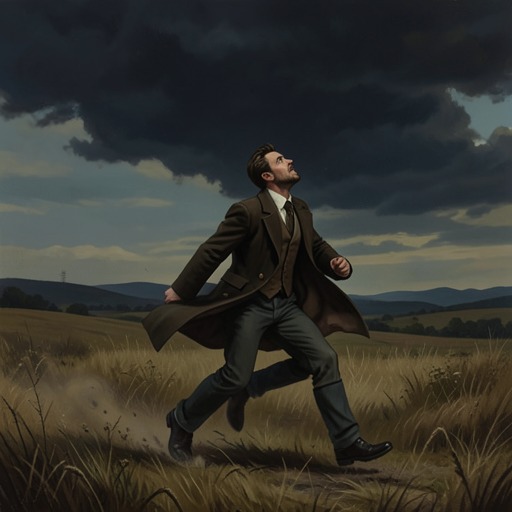
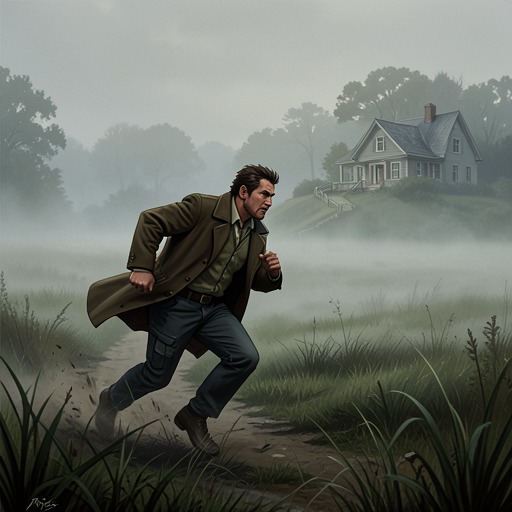
The declaration does not remain an abstract maxim. Tristram immediately calls for horses, greased wheels, and the mail to be tied on, urging that not a moment be lost. Its brisk imperatives enact the position they express: the sentence itself gathers momentum and propels the narrative onward.
That movement is also a way of resisting narrative stillness. Tristram’s account repeatedly sets the desire to proceed against interruptions, detours, and the practical business of travel. The maxim therefore describes both an appetite for physical motion and a preference for a narrative that refuses to advance only in a straight, uninterrupted line.
Travel: Motion and Its Frictions
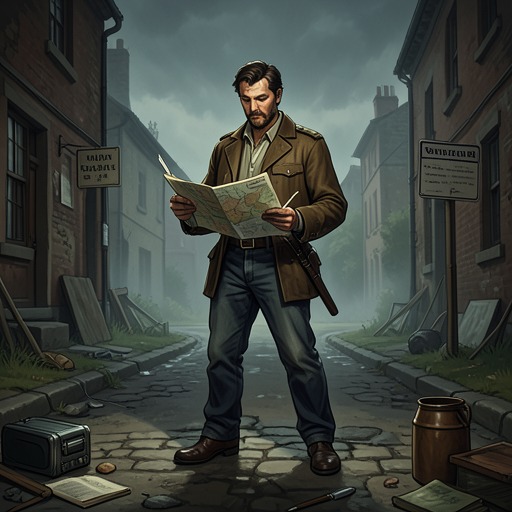
The journey shows that movement is not effortless. Between Calais and Paris, three roads compete for the traveler’s choice, and the local deputies’ competing claims can consume half a day. Tristram distinguishes the route by Lisle and Arras as the longest but most interesting and instructive, while the road by Amiens offers the prospect of seeing Chantilly. Motion requires choosing among possibilities, and even the choice of a route can delay departure.
His account of Calais makes a related point about what travel can and cannot establish. He says he knows little of the town: he arrived at dusk and left in darkness, relying only on what his barber told him. Yet he claims he could assemble a long, convincing chapter by drawing inferences from scattered details. The confident guidebook-like description is thus set against the narrowness of his actual observation, exposing how readily travel writing can turn fragments and convention into apparent knowledge.
Travel also repeatedly disrupts the wish to sleep while moving. At each stage, the traveler must pay three livres fifteen sous, counted out sous by sous; even preparing the exact sum in advance does not prevent disputes over missing change, the rate for a post and a half, or other small charges. The post-road book’s tiny print forces the traveler to open his eyes, while offers and claims from people encountered en route provoke further argument. Each interruption awakens the rational powers that sleep and motion were supposed to leave at rest.
The Broken Chaise and Renewed Energy
In Lyons, the wreck of Tristram’s chaise first appears to promise a more pleasurable and economical journey. He calculates that he can continue by water to Avignon for a hundred and twenty miles at less than seven livres, then cross the plains of Languedoc on mules or asses. He imagines saving four hundred livres and gaining the pleasure of descending the Rhône, with the landscapes of Vienne, Valence, and Viviers passing by.
As he elaborates the imagined journey, the damaged chaise seems smaller and shabbier to him; its paint loses freshness, its gilding its lustre, and its whole appearance becomes contemptible. He is about to reject it when a chaise-undertaker offers first to refit it and then to buy it. Tristram agrees to sell, reckoning the ironwork at forty livres, the glasses at another forty, and the leather as material the buyer can live on. The episode places the maxim’s delight in onward motion beside the material accident that makes a new route possible: breakdown becomes an occasion for imagined freedom, then a practical change in transport.
Meaning and Narrative Use
The expression’s force lies in its reversal of the conventional equation between perpetual motion and misery. Tristram does not deny that travel brings delays, expenses, uncertainty, and damaged equipment; instead, he treats movement as worth pursuing through those impediments. The traveler’s progress is repeatedly interrupted, but the desire to continue converts even an accident into the prospect of another journey.
The maxim also captures the book’s resistance to a single, orderly road. Routes branch, descriptions exceed what the narrator has actually seen, and a wrecked carriage opens onto a different itinerary. Motion is both the subject of the travel episodes and a model for their form: forward movement remains desirable, but it occurs through digressions, reversals, and changes of pace.