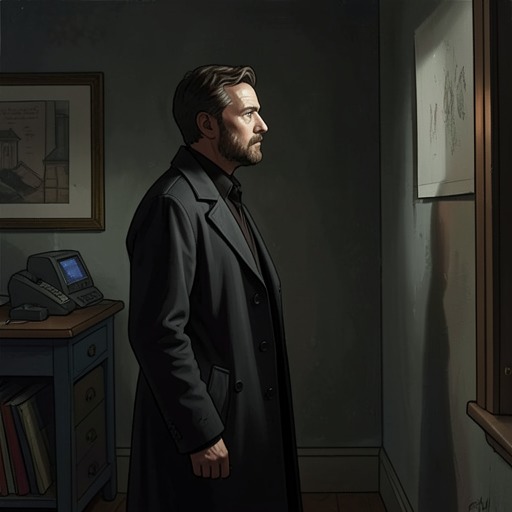
Didius
The Life and Opinions of Tristram Shandy, GentlemanDidius is a learned ecclesiastical disputant whose arguments help transform Yorick’s sermon and the mistaken Christian name of Walter Shandy’s son into public controversies. He speaks with professional assurance, deploying legal authorities and carefully balanced reasoning; yet the scenes repeatedly expose a gap between the authority of learned debate and the human or comic realities it is meant to settle. Yorick traps him with his own logic, while Kysarcius corrects his account of baptismal law.
Identity and Introduction
Didius appears among the learned churchmen and legal authorities drawn into discussion with Walter Shandy and Yorick. His standing is conveyed through his command of ecclesiastical and legal questions, his readiness to address the company, and his confidence in formal argument. The evidence presents him not through a private history but through debate: he is defined by the occasions on which he interprets a sermon, baptism, and kinship as matters to be adjudicated.
His public manner combines the gestures of a practiced speaker with the technical vocabulary of a disputant. When he introduces the question of baptism, he rises and lays his right hand, fingers spread, upon his breast. The ceremonious pose accompanies an argument built around precedent and distinctions in Latin grammar. His authority is therefore both intellectual and theatrical: he presents himself as a man equipped to settle difficult questions, while the scene invites scrutiny of the performance as well as the reasoning.
The Sermon Dispute
During the controversy over Yorick’s sermon, Didius objects to the sermon being cut into slips and handed around to light pipes. He calls the treatment abominable and joins Kysarcius in insisting that it should not go unnoticed. The complaint frames the sermon’s destruction as an insult to a learned gathering, but Didius’s response also makes the paper’s disputed value the center of an argument.
Didius then turns Yorick’s act into a dilemma. If the sermon was not good enough to preach before so learned a body, Didius says, it was not good enough to be preached there at all; if it was good enough for that audience, it was too good to be used afterward for lighting pipes. He believes the reasoning has caught Yorick on one of two horns. The polished antithesis is a display of logos, but it also mistakes the point Yorick is making: Yorick is not merely rating the sermon’s worth to the audience, but condemning preaching as a self-serving display of reading and wit.
Yorick answers that the sermon came from his head rather than his heart and that the pain of writing and preaching it is what makes him take revenge on it. He condemns sermons that parade learning without warmth or genuine religious purpose. Didius’s clever framing cannot contain that criticism; the exchange places formal ingenuity beside Yorick’s rebuke of intellectual vanity and the misuse of the preacher’s brief hour.
Baptism and the Disputed Name
Didius later turns to the blunder in the Christian name given to Walter Shandy’s child. He argues that, before the Reformation, a similar mistake during baptism in Latin might have allowed the rite to be declared null and the child to receive a new name. To illustrate the point, he cites a priest’s supposed corruption of the Latin baptismal formula, claiming that such a mistake rendered the baptism invalid.
Kysarcius immediately challenges the legal and grammatical detail. In the example Didius gives, Kysarcius says, the error lies only in the endings of the nouns, so the baptism remains valid; invalidity would require the mistake to fall on the first syllable of each noun rather than the last. The correction narrows Didius’s confident claim and makes the argument’s fine distinctions visible. The question is not merely whether a name was miscommunicated, but whether the precise form of the words spoken could alter the validity of the sacrament.
Didius’s account also provokes private reactions that complicate the solemn debate. Walter’s brother Toby silently notes that the naming mistake happened only the day before yesterday, while Didius speaks hypothetically of a distant pre-Reformation case; Toby also observes that the child’s baptism was in English. Walter, eager to hear the argument’s conclusion, draws closer to the table. The contrast between the actual family predicament and Didius’s remote canonical example gives the learned discussion its comic tension without resolving the child’s immediate case.
Kinship and the Suffolk Case
Didius participates with Kysarcius and Triptolemus in an argument over whether a mother is legally kin to her child. Kysarcius presents the proposition that the law has answered the question in the negative, despite its conflict with ordinary understanding. Walter is so eager to hear the discussion that he covers Toby’s mouth, ostensibly to whisper, because Toby’s inward whistling of Lillabullero might interrupt the proceedings. Didius is thus part of a learned conversation that Walter treats as urgently consequential even while its premise runs against everyday ideas of family.
The company grounds the proposition in the Duke of Suffolk’s case, cited through Brook, Lord Coke, and Swinburn. In the example presented, a duke’s son dies intestate, unmarried, and without children, leaving his mother and a paternal half-sister alive. The mother takes administration of his goods under the statute of 21 Henry VIII, which assigns administration to the next of kin. The legal question turns on whether the mother counts as kin in the relevant sense. Didius’s role in this company is to sustain a mode of inquiry that treats inheritance, family, and naming as problems to be parsed through precedent and technical definition.
Narrative Role and Significance
Didius is less a character developed through an independent personal arc than a recurring representative of learned disputation. His scenes connect theological and legal expertise to comic reversals: his carefully balanced challenge to Yorick fails to answer Yorick’s criticism of self-regarding preaching, and his baptismal example is corrected on the very grammatical distinction on which its force depends. In each case, intellectual form is conspicuous, but the confidence with which it is delivered does not guarantee that it has settled the matter.
The debates also show why Didius’s arguments captivate Walter. A naming error becomes an occasion for intricate canon law; a question of maternal kinship becomes a technical dispute over intestate administration. The learned company offers Walter a way to pursue his family anxieties through abstract reasoning, while Toby’s quiet interruptions and Yorick’s moral criticism keep those abstractions in comic perspective. Didius helps sustain that tension: he lends the arguments their professional gravity, even as the narrative exposes how easily gravity, ingenuity, and certainty can come apart.