
Giovanna and Her Parents After Childhood
The Lying Life of AdultsThis thread follows Giovanna’s changing attachment to Andrea and Nella as idealized parents become fallible adults, then distant figures she tries to approach on new terms.
increasing Bearing strength in each event
 decreasing
Bearing strength in each eventdecreasingThe Beloved Father
The Beloved Father
Affection as certainty
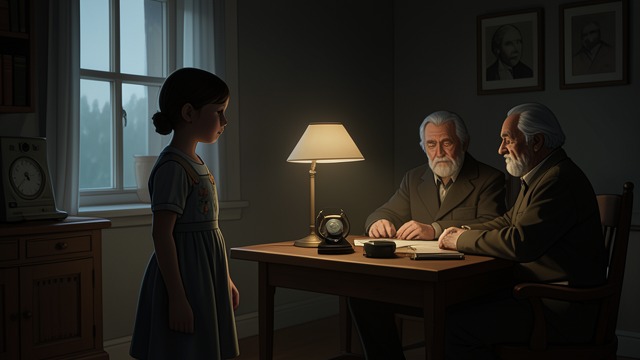
Giovanna remembers Andrea as courteous, elegant, and playful, a father who invents teasing games about taking her hair or features because he loves them. His joking attention gives her a strong sense that she is indispensable to him.
Nella is quieter, but she and Giovanna share intimate hours of jokes, makeup, and domestic companionship. Together, the parents seem to Giovanna the only clear and dependable figures in a confusing world.
The first fracture
That security makes the overheard comparison with Vittoria devastating. Giovanna cannot treat it as an ordinary insult because it comes from the father whose loving voice has helped define her worth.
She begins to question whether her parents’ displeasure concerns only her grades, or whether they have always perceived some unwanted future in her. The first uncertainty in the parent-child bond is therefore also a crisis in Giovanna’s sense of self.
A Mother’s Attempt at Repair
A Mother’s Attempt at Repair
Explaining the family history
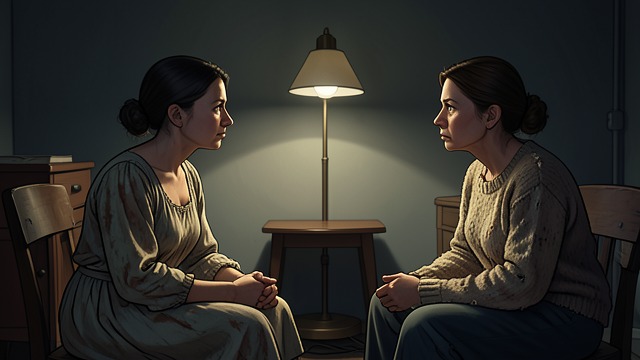
Nella responds to Giovanna’s distress with a calm account of Andrea’s difficult upbringing and his lifelong conflict with Vittoria. She tries to make clear that her husband’s remark was a private family expression, not a verdict on their daughter.
The explanation gives Giovanna a picture of the family’s old injuries but does not give her the reassurance she needs. She remains convinced that seeing Vittoria is necessary if she is to understand the face she fears she is inheriting.
Trust tested by delay
When Nella tells her to discuss the visit with Andrea, Giovanna expects the matter to be settled quickly. Instead, the delay and suggestion that she could go alone feel like evidence that her parents no longer take her urgent feelings seriously.
The perceived withdrawal is a turning point. Giovanna starts making plans without them, even though she still wants their permission and protection. Their care remains real, but she is beginning to experience it as limited by their own anxieties.
A Father’s Apology and Warning
A Father’s Apology and Warning
Repair through action
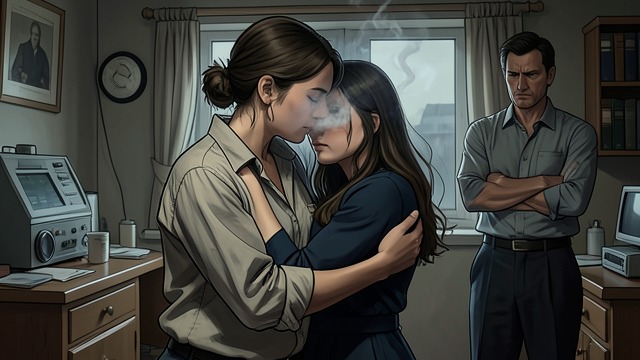
Andrea recognizes that Giovanna has heard his remark and tells her that he did not mean to hurt her. Rather than leave the apology at words, he agrees to take her to see Vittoria, although he openly says that he does not want to go.
His willingness to act for Giovanna restores some trust. She embraces him and still longs for the old playful ease, even as she notices an unfamiliar odor and feels an unexpected pleasure at the thought that he might become a stranger.
Protection and possession
Andrea warns that Vittoria will try to take Giovanna’s affection away from him. His fear makes visible the emotional stakes of the family feud: he is not merely worried about a visit but about losing his daughter’s loyalty.
Giovanna’s embrace is therefore divided. She loves her father and wants to soothe him, yet Vittoria’s world already exerts a powerful attraction. The parental bond has become something Giovanna can feel pulling in opposite directions.
The Father Becomes Fallible

The Father Becomes Fallible
Adult conduct enters the home
Giovanna’s perception of her parents changes when she sees Mariano’s foot between Nella’s ankles under the dinner table and later witnesses the family consequences of the adults’ hidden relationships. The parents who taught her about the body can no longer keep adult sexuality safely abstract.
Nella eventually tells Giovanna that Andrea has had another relationship for fifteen years. The revelation does not feel wholly new; it confirms suspicions Giovanna has pieced together from the bracelet, Costanza, and the tense exchanges among the adults.
Love without innocence
Andrea’s departure and his strained explanations make Giovanna feel abandoned, but her feelings do not settle into simple hatred. She sees his tenderness alongside his betrayals and struggles to understand how goodness and harm coexist in one person.
Nella’s continuing devotion is also difficult for Giovanna to judge. What once looked like weakness begins to resemble a painful strength, while Andrea’s intelligence no longer guarantees moral clarity. Their parental authority survives only in altered, contested form.
Love Reconsidered

Love Reconsidered
The mother’s fidelity
Giovanna begins to soften toward Nella after noticing how faithfully she continues to care about Andrea despite his departure. Nella says that she sometimes remembers the years when they were happy and forgets that she hates him, a confession that gives Giovanna a new way to understand attachment.
Giovanna no longer sees her mother only as a person diminished by suffering. She considers whether Nella’s persistence is a form of strength, though she remains frustrated by her mother’s dependence on Andrea.
A partial approach to Andrea
Giovanna also makes limited efforts to speak cordially with her father. She listens to his accounts of books and ideas, accepts his practical help, and sometimes finds herself drawn back toward the daughterly admiration she had tried to reject.
The return is incomplete. Giovanna distrusts Andrea’s self-justifications and resists restoring his authority, but she can no longer pretend that she feels nothing. Her movement toward adulthood involves recognizing love as enduring and compromised rather than perfectly safe.
Before Giovanna’s twelfth birthday
The weeks after the overheard remark
The days before Giovanna’s first Sunday visit to Vittoria
During the two years before Andrea and Nella separate
After Giovanna returns from her second Milan journey
