
The Face of Vittoria
The Lying Life of AdultsThis thread follows Giovanna Trada’s fear that physical resemblance to Vittoria determines her character, then shows how beauty and ugliness become unstable judgments.
increasing Bearing strength in each event
 decreasing
Bearing strength in each eventdecreasingA Face Predicted
A Face Predicted
A father’s remark
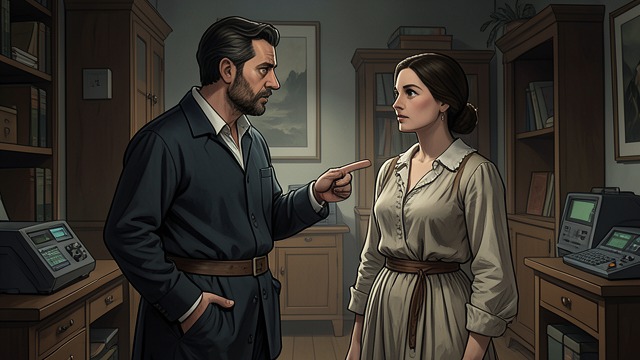
Andrea Trada tells Nella that their daughter Giovanna Trada is getting the face of Vittoria. He means to criticize a change in his daughter’s conduct, but Giovanna overhears the sentence as a pronouncement about her body and future.
Resemblance as threat
Because Vittoria has been described as spiteful and repellent, Giovanna treats resemblance as a kind of moral contamination. Her father’s words collapse appearance and character: to look like the despised aunt seems to mean becoming the person her family fears.
The remark gains force from Giovanna’s early adolescence, when bodily changes already make her self-conscious. A casual adult judgment becomes an origin story she struggles to escape, shaping how she studies her face and how she interprets every family encounter.
The Mirror’s Inventory
The Mirror’s Inventory
Features under suspicion
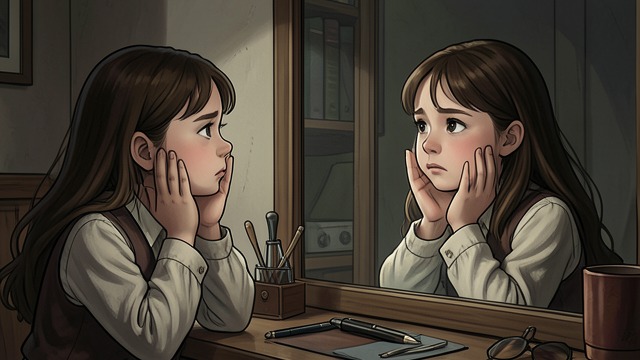
Giovanna Trada begins examining herself for evidence of Vittoria. She lists details she once ignored—her eyebrows, nose, lips, ears, hair, and growing breasts—and turns the mirror into a tribunal where every feature may testify against her.
The unstable body
She cannot decide whether the changes are ordinary adolescence or signs of an inherited identity. Her parents’ attractive appearances sharpen the comparison, making her feel that she has failed to combine their best qualities and instead received a face belonging to their family conflict.
The scrutiny is painful but also begins a limited form of agency. Giovanna tries makeup, asks Nella to teach her, and recognizes that she must take responsibility for the body she has rather than wait for another person’s approval to define it.
Beauty Inside the Ugliness
Beauty Inside the Ugliness
The feared face encountered
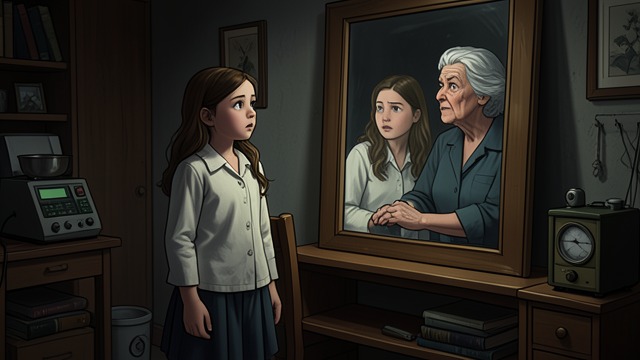
When Giovanna Trada first sees Vittoria in person, she is frightened by the older woman’s forceful manner, but cannot honestly call her simply ugly. Vittoria’s face changes as she speaks: harshness gives way to warmth, grief, anger, and animation.
Appearance refuses certainty
Giovanna experiences Vittoria as both beautiful and ugly, an answer that unsettles the family’s fixed moral portrait. The aunt’s physical presence does not prove Andrea’s accusations false, but it makes the inherited equation of ugliness with evil harder to sustain.
The meeting also gives Giovanna a different standard for beauty: vitality, emotional force, and the capacity to command affection matter alongside conventional features. Her self-image remains anxious, but the mirror no longer has a single authoritative interpretation.
The Face in the Family Photograph
The Face in the Family Photograph
A hidden image recovered
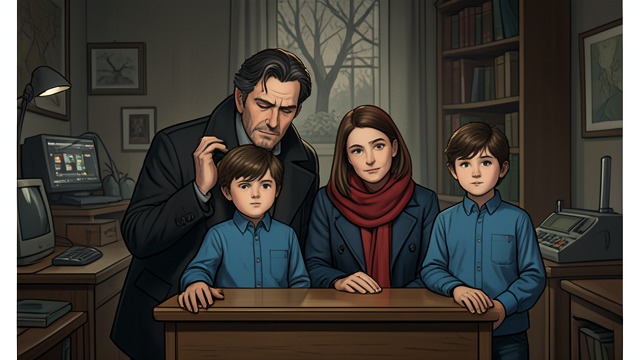
Nella shows Giovanna Trada an old family photograph in which Andrea, Vittoria, Enzo, and their mother appear together. Unlike the photographs Andrea blacked out, this image preserves the siblings’ closeness and the presence of the man at the center of Vittoria’s history.
Resemblance becomes relational
Giovanna notices that Andrea and Vittoria look strikingly alike. Their shared features complicate the idea that one sibling represents refinement while the other embodies vulgarity; the family’s emotional division has been laid over a likeness that remains visible.
The photograph also reveals how selective attention works. Nella had repeatedly looked at the young Andrea without noticing the bracelet on his mother’s wrist, while Giovanna sees both details at once. Looking becomes more than inspection: it exposes what grief, desire, or loyalty has taught a person not to see.
Beauty Without Rescue
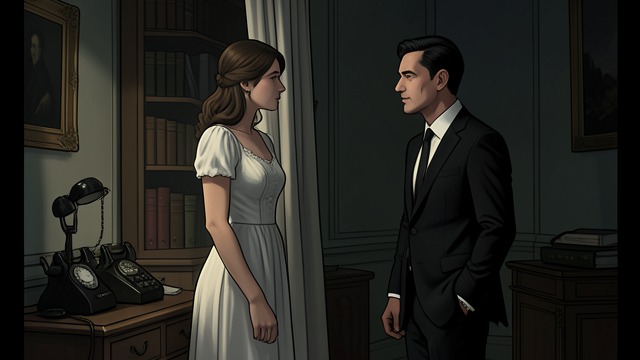
Beauty Without Rescue
A brief affirmation
After spending the night in Milan with Giuliana and Roberto, Giovanna Trada hears Roberto call her beautiful. The compliment gives her a momentary sense that the face she has feared may be seen differently by someone she admires.
No final verdict
The reassurance does not resolve Giovanna’s anxiety or grant her a stable identity. She continues to compare herself with others and to wonder whether beauty can be separated from the harm people inflict while pursuing love and recognition.
By late adolescence, she begins to see that beauty and ugliness do not reliably disclose character. A harmonious appearance can coexist with suffering and betrayal, while a face judged coarse may carry tenderness or courage. The old question of whose face she has inherited remains open, but it no longer determines the whole measure of who she can become.
Two years before Giovanna leaves home
In the weeks after the overheard comparison
At Giovanna’s first meeting with Vittoria
During the first period of Andrea and Nella’s separation
During Giovanna’s sixteenth year
