
The Parish Community and Its Dispersal
The Lying Life of AdultsThis thread follows the parish world that briefly connects Giovanna to Roberto and to a wider community, then fractures under institutional opposition and personal conflict.
increasing Bearing strength in each event
 decreasing
Bearing strength in each eventdecreasingThe Charity Market
A Parish Gathering
Entering the church
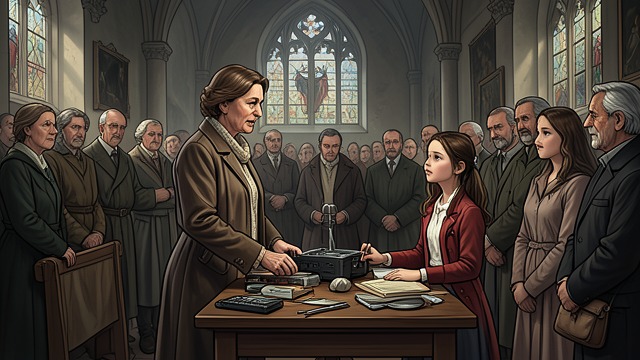
Vittoria Trada takes Giovanna Trada, Angela, and Ida to a parish flea market, where Margherita and her children help sell used goods. The event is practical and communal: people arrange objects, greet visitors, and raise money for the poor.
A different kind of public life
Giovanna watches Vittoria move between harshness and performance, sometimes bargaining fiercely and sometimes dancing to music. The church is unlike the quiet, art-focused spaces Andrea Trada has shown his daughter; this is a place where religion, work, music, and neighborhood life meet.
The market gives Giovanna a first glimpse of a community that is not organized around her parents’ intellectual circle. She is not yet fully at ease there, but she begins to see how Vittoria belongs to a network beyond the private family feud.
Don Giacomo’s Welcome
A Priest Makes Room
Children in the parish
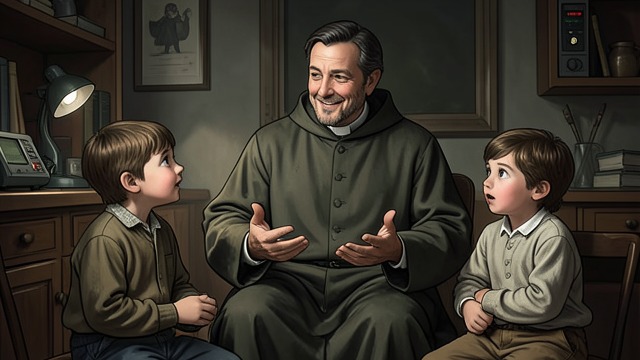
Don Giacomo meets Giovanna, Angela, and Ida without requiring them to know prayers or profess belief. He tells them they can pray sincerely even without formal words and treats the girls’ questions as part of their innocence rather than as a disruption.
A message to Vittoria
His remarks about welcoming children also seem directed toward Vittoria, whose distress he has noticed. When he refers to Roberto’s ideas about children and the Gospel, the parish scene opens beyond selling goods into debate about how adults should treat the young.
Giovanna is struck by the contrast between the priest’s gentleness and the tense family world she has entered. Don Giacomo offers a form of authority that does not depend on silencing children, and the memory of that welcome will matter when she later encounters Roberto speaking in the church.
Roberto’s Parish Address
A Public Voice
A talk in the church
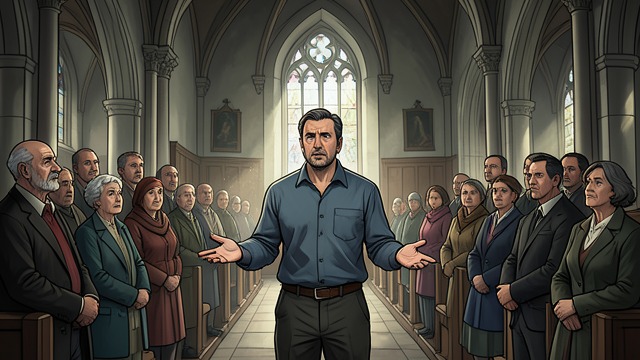
Giovanna returns to the parish and sees Roberto Matese speak from a table at the end of the nave. His talk is difficult to reconstruct later, but she remembers its themes of conscience, justice, courage, and the responsibility to act for others.
A new source of authority
The force of the occasion comes as much from Roberto’s presence as from the words themselves. Giovanna hears an argument about spiritual and political life that feels different from the rehearsed intellectual discussions of her father’s circle.
The address makes the parish a point of encounter between Giovanna’s need for direction and a community animated by Roberto’s ideas. Her subsequent attachment to him grows from this public moment, when she imagines that his voice can help her understand herself and the adult world.
The Discussions Are Banned
Institutional Resistance
The end of the gatherings
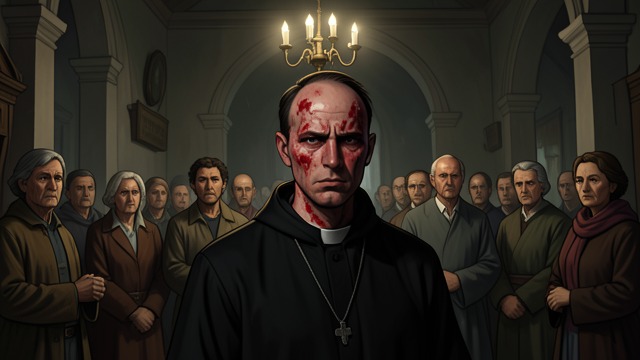
Giovanna later learns from Don Giacomo that Roberto will not return to speak and that the parish will host no more initiatives of that kind. The priest says that his superiors and some parishioners opposed the discussions, exposing a divide between the work he believes the church should do and the institution’s limits.
Obedience takes its toll
Don Giacomo’s reddened eyes and skin eruption suggest the personal cost of being made to obey decisions he rejects. He jokes that obedience is a skin disease, and Giovanna recognizes in his condition the strain of a person whose inner convictions have been constrained.
The ban interrupts the community’s new intellectual life and cuts off one of Giovanna’s routes to Roberto. It also makes the parish’s warmth fragile: even a welcoming local gathering can be undone by authority exercised from outside the neighborhood.
Don Giacomo Leaves
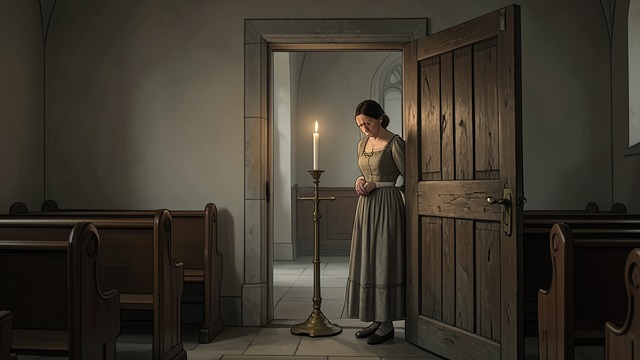
A Community Loses Its Priest
Departure from Pascone
Giovanna hears that Don Giacomo has been sent to Colombia after the conflict over the parish discussions. His departure confirms that the prohibition has consequences beyond ending the talks: the priest who made room for questions is removed from the community.
The remaining bond
Vittoria tells Giovanna that Don Giacomo had first been like medicine for the parish and then brought painful side effects. Her mixed judgment reflects a wider unease: the discussions stirred people but did not leave their old conflicts behind.
The parish loses a figure who linked faith, public debate, and care for children. Roberto remains associated with that brief opening, but Giovanna must now pursue their connection through personal relationships rather than a shared community forum.
Early in Giovanna’s regular visits with Vittoria
During the same parish market
Near the end of Giovanna’s adolescence
Some time after Roberto’s first parish address
After the parish discussions are prohibited
