Blacked-out family photographs
The Lying Life of AdultsBlacked-out family photographs are the clearest physical sign of Andrea’s attempt to erase people from his family history. The black rectangles conceal Vittoria and another person, yet their presence remains legible in the photograph’s composition and surviving traces. When Giovanna discovers the pictures among her father’s family images, the photographs become more than records of the past: they are evidence of a deliberate silence, and the first object through which she tries to look behind it.
Discovery and Arrangement
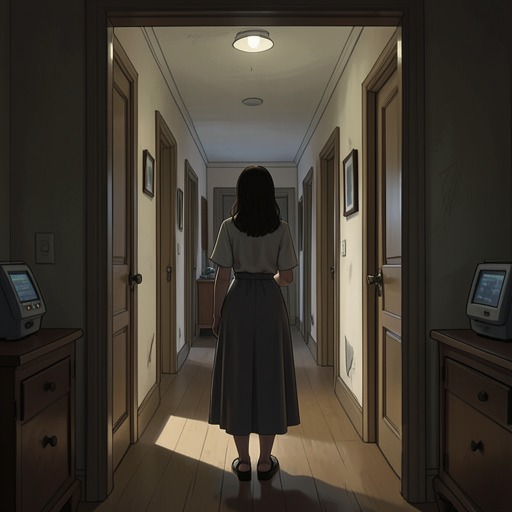
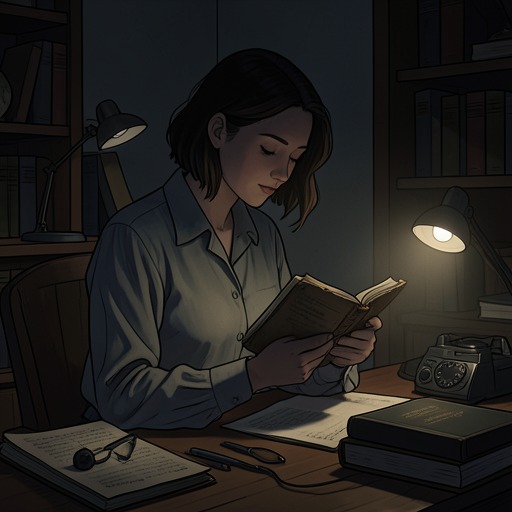
After searching the family albums for any indication of a woman she had no memory of, Giovanna opens a box of old photographs. The pictures of her parents’ separate teenage years are jumbled together, but their childhood and early-adolescent photographs have been sorted into two envelopes, one for her mother’s family and one for her father’s. She expects that the pictures of her father’s relatives may include the aunt she has never known.
There are only about twenty images in her father’s envelope. In three or four, Andrea appears beside a precise black rectangle drawn with a felt-tipped pen. The contrast between the informal family photographs and the unusually deliberate marks arrests Giovanna’s attention: these are not accidental blemishes but carefully bounded areas of concealment. She understands the rectangles as deletions, and identifies Vittoria as the person hidden beneath the black ink.
The Erasure and What Remains
Giovanna imagines Andrea using a ruler from his desk to outline each area and then filling it in without crossing its margins. The care implied by the neat geometry makes the covering itself an action: someone has taken time to remove a person from an image that originally included her. But the photograph has not been destroyed. Andrea has left the surrounding scene intact, so the deletion becomes conspicuous precisely because everything around it remains visible.
Giovanna takes a knife to one covered photograph and delicately scrapes at a small patch of ink. Only the white of the paper emerges. Afraid that disobeying her father might further damage his affection for her, she stops. The attempt does not restore the hidden image; it confirms that the material surface has been altered while keeping the person beneath it inaccessible.
At the back of the envelope, she finds a photograph of Andrea as a young man rather than a child or teenager. He is smiling in profile on a street, beside two more sharply drawn rectangles. Giovanna understands these as covering his sister and someone else. The image preserves details of the scene—a shop entrance whose sign shows only the ending “–RIA,” a display window, a bright lamppost, and long shadows, including one cast by a female figure—but not the faces Andrea has hidden.
She tries scraping at this photograph too, stopping when the paper beneath the ink again appears white. After waiting, she resumes with care, listening to her breathing in the quiet house. She gives up when all she has exposed from the place where Vittoria’s head must once have been is a spot that might be marker residue or a trace of her lips. The image yields a mark, not a recovered face: the erasure can be examined, but not undone.
Family Division and Giovanna’s Looking
The photographs acquire meaning within the wider separation between the two branches of Giovanna’s family. Her mother’s relatives belong to a familiar place, Museo, while her father’s relatives seem to inhabit a nameless world below the part of Naples she knows. Her parents’ visits to them are marked by unusual tension, and Andrea and Nella warn Giovanna to ignore Vittoria if she says something. The photographs give this anxious, unspoken estrangement a visible form: even within the family record, Andrea has made his sister disappear.
Later, Vittoria brings Giovanna to meet her paternal relatives. She describes the excursion as a meeting with their blood and urges Giovanna to look closely at the differences between them and her parents. The relatives welcome Giovanna warmly, call her Giannina, and offer an experience of kinship distinct from the guarded contact she has known. This encounter complicates the black rectangles’ implied history: the people removed from Andrea’s photographs are not merely names or figures in an old conflict, but members of a living family network that receives his daughter with affection.
The photographs also foreshadow the strain of Giovanna’s position between adults whose relationships and resentments remain partly hidden from her. At Angela’s home, she observes an ambiguous closeness between Nella and Mariano and decides she will not report what she saw to Vittoria, fearing that her aunt would interpret it in the harshest terms. After Andrea and Mariano’s friendship breaks into an open quarrel, Giovanna tries to understand the rupture through partial clues and anxious conjecture. Like the blacked-out images, those clues reveal that something has been withheld without making the whole story available.
Significance as an Object of Memory
The photographs turn concealment into a visible, tangible act. The black rectangles do not simply leave a gap: their exact edges, the surviving background, and the traces left by people outside the covered areas all attest to what the image can no longer show. Andrea’s attempt to control the family past is therefore imperfect. He can cover faces, but he cannot remove the fact that someone was beside him, or prevent his daughter from noticing the work of erasure.
Giovanna’s careful scraping mirrors the limits of her search for knowledge. She does not recover Vittoria’s features; she finds only white paper and an uncertain spot. The episode establishes a recurring distinction between looking and seeing: visual evidence can sharpen the questions a family has tried to suppress without supplying a complete answer. The photographs’ significance lies in that double action. They preserve a trace of family connection while making the refusal of that connection impossible to overlook.