Giovanna confides in Vittoria about Nella and Mariano
The Lying Life of AdultsGiovanna’s confession to Vittoria about Nella and Mariano is a turning point in which an uncertain glimpse at a family dinner becomes an accusation shared with the aunt Giovanna both trusts and fears. The scene begins with Mariano’s foot against Nella’s ankle beneath the table; days later, at a Christmas market, Giovanna gives Vittoria the account she had decided not to tell. She asks for secrecy, mixes what she saw with what she imagined, and receives an answer that makes the adult world seem less innocent—and less surprised—than she had hoped.
Background: a family’s hidden anxieties
Giovanna has grown up among adults who present a composed surface while shielding her from matters they refuse to explain. Before visits connected with Vittoria, her parents become tense: her father puts aside his books and notebooks, changes into a clean shirt and good suit, while her mother checks everyone’s appearance as though proper clothing could secure their safe return. The parents say little about what they are defending themselves from. Instead, they warn Giovanna to pretend not to hear if Vittoria says something. Their careful silences leave a child to interpret fragments without knowing what the adults already understand.
The household also polices language. Neapolitan dialect is forbidden to the girls, although Mariano’s frequent visits bring them a stream of dialect insults aimed at the people he calls his enemies. He and Giovanna’s father have been friends since university; Mariano teaches history at the university, contributes to a prominent Neapolitan journal, and spends long hours arguing with his friend about their work and its opponents. For Giovanna and her sisters, the forbidden words are funny to repeat under their breath, but Giovanna also hears in Mariano’s jokes a streak of spite. The distinction matters: his presence is familiar, yet never entirely reassuring.
At dinner, the children’s boredom gives way to a view of the adults from an unusual angle. Giovanna lies on the floor by the open dining-room door and sees their legs beneath the table. Mariano has stretched his legs toward her mother and is squeezing one of Nella’s ankles between his. Giovanna sits up, ashamed of what she has noticed. When she lies down again, Nella has withdrawn her legs and turned her body toward Giovanna’s father, remarking that November is still warm. The gesture does not explain what came before it; it sharpens the question.
The dinner scene and its uncertainty
After Giovanna’s parents leave, Mariano and Costanza clear the table and send the girls to bed. Giovanna cannot settle on what the contact meant. It might have been innocent play, an illicit act by Mariano, or something Nella had knowingly allowed; she wonders how long their ankles had been together and why Nella had not immediately pulled away. She also finds the possibility difficult to reconcile with her picture of her mother, who has criticized Mariano as tiresome and has seemed unable to tolerate him. Observation has supplied a detail, not a verdict.
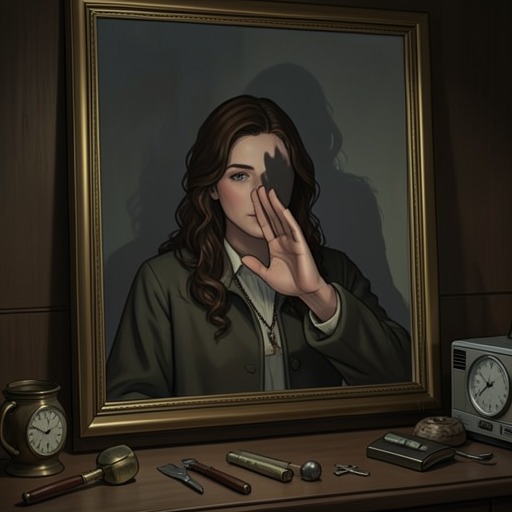
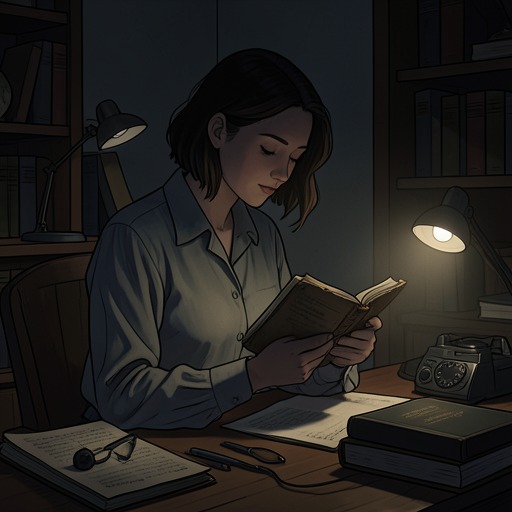
In bed, Giovanna tries to strip the image of its significance, telling herself that it was nothing more than play between friends. But the picture returns: Nella’s ankle held between Mariano’s legs. Vittoria’s earlier injunction to look carefully gives that memory an investigative force. Giovanna has looked, she thinks, and seen something; she could report it and ask her aunt what it means. Yet she decides she will not. She fears that Vittoria would take an ambiguous touch and force it into the language of sexual desire, using the same coarse vocabulary with which she speaks of her own love for Enzo. In Giovanna’s imagination, that vocabulary would not merely describe Nella and Mariano; it would degrade her mother and, through her, her father. Silence becomes an attempt to protect her parents from Vittoria’s interpretation as much as a refusal to become an informer.
The confession at the parish market
The withheld account weighs on Giovanna. At the parish Christmas market, she feels oppressed by thoughts of her mother and Mariano, while the people around her appear handsome, good, and just. Vittoria, too, looks unwell: she alternates between an artificial brightness and a wide-eyed stare into space, calls herself sick at heart, in the chest, and in the stomach, and asks Corrado to fetch water. Giovanna recognizes in her aunt’s distress a reflection of her own. That sense of closeness helps turn what had been a private decision not to speak into an urgent need to tell someone.
Giovanna’s account is driven not only by suspicion but by jealousy and distress at the thought of Mariano’s physical access to Nella. She imagines him holding her mother while Nella wears clothes and jewelry Giovanna knows from childhood and has sometimes worn herself. The imagined intimacy feels like an intrusion by a malicious stranger. Without first deciding consciously to speak, Giovanna calls Vittoria her aunt—a form of address Vittoria has forbidden—and insists that she must tell her a secret. She asks Vittoria to swear not to tell anyone. Vittoria refuses to swear, saying that the only oath she has taken is to love Enzo forever and that she will keep it until death. Giovanna says she cannot talk without the promise. Vittoria responds that the nasty things left unsaid become dogs that eat at a person’s head at night. Frightened by that image and seeking consolation, Giovanna pulls her aside and tells her what she saw, mingled with what she imagined.
Vittoria’s answer and the consequences
Giovanna ends the disclosure with a specific plea: she begs Vittoria not to tell her father. Vittoria does not answer by confirming an affair or explaining the ankle contact. Instead, she replies in dialect, with a mocking harshness, that Giovanna thinks her father gives a damn about Mariano and Nella’s ankles beneath the table. The answer exposes the gap between the child’s construction of the family secret and the aunt’s harder view of her brother. It offers no resolution about what happened between Nella and Mariano; the central evidence remains a gesture Giovanna saw and a story she built around it.
The exchange also reverses the roles implied by Vittoria’s demand that Giovanna watch closely. Giovanna has followed the instruction to observe, but she has not become a neutral witness: her report carries fear, shame, love for her mother, and images shaped by Vittoria’s sexual language. Nor can the promise she sought secure her confidence in a stable way: Vittoria refuses an oath, and her response is not reassurance. The confession makes their intimacy palpable, yet leaves Giovanna with no clean boundary between sight and suspicion, secrecy and disclosure, or the aunt’s bluntness and the comfort the child came seeking.