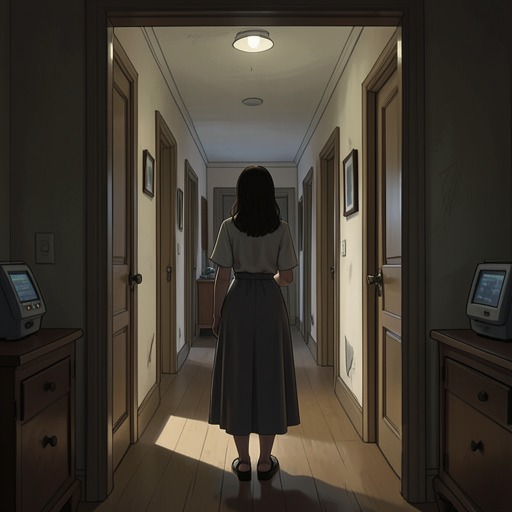
Giovanna retakes the grade
The Lying Life of AdultsGiovanna’s failure to advance at school is both an educational setback and a rupture in the family’s management of appearances. When her mother discovers the result, she tries to challenge it as an injustice; Giovanna, by contrast, comes to regard failure as the one distinction she can claim. Her parents’ decision to keep it secret deepens her humiliation and makes their remaining common feeling seem to her like shame.
Causes and Discovery
In June, Giovanna’s mother goes to the school to find out what has happened. She already knows that Giovanna has been doing badly, but not being promoted seems excessive. She brings Giovanna with her and speaks to the teachers and principal as though her daughter’s presence might demonstrate that an injustice has occurred. The visit is painful for both of them: the teachers struggle to remember Giovanna, while the school records show poor grades and an excessive number of absences.
Her mother is especially troubled by the absences and asks where Giovanna had gone and what she had done. Giovanna says that she had been at the Floridiana. The literature teacher then says that she evidently has no talent for classical studies. Giovanna does not answer aloud, but the judgment meets a much broader despair: she feels that she has no talent for anything, and is neither intelligent, capable of good intentions, pretty, nor nice. The academic verdict therefore lands within an already severe self-condemnation rather than remaining a narrow assessment of her studies.
A Family Response
Giovanna’s mother counters the teacher by insisting that her daughter is talented and has only been somewhat lost that year. Once they are outside, however, she blames Giovanna’s father: because he has left, she says, he should have been the one watching over, helping, and encouraging their daughter. She continues blaming him at home and seeks him out at school the following day. The narrator does not know what passes between her parents, but their dispute makes the school failure part of the family’s separation as well as Giovanna’s schooling.
Afterward, Giovanna’s mother tells her that they will not tell anyone she was not promoted. The proposed silence is meant to contain the setback, but Giovanna experiences it as another humiliation. She wants people to know. In her view, failure has become her only mark of distinction, and concealment denies her the chance to make it visible to the people whose judgment matters to her.
Shame, Identity, and the Concealed Result
The disclosure Giovanna imagines is deliberately harsher than the facts of the school record. She wants her mother to tell her colleagues, and her father to tell the people who respect and love him, that she is unlike her parents, cannot learn or work hard, and is ugly inside and out like her aunt. She even imagines that they might say she should go live with that aunt in the Macello neighborhood, in the Industrial Zone. This fantasy binds academic failure to a wider fear of family resemblance, rejection, and belonging elsewhere.
The imagined move carries the force of an escape into the territory of her father’s relatives. For Giovanna, that part of Naples had long been distant and difficult to reach: her family’s usual life occupied the city’s higher districts, while journeys down into the lower city seemed to lead into a different world. Her father’s relatives lived in areas she had regarded as obscure and unfamiliar. Later, when she visits them with her aunt, Giovanna finds warmth and welcome there, and the name Giannina helps her imagine herself as a more relaxed and affectionate person than the Giovanna known at home and school. Against that history, her fantasy of living with her aunt turns failure into a possible departure from the identity her parents have given her.
Aftermath and Significance
When Giovanna asks why the result should be hidden, her mother says there is no point making a drama of it: it is only a small setback, and Giovanna will repeat the year, study, and become the best in her class. Giovanna answers yes, but then asks whether her father told her mother not to tell anyone. Her mother does not answer. She bends over her work and looks even thinner to Giovanna, who understands their shame as perhaps the only feeling they still share.
The event thus ends not with a resolution of the school problem but with an uneasy bargain about how it will be named. Her mother offers repetition and future achievement as a path forward; Giovanna has wanted the failure acknowledged as evidence of her difference. The silence between her parents leaves that difference unresolved, while the repeated year makes the setback a concrete break in the course of her education.