Milan
The Lying Life of AdultsMilan is both a destination and a measure of changing intimacy in Giovanna’s story. On her visits, the city brings her close to Roberto and Giuliana’s shared life: first as an observant young guest, later as someone who invents urgent reasons to return. Its crowded apartment and the journey across the city stand apart from her family’s ordered home in Naples, while Roberto’s reflections on Pascone make Milan part of a wider contrast between departure and the claims of one’s origins.
Milan in Giovanna’s mental map
Before Milan becomes a place she travels to, Giovanna’s sense of distance is shaped by Naples. She describes the city through a vertical geography: her family lives in its highest part, and visiting her father’s relatives requires descending toward neighborhoods that seem to belong to another city. The familiar Vomero streets, with their gardens, flowers, and Villa Floridiana, give way to districts her parents approach with visible weariness and anxiety. For a child who knows the lower city mostly through names her parents mention, distance is not simply mileage; it marks the boundary between a protected, familiar world and places she has not yet learned to see for herself.
That inherited map helps frame Milan as a different kind of crossing. Giovanna travels there with Giuliana, not as a tourist but as a companion in Giuliana’s strained engagement to Roberto. The visit places her inside a domestic world she has previously encountered only in fragments: one where adult relationships, professional obligations, and a woman’s anxious attachment are no longer distant topics but the immediate circumstances of her stay.
A visit shaped by separation
Before Giovanna reaches Milan, Giuliana’s concern about Roberto’s work trip to London sharpens when she learns that he will travel with Michela and two other professors. The prospect unsettles Giuliana, and Giovanna becomes alarmed too. The journey to Milan thus takes place against a relationship already strained by distance and by Giuliana’s fear that Roberto may be drawn toward another woman. Milan is where that fear can be tested against the ordinary facts of the couple’s life together.
At the station, Giovanna recognizes Roberto before Giuliana does and raises her hand so he can spot them among the travelers. He and Giuliana hurry toward each other and embrace with an intensity that seems almost to merge their bodies, though their kiss is light. Roberto thanks Giovanna for accompanying his fiancée, then takes Giuliana’s large suitcase and bag. Giovanna follows with her own small case. This arrangement makes her a witness and helper at once: present at the couple’s reunion, yet physically a few steps behind them.
The sight revises her image of Roberto. In Naples, and in their earlier conversations in Piazza Amedeo, she had experienced him as a professor of unusual depth, absorbed in complicated branches of knowledge. In Milan, with his hip pressed to Giuliana’s and his repeated kisses, he appears as an ordinary young fiancé. His capacity for ordinary affection does not erase the intellectual gravity Giovanna associates with him; it makes that gravity one part of a person she can now see in a shared domestic setting.
The apartment and its contrasts
The couple’s apartment lies beyond a journey of at least twenty minutes on the metro and a further fifteen-minute walk. After a descent down a grand pale-yellow staircase, the travelers climb old, dark stone steps to the fifth floor. Giovanna takes pride in remaining silent with her own bag while Giuliana, unburdened, talks and moves with growing happiness. The route makes their different positions visible: Giuliana is returning to a familiar home and partner, while Giovanna enters as a guest who must find her place in their reunion.
Giovanna likes the apartment immediately, despite a faint smell of gas. Its rooms give a strong contrast to the tidy flat on Via San Giacomo dei Capri, which she associates with her mother’s insistence on order. Here, books lie in piles on the hall floor; the large room contains unusual old furniture, a desk crowded with folders, a faded red couch, overflowing shelves, and a television perched on a plastic cube. The concierge cleans daily, Roberto explains, but the apartment still feels structurally unwelcoming. Its disorder is not presented as dirt so much as a lived-in accumulation of work, books, and objects—a household whose character differs from the one Giovanna knows at home.
Giuliana immediately begins to claim and tend the space. She interrupts Giovanna’s attempt at an ironic remark, embraces Roberto, and gives him a long kiss. Then she leads Giovanna into the kitchen, checks what is there, and criticizes the concierge’s work as she begins to put things right. She speaks to Roberto continuously about people from university—Gigi, Sandro, and Nina—and the problems attached to their names. When Roberto asks whether Giovanna might be bored, Giovanna says she is not. The apartment becomes a scene in which Giuliana’s fluency and familiarity are unmistakable, while Giovanna watches the couple’s everyday closeness from the edge of their conversation.
Pascone and the meaning of return
Milan is also the setting of Giovanna’s conversation with Roberto about what binds him to Giuliana. When he tells her he loves Giuliana and says the only thing that could prevent their marriage would be Giuliana’s refusal, Giovanna reassures him that Giuliana wants marriage intensely. She also voices Giuliana’s fear that Roberto might fall in love with someone else, especially while traveling and meeting people who understand his work. The exchange unsettles Giovanna because Roberto is willing to speak with her about private matters, not only about ideas or professional life.
In response, Roberto describes Naples and Pascone as places unlike Giovanna’s own perception of them. He says he has incurred a debt there that he must repay: a spiritual obligation to the place where he was born, so large that a lifetime would not be enough to restore the balance. His love for Giuliana, who was born on those streets, is bound to the memory of that debt; he describes her as its incarnation. Milan therefore does not simply represent a new life away from Naples. It is where Roberto explains that his attachment to Giuliana carries the place he left with him, turning marriage into a form of return and repayment.
The conversation also exposes a difference in how Giovanna and Roberto understand intimacy. She tests his account against the practical possibility that he might meet someone else who understands his work better. He answers by reaching back to his childhood and birthplace, and thanks her for forcing him to reflect. His serious language makes her feel at ease because he sometimes uses elementary constructions, yet it also troubles her: she wonders whether he is adapting his manner to speak with a girl, and whether he might speak with greater complexity to Michela. The Milan conversation thus deepens her access to Roberto while reminding her that access does not mean equality or full knowledge.
Return as an invented necessity
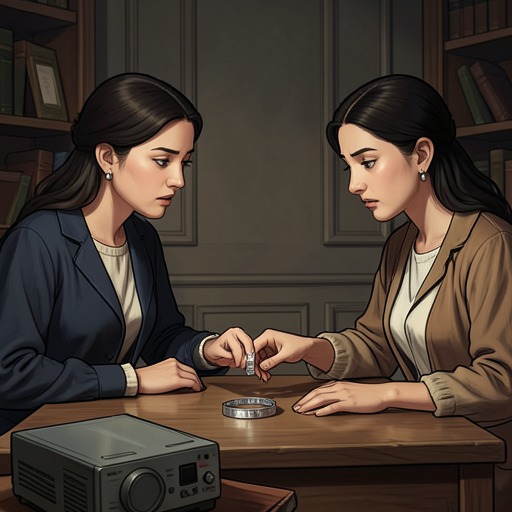
Later, Giovanna recognizes that she wants to go back to Milan immediately, at all costs, even as she conceals that desire from herself. She supplies her return with respectable explanations: relieving Giuliana’s anguish by recovering the bracelet, telling Roberto what Giuliana cannot say—that he should marry her promptly and take her away from Pascone—and protecting her adult friend by drawing her aunt’s anger onto herself. These motives are not wholly false, but Giovanna recognizes that they disguise the purpose driving her: the need to return to Milan.
She buys another ticket and calls her mother to say she will stay an additional day, ignoring her mother’s complaint. Only as the train is about to leave does she realize she has not told Roberto. Her departure is narrated through the language of fate, though the circumstances show her actively arranging it and dressing desire in reasons she can acknowledge. Milan’s importance lies in this tension between the journey she undertakes and the motives she cannot straightforwardly confess: the city has become a place to which she is drawn, even when she tells herself she is going for someone else’s sake.