Miles Archer
The Maltese FalconMiles Archer is Sam Spade’s partner at Spade & Archer, and his murder sets the investigation in motion while exposing the hard distinction Spade makes between private feeling and professional duty. Archer is not presented as an idealized friend: Spade later says he had found him a poor partner and intended to end their association. Yet Archer’s death, and the fact that a fellow detective was killed in the course of their work, makes pursuing the killer obligatory in Spade’s eyes.
Identity and Introduction
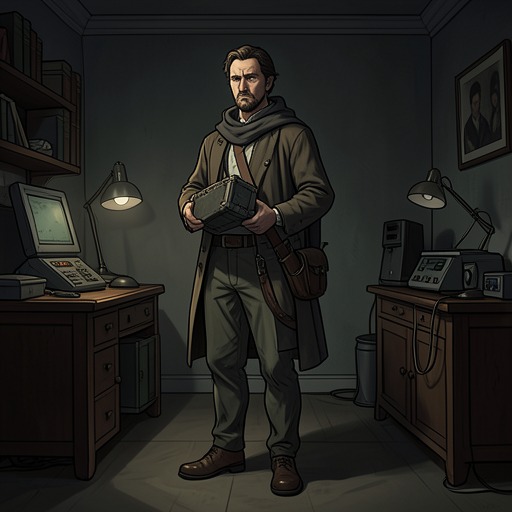
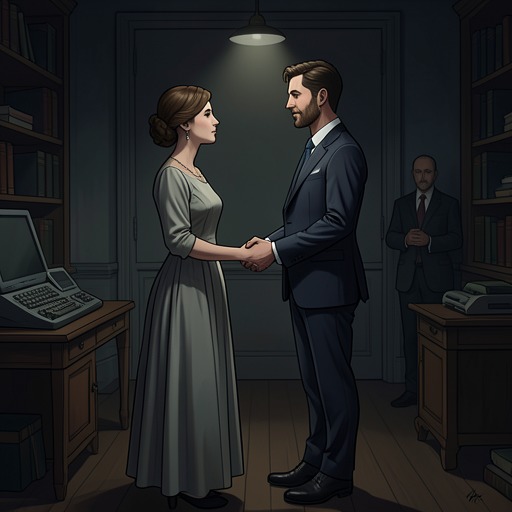
Archer enters the story during Brigid O’Shaughnessy’s first meeting with Spade. After an interruption at the office door, Spade welcomes him in and introduces him as his partner. He is of medium height, broad-shouldered and solidly built, with a heavy jaw, a red face, and some gray in his close-trimmed hair; he is past forty. The introduction places him in the firm’s everyday working arrangement before the case turns him into its first major casualty.
Spade explains the assignment to Archer in the same scene. O’Shaughnessy says her sister has run away from New York with Floyd Thursby, whom she has seen and expects to meet that night. She wants the detectives to find the supposed sister and bring her home. The case as presented to Archer is therefore a search for a missing young woman, not yet an inquiry into the tangled contest over the black bird that will eventually dominate the investigation.
Murder and the First Reconstruction
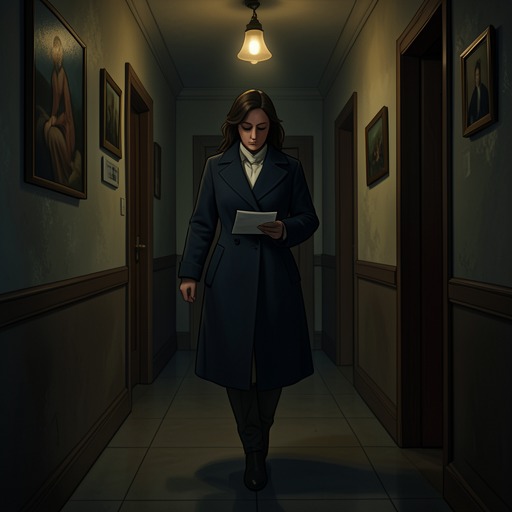
Archer is found dead below a steep slope near an alley, where a damaged fence borders the drop. A ten-foot section of the fence’s top rail has been torn loose; Archer lies on his back near a boulder farther down the slope. Police and other investigators are searching the incline with lights. The broken rail and the position of the body give Spade physical circumstances from which to reconstruct the shooting rather than merely receive an account of it.
A Webley-Fosbery automatic revolver is recovered. Spade identifies the weapon type and notes that it is a .38-caliber, eight-shot model no longer made. One cartridge has been fired. From the position of the body and the broken fence, he proposes that Archer was shot while standing with his back to the fence, then fell through the damaged rail and down the slope until stopped by the boulder. Tom Polhaus confirms the reconstruction and says the blast burned Archer’s coat. The scene establishes the immediate mechanics of the death, but not yet who fired the weapon or why Archer was there.
Spade tells the police that Archer had been assigned to follow Thursby. This places Archer’s death within the apparently straightforward missing-sister assignment: he had been tracking the man O’Shaughnessy described as her sister’s companion. The connection also makes Thursby a suspect, though at this stage the investigation still has to distinguish the available physical evidence from Spade’s developing account of the people and motives behind it.
Evidence, Suspects, and the Case’s Reversal
Thirty-five minutes after Spade leaves Burritt Street, Thursby is shot outside his hotel. Lieutenant Dundy confronts Spade with the timing and implies that Spade’s failure to stop and look at his dead partner is significant. Spade responds coldly, but the rapid sequence of the two shootings intensifies police suspicion and makes the relationship between Archer’s assignment and Thursby’s death central to the inquiry.
Later, Polhaus says the gun that killed Archer belonged to Thursby: the bullet recovered from Archer came from the Webley, and a bellhop at Thursby’s hotel had seen that distinctive weapon in Thursby’s room the morning of the murder. Spade questions whether this proves Thursby fired the shot, but Polhaus insists the identification is certain. Spade then reasons that Thursby is the only person he killed. The evidence makes Thursby responsible for Archer’s death in the police account, while leaving the larger sequence of alliances and violence to be uncovered.
The story later overturns the assumption that Archer’s involvement was simply routine surveillance. Spade tells Brigid that she had Archer and himself handle the matter because she wanted a shadow who was known to her and would accompany her. He points to the Coronet apartment’s earlier rental receipt and the trunks already there as evidence that her story about when she rented it was false. Brigid admits that she pointed Archer out to Thursby while pretending to discover that she was being followed. She says she expected Thursby to be frightened into leaving town, not to shoot Archer. Spade rejects that account as an adequate explanation of her actions and presses her on the deliberate arrangement that exposed Archer to Thursby.
Relationships and Conflicting Accounts
Archer’s partnership with Spade is the relation that gives his death its lasting force. The two men work together in the detective business, but Spade does not claim that their personal relationship was close or affectionate. He says he discovered in their first week in business that Archer was a poor partner and intended to dismiss him when their year together was complete. That blunt judgment complicates any simple picture of revenge: Spade’s insistence on pursuing the murder does not depend on believing Archer was a good man or a valued friend.
Archer is also linked to Thursby through the surveillance assignment and to Brigid through the deception that brought him into Thursby’s path. Brigid’s story initially makes Archer a detective pursuing a man who had betrayed her; her later admissions and Spade’s deductions reveal that she engineered the circumstances in which Archer would be recognized as her shadow. The changing account recasts Archer from an incidental casualty of a client’s problem into someone deliberately placed in danger, even as Brigid disputes that she intended his death.
The police investigation supplies a more concrete link between Archer and Thursby: the weapon and ballistic evidence point to Thursby as the shooter. Spade’s reconstruction of the crime scene, Polhaus’s account of the hotel bellhop, and Brigid’s explanation of how Archer was exposed to Thursby are distinct parts of the case. Together, they connect the physical act of shooting to the chain of decisions that put Archer in its path.
Professional Duty and Narrative Significance
When Brigid asks why Spade will not let her go, he distinguishes his reasons from personal affection. A detective’s partner is supposed to act when that partner is killed; allowing the killer to escape would also damage the standing of their organization and, more broadly, detectives’ ability to pursue criminals. Spade compares the detective’s work to a dog’s pursuit of a rabbit: catching a criminal and then letting the criminal go is possible, but contrary to the work’s nature. He adds that sparing Brigid would also mean letting Gutman, Cairo, and Wilmer go.
That explanation makes Archer’s death more than the opening murder in a complicated hunt for the falcon. Spade’s pursuit becomes entangled with his own working code: he must find a criminal to hand over when the reckoning comes, and he cannot make an exception for Brigid without abandoning the same professional logic he claims to follow. His final position is sharpened by his lack of idealization of Archer. The partner’s personal failings do not cancel the obligation created by the partnership, so Archer remains consequential in the story even after the investigation moves far beyond the circumstances of his death.