
The Man in the High Castle
Introduction
"The Man in the High Castle" is a seminal alternative history novel by American science fiction writer Philip K. Dick, first published in 1962 and awarded the Hugo Award for Best Novel in 1963. It is widely regarded as the founding work of the alternate history subgenre within science fiction. The novel posits a world where the Axis powers won World War II, with the war ending in 1947. The United States has been divided between Nazi Germany in the east and Imperial Japan in the west, with a neutral buffer zone in the Rocky Mountains. The story takes place in 1962, the same year the novel was published, creating a disorienting mirror of our own timeline.
Plot Summary
The novel employs a multi-perspective narrative, focusing on several characters. Mr. Tagomi, a Japanese trade official in San Francisco, struggles with his conscience as he navigates the oppressive system. Juliana Frink, a young woman living in the Colorado buffer zone, becomes fascinated with a forbidden underground novel titled "The Grasshopper Lies Heavy," which depicts an alternate history where the Allies won the war. She embarks on a journey to find the mysterious author, known as the "Man in the High Castle." Meanwhile, her estranged husband Frank Frink, a Jewish man, attempts to evade detection by forging documents, and Robert Childan, an American antique dealer, grapples with his subservient role in the Japanese-dominated society. The novel weaves these threads together, culminating in Juliana's encounter with the High Castle's author, who reveals that reality may be fluid and constructed. The plot is intricate and philosophical, questioning the nature of truth and power.
Themes and Style
The novel explores profound themes including the nature of reality, the consequences of totalitarianism, cultural identity, and moral relativism. Dick employs a "story within a story" structure, using the Grasshopper Lies Heavy as a lens to question which history is authentic. The book also delves into Japanese concepts of "Tao" and "righteousness" versus Nazi racial ideology, highlighting the clash of civilizations under extreme conditions. Dick's prose is introspective and detailed, often focusing on the mundane objects and daily routines of his characters to reveal deeper existential anxieties. The characters are ordinary people caught in extraordinary circumstances, reflecting Dick's belief in the resilience of human decency. The novel's open ending invites readers to contemplate the possibility of multiple realities.
Background and Legacy
Dick wrote the novel during the early 1960s, a period of intense Cold War anxiety. He was influenced by his own fears of fascism and his interest in philosophy, particularly Martin Heidegger's ideas about being and reality. The novel was praised for its originality and won the Hugo Award, establishing Dick's reputation as a major voice in science fiction. It has since become a classic of the genre, influencing countless works of alternative history and speculative fiction. The 2015 Amazon television adaptation, while diverging significantly from the plot, brought renewed attention to the book. "The Man in the High Castle" remains a powerful cautionary tale about the fragility of democracy and the importance of questioning authority.
About the Author
Early Life
Philip Kindred Dick was born on December 16, 1928, in Chicago, Illinois. His birth was immediately shadowed by tragedy: his twin sister, Jane, died only a few weeks later. This loss haunted Dick throughout his life, manifesting in his recurring themes of duality, alternate selves, and reality fragmentation. After his parents divorced, he moved with his mother to California, where he attended Berkeley High School and later briefly enrolled at the University of California, Berkeley, but left without graduating to pursue writing.
Writing Career
Dick began writing fiction at a young age, publishing his first story at twelve. He made his professional debut in the early 1950s with short stories in pulp magazines. His first novel, "Solar Lottery," was published in 1955. Throughout the 1960s, Dick produced a remarkable string of acclaimed novels. "The Man in the High Castle" (1962) won the Hugo Award for Best Novel in 1963, establishing his reputation. He followed with "Do Androids Dream of Electric Sheep?" (1968), "Ubik" (1969), and "Flow My Tears, the Policeman Said" (1974), which won the John W. Campbell Memorial Award for Best Science Fiction Novel in 1975. His later works, such as "A Scanner Darkly" (1977) and "VALIS" (1981), grew increasingly autobiographical and philosophical, reflecting his struggles with mental health and substance abuse.
Personal Life and Struggles
Dick married five times and had three children. He experienced financial difficulties throughout much of his career, despite his prolific output. His personal life was marked by anxiety, paranoia, and drug dependency, which he documented in his fiction. In the 1970s, he underwent a series of profound mystical experiences, which he believed were communications from a transcendent entity. These events led to the "VALIS" trilogy, which blurred the line between fiction and his own altered perceptions.
Death and Legacy
Philip K. Dick died on March 2, 1982, of a stroke in Santa Ana, California, at age 53. During his lifetime, he received critical acclaim from fellow writers like Stanisław Lem and Robert A. Heinlein, but widespread fame eluded him. After his death, his reputation grew immensely. He is now recognized as a precursor to cyberpunk, and his works have been adapted into numerous major films, including "Blade Runner," "Minority Report," "Total Recall," and "A Scanner Darkly." The Philip K. Dick Award, established in 1982, honors outstanding science fiction published in paperback original. His exploration of reality, identity, and consciousness continues to influence writers, filmmakers, and thinkers worldwide.
StoryFlow
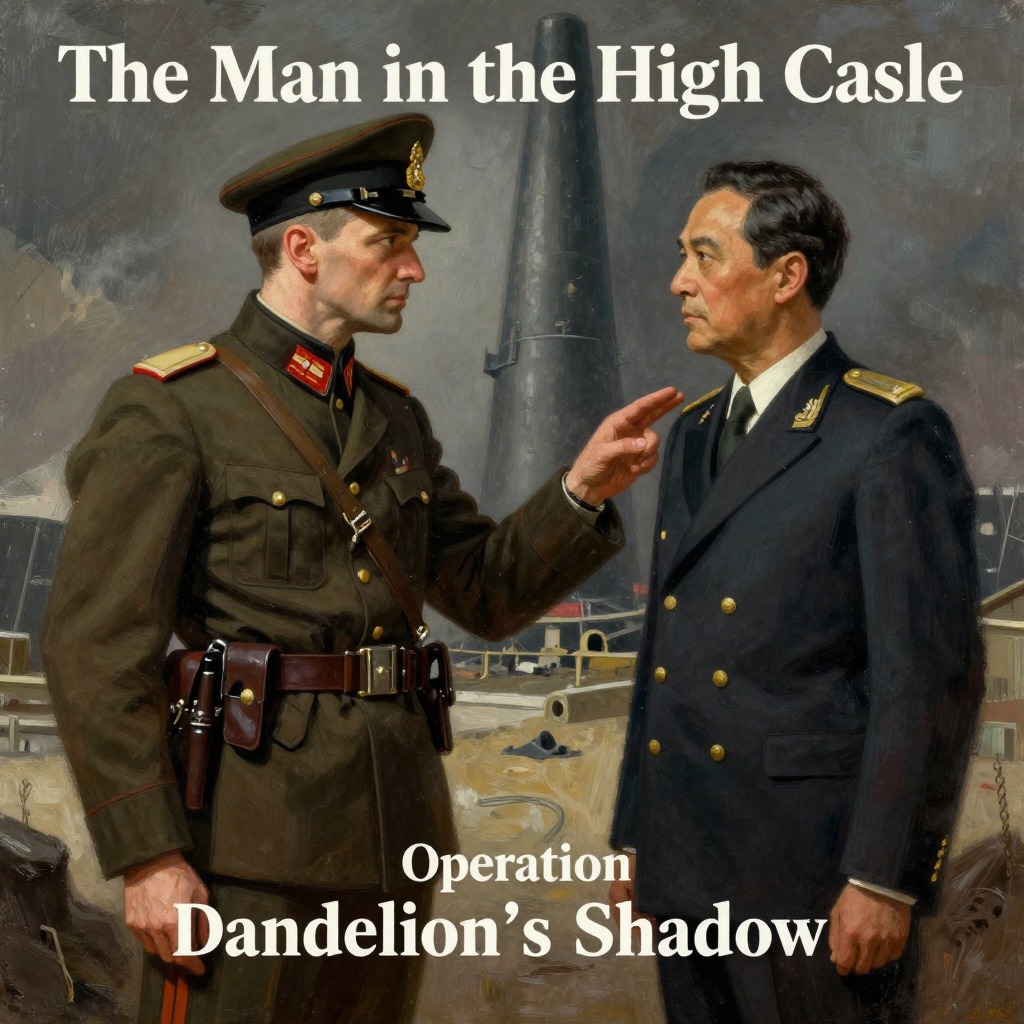
Operation Dandelion's Shadow
A German naval intelligence officer risks his life to tell Japan that the Reich is preparing a sneak nuclear strike, and a Japanese official becomes the first shield against it.
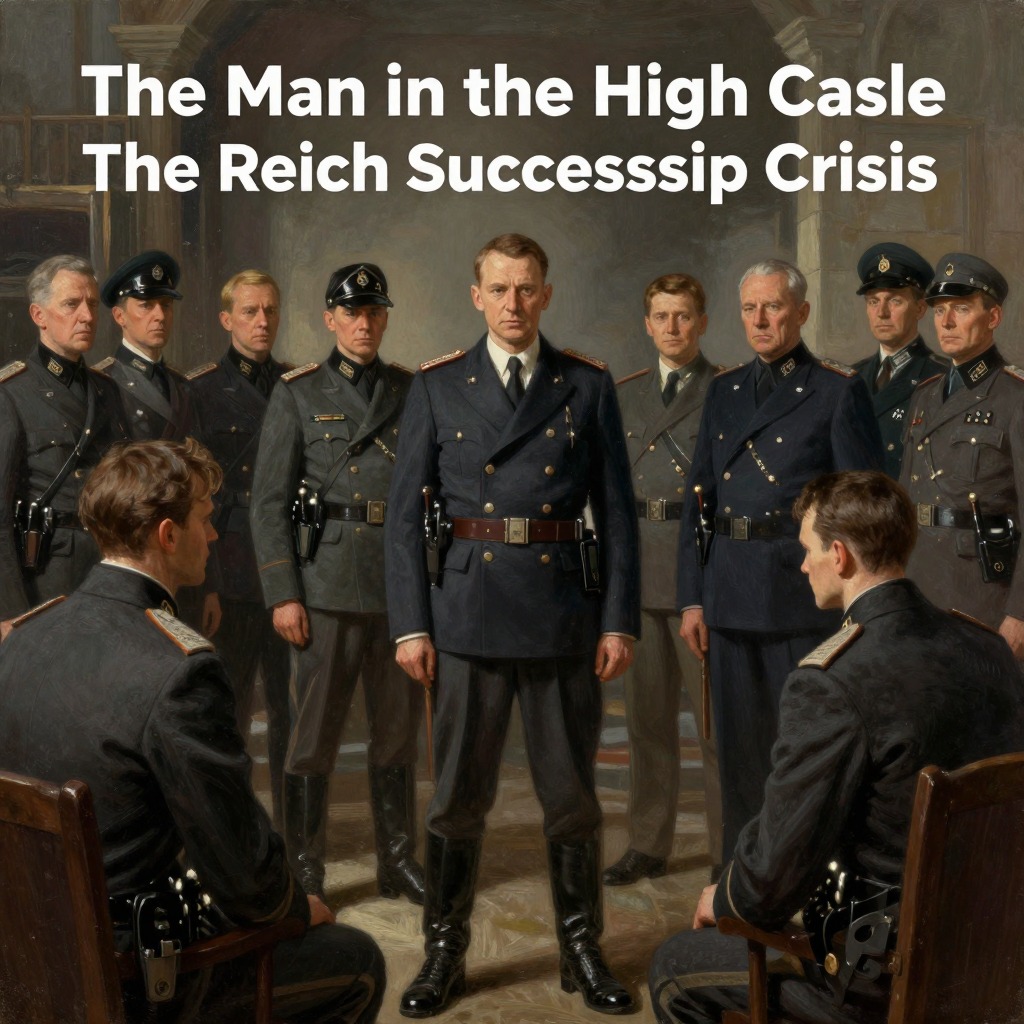
The Reich Succession Crisis
The death of Martin Bormann sets off a struggle inside the Nazi leadership, changing the fate of Operation Dandelion and of everyone caught between the Pacific and Berlin.
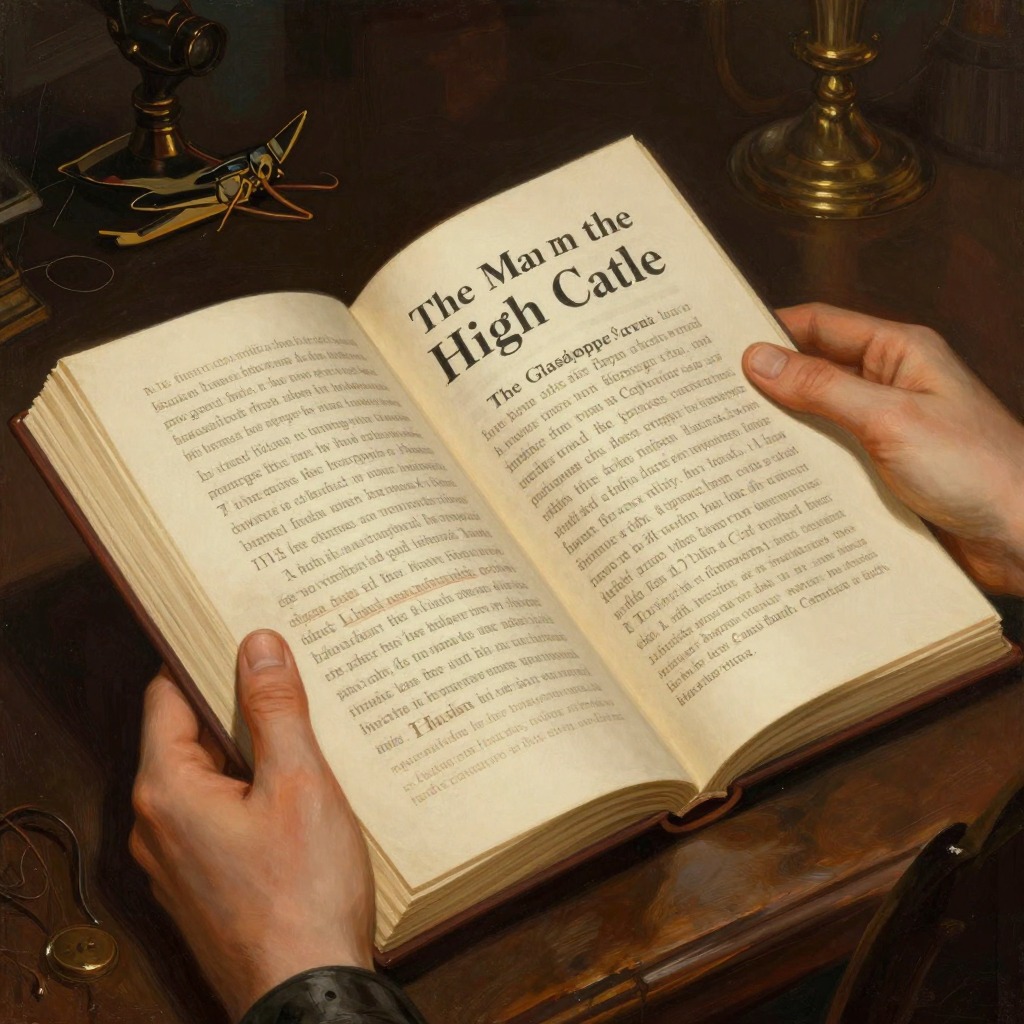
The Grasshopper Lies Heavy's Spread
A banned counterfactual novel travels from hand to hand, shaping how people imagine an Allied victory, until it finally becomes the key to a hidden truth.
