Fate
The Monkey's PawFate is presented as a power over human lives that the monkey’s paw can challenge only at a cost. The old fakir’s stated purpose gives the object its governing principle: those who interfere with fate do so to their sorrow. The deaths and grief that follow lend the warning force, but the story does not settle whether the suffering is deserved, proportionate, or proof of a fully intelligible cosmic order.
The principle and its instrument
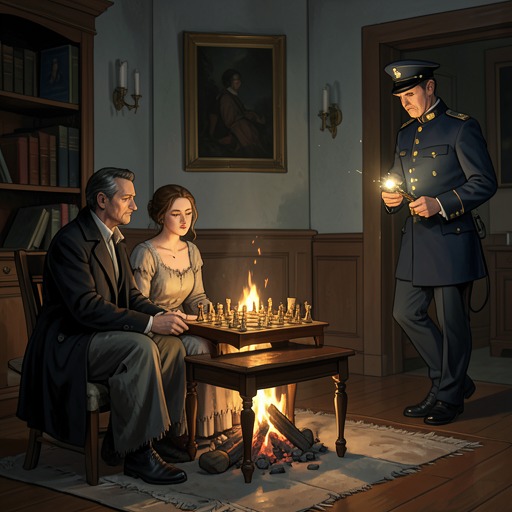
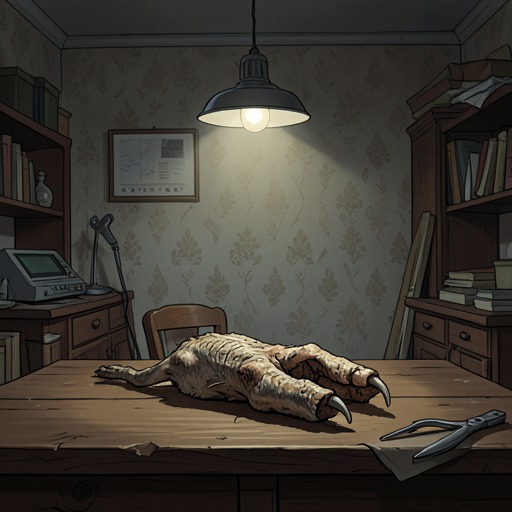
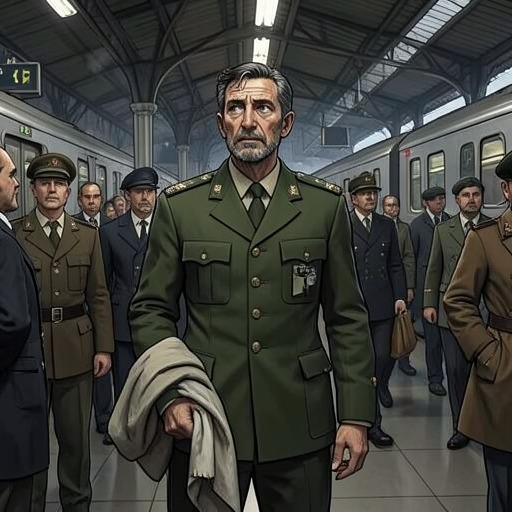
The claim about fate enters the White family’s parlour through Sergeant-Major Morris’s account of a dried, mummified paw. An old fakir, described by Morris as a holy man, placed a spell on it to demonstrate that fate ruled people’s lives. The enchantment allows three separate men to make three wishes each, making the paw less an escape from fate than a means of testing the danger of intervention.
Morris’s account joins an abstract claim to a material object. The paw looks ordinary, yet it carries an extraordinary power; the gap between appearance and promise turns a discussion of destiny into a temptation the family can handle and pass among themselves. The family’s eager attention and laughter sit uneasily beside Morris’s grave manner, marking the divide between treating fate as an entertaining story and hearing it as a warning.
Warnings, wishes, and uncertainty
The story’s history of the paw offers a grim precedent: its first owner used his third and final wish to ask for death. Morris does not know what the first two wishes were, so the account establishes a disastrous end without explaining the wishes’ circumstances or proving exactly how the paw brings it about. That gap preserves uncertainty even as it makes the object’s promise ominous.
Morris has already used his own three wishes. When he suddenly throws the paw into the fire, Mr. White stoops to snatch it away. The action makes the conflict over fate immediate: Morris would destroy the instrument, while Mr. White chooses to keep it despite the warning. The story thus links the danger not only to the power attributed to the paw but also to the human impulse to seize an opportunity whose consequences remain unknown.
Death and the cost of intervention
The claim that interference brings sorrow is tested against Herbert’s death in the machinery at work. When the company’s visitor explains what happened, Mrs. White first begins to give thanks before the meaning of the news reaches her; Mr. White repeats the explanation dazedly and takes her hand as he once did in their courtship. The fatal accident is an institutional, physical cause of death, while the paw’s supernatural role belongs to the story’s larger pattern of wishes and consequences. The narrative places these explanations together without resolving how they relate.
After Herbert is buried in a cemetery two miles away, the house becomes shadowed and silent. Expectation initially persists, as though some further event might lighten the parents’ burden, but the passing days bring resignation and weary quiet. Grief is therefore not a brief consequence attached to the warning: it becomes the condition in which Mr. and Mrs. White confront the possibility of using the paw again.
The final test
Mrs. White urges her husband to wish Herbert back. Mr. White’s resistance is grounded in what he knows of the death: Herbert has been dead ten days, and his father could identify him only by his clothing. When Mr. White goes to retrieve the paw, he fears that an unspoken wish might bring his mutilated son before him; the object that promised a means of changing events has become inseparable from the possibility of seeing the cost of that change.
Later, a quiet knock sounds at the front door just as Mr. White strikes a match at the foot of the stairs. The sound builds into repeated blows while Mrs. White struggles with the bolt and he searches the floor for the paw. As the bolt begins to give, he finds it and frantically makes his third and last wish. The knocking ceases; when the door opens, the road beyond is quiet and deserted. This ending gives the warning its starkest consequence: the wish appears to stop the return Mrs. White sought, but the story leaves the returned figure’s presence and the wish’s exact effect unconfirmed.
Meaning and limits
Fate in the story is both a stated supernatural rule and a question the events do not conclusively answer. Morris attributes the rule to the fakir, and the sequence of a fatal accident, bereavement, and fearful wishes seems to reinforce the warning against interfering. Yet Herbert’s death is presented as a workplace accident, and the text does not establish a clear moral proportion between the family’s wishes and their suffering. The idea that pain is the price of intervention remains a character’s transmitted explanation as well as a pattern the narrative invites readers to weigh.
The paw makes the familiar household setting the arena for that uncertainty. It is passed from hand to hand in the parlour, thrown onto the fire, retrieved, and later sought in darkness while a knock sounds at the door. Fate is consequently less a settled doctrine than a pressure on choice: the characters act without understanding what their wishes may do, and the reader is left between the warning that fate must not be disturbed and the anguish that makes resistance to it almost impossible.