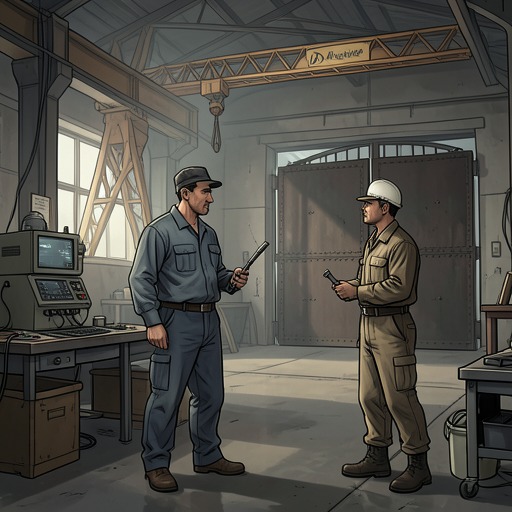
Maw and Meggins
The Monkey's PawMaw and Meggins is the firm that employs Herbert White and, after his death in a machinery accident, sends a representative to offer his parents two hundred pounds. Its role is brief but structurally decisive: the exact amount Mr. White wished for returns as compensation for his son’s death, turning a hoped-for solution to household burdens into an irreparable family loss.
Identity and Narrative Function
The firm appears through its name and through the visit of an unnamed representative; the supplied evidence gives no further account of its organization, business, or personnel. It is identified as Herbert White’s employer, and its actions are conveyed through the representative rather than through a direct scene inside the workplace. This limited presence gives the company a consequential place in the story without supplying grounds to describe its wider operations.
The firm’s part in the plot links the industrial accident to the household catastrophe. Its representative brings the news that Herbert was caught in machinery, then explains the company’s position and announces the payment. The sequence places a formal corporate response beside the parents’ immediate grief, making the firm’s carefully stated terms part of the emotional force of the scene.
The Accident and the Company’s Response
The representative says he has been asked to call and identifies himself as coming from Maw and Meggins. His arrival follows visible hesitation: he pauses repeatedly at the gate before entering, and inside the house he is ill at ease and initially silent. The narrative presents him as the bearer of news on the company’s behalf, not as an independent investigator or decision-maker.
He eventually states that Herbert was caught in the machinery. The brief report gives the accident’s essential circumstance but does not describe how it happened, where in the works it occurred, or who was responsible. Mr. White repeats the words in a dazed manner; the news leaves the parents facing the death of their only remaining child.
The representative conveys the firm’s sincere sympathy, but adds that he is only its servant and is obeying orders. He then makes the company’s position explicit: Maw and Meggins disclaims all responsibility and admits no liability. The wording sharply distinguishes condolence from accountability. The evidence establishes the firm’s stated denial; it does not identify the legal basis for that position or establish what rules governed the accident.
Compensation and Its Reversal
Despite disclaiming responsibility, the firm offers the Whites a sum in consideration of Herbert’s services, calling it compensation. The amount is two hundred pounds. The announcement turns the visit from a message of sympathy into the delivery of a specific financial offer, while the representative’s explanation keeps the company’s refusal of liability alongside that offer.
The sum has already been named within the family as a wish. When Mr. White says he does not know what to wish for, Herbert suggests two hundred pounds, saying that it would clear the house. Mr. White then wishes for exactly that amount while holding the monkey’s paw. After the accident, the company’s offer supplies the requested figure, but in circumstances that make the apparent fulfillment inseparable from Herbert’s death.
On hearing the amount, Mr. White drops his wife’s hand, rises, and asks how much; when the representative answers, he smiles faintly, reaches out like a sightless man, and collapses unconscious. The shock is intensified by the match between the sum he wished for and the money now offered. The payment can answer the numerical wish, but it cannot restore his son or ease the loss in any equivalent human sense.
Significance and Limits of the Evidence
Maw and Meggins embodies the story’s collision between a quantified monetary response and a loss that cannot be measured or undone. The company’s offer gives the wish a concrete result, yet the result arrives only as compensation after a fatal accident. The same figure therefore changes meaning: first a proposed way to relieve the household’s financial burden, then a company payment bound to bereavement.
The scene also makes the company’s response institutional in form. Sympathy is delivered through a representative who emphasizes his obedience to orders; responsibility is denied in explicit terms; compensation is presented as a discretionary sum tied to Herbert’s services. These details support an account of what the firm says and does in the story, but not a broader historical claim about the law, insurance, or the ordinary practices of employers at the time.