Sergeant-Major Morris
The Monkey's PawSergeant-Major Morris is a returning soldier and old friend of Mr. White whose visit turns a family evening into the beginning of a tragedy. He brings the monkey’s paw from his travels and explains that its power is bound to a warning about fate: those who interfere with it do so to their sorrow. Having used the paw himself and seen its consequences, he tries to burn it and urges Mr. White to do the same. His story supplies the rules and danger that the family later learns too late to heed.
Identity and Introduction
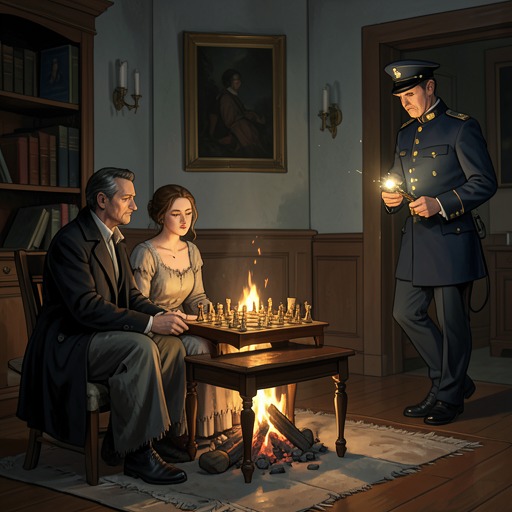
Morris arrives at Laburnam Villa as a long-absent acquaintance returning from abroad. Mr. White introduces him by rank, and the family receives him in the parlour, where he sits by the fire while his host brings whiskey and tumblers. He is described as tall and burly, with beady eyes and a rubicund face. His imposing appearance accompanies a familiar, sociable welcome: he and Mr. White share the ease of old friends, while Mrs. White and Herbert listen to the visitor’s stories.
The length and direction of Morris’s travels give his arrival its particular charge. Mr. White recalls that Morris left twenty-one years earlier as a slight young man working in a warehouse; he has since spent years abroad and speaks to the family of wars, plagues, strange peoples, and adventures. The Whites’ interest in those distant experiences frames him as a bearer of stories from elsewhere. When Mr. White says he would like to see India, Morris answers that he is better off where he is, a brief caution that foreshadows the more serious warning he will give about the paw.
The Talisman and Its Rules
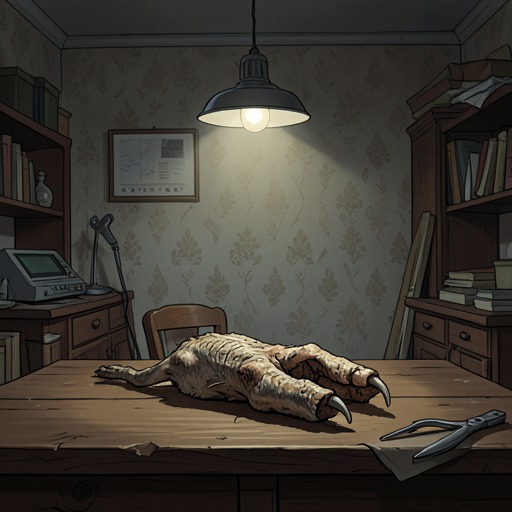
The subject turns from travel to the monkey’s paw when Mr. White recalls a tale Morris had begun telling him. Morris first tries to dismiss it as nothing worth hearing, then describes it offhandedly as a kind of magic. The contrast between his casual manner and the family’s eager attention helps make the object at once a parlour curiosity and a source of unease. To look at, he says, it is only an ordinary little paw, dried to a mummy. Mrs. White recoils when he produces it; Herbert examines it, and Mr. White takes it in turn before placing it on the table.
Morris explains that an old fakir put a spell on the paw to demonstrate that fate rules people’s lives and that attempts to interfere with fate bring sorrow. The spell permits three separate men to have three wishes each. This account gives the family a mechanism but not a safe way to use it: the rule is presented alongside its moral and practical warning, not as a promise of uncomplicated wish fulfilment.
Herbert’s joking challenge prompts Morris to admit that he has already made his three wishes. His face turns pale as he says so. Asked whether the wishes were granted, he confirms that they were; asked about the first man who had possessed the paw, he remembers only that the man’s third wish was for death. Morris says that this was how he came by the object. The identity of that first owner and the content of the first two wishes remain unknown, but the death wish makes clear that the paw’s history cannot be reduced to a light entertainment.
Warning and Refusal
When Mr. White asks whether Morris would want another set of three wishes, Morris does not give a confident answer. He says he does not know, then takes the paw between finger and thumb and throws it onto the fire. Mr. White immediately stoops to snatch it away. Morris’s act is the strongest practical expression of his warning: he does not merely describe the risk but attempts to remove the instrument from reach.
Morris solemnly tells his friend that it would be better to let the paw burn. When Mr. White asks to have it if Morris does not want it, Morris resists, doggedly explaining that he has already thrown it into the fire and telling him not to blame him for what happens if he keeps it. He urges Mr. White to put it back on the fire like a sensible man. The warning is explicit, and the responsibility he names is personal: the Whites are not being forced to accept the talisman.
Yet Morris also explains how it is used. The holder must raise it in the right hand and wish aloud; he adds a warning about the consequences. Mrs. White answers with a joke about wishing for four pairs of hands to help with supper, and the family laughs as Morris, looking alarmed, catches Mr. White by the arm when he draws the talisman from his pocket. The laughter briefly turns the moment into domestic play, but Morris’s alarm marks the divide between the family’s amusement and his knowledge of the object’s danger.
Relationships and Narrative Role
Morris’s friendship with Mr. White is expressed through an easy welcome and direct disagreement. He shares his account with the family, but when Mr. White chooses to keep the paw, Morris does not soften his warning to preserve the mood. His refusal to endorse another wish, his effort to burn the paw, and his insistence that Mr. White not blame him make their relationship a point of tension as well as familiarity. Morris leaves his friend with a choice and a clear account of the risk attached to it.
As the story’s returning witness, Morris connects the ordinary household setting to an unexplained supernatural history. He supplies the paw’s appearance, its stated origin and operating rule, and the grim fragments of its prior use, but no full account of what happened to him after his own wishes. His knowledge is therefore consequential yet incomplete: enough to establish that the object has been used and that a previous owner wished for death, not enough to explain the chain of events behind those outcomes. The story does not show Morris present during the Whites’ later grief or the knocking at their door; his role in those events is indirect, through the object and warning he leaves behind.
The contrast between Morris’s caution and the Whites’ initial levity gives his visit its lasting narrative significance. The family can treat the paw as an exotic curiosity and its instructions as an occasion for laughter because the consequences remain distant. Morris has already crossed that distance: he has used the wishes, turns pale when pressed about them, and tries to destroy the paw. His attempt fails when Mr. White retrieves it, leaving the warning intact but unheeded.