The White family's first wish
The Monkey's PawThe White family's first wish is the turning point in which an ordinary household’s wish for two hundred pounds is fulfilled through Herbert White’s death. Its cruel precision binds desire to consequence: the sum suggested as a practical way to ease the family’s finances returns as compensation for a fatal accident, leaving the Whites with the money they asked for and the loss they never wanted.
The wish and its immediate sign
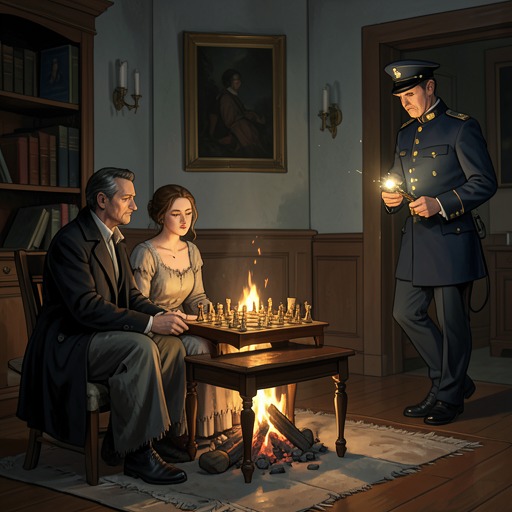
Herbert White proposes the amount after his father admits that he does not know what to ask for and feels that he already has all he wants. Herbert jokes that clearing the house would make his father happy, then recommends two hundred pounds as a sum that would do. The suggestion gives the wish an everyday, domestic scale: it is not a request for riches without limit, but a specific amount linked to the household’s concerns.
Mr. White holds up the monkey’s paw and distinctly wishes for two hundred pounds. Herbert answers the words with a few impressive chords on the piano, treating the moment with a solemnity undercut by a wink to his mother. Then a crash interrupts the music. Mr. White cries out that the paw moved and looks with disgust at the object on the floor. The family has spoken its wish; the paw’s movement is the first sign that the request has taken effect, though the cost is not yet known.
The accident behind the payment
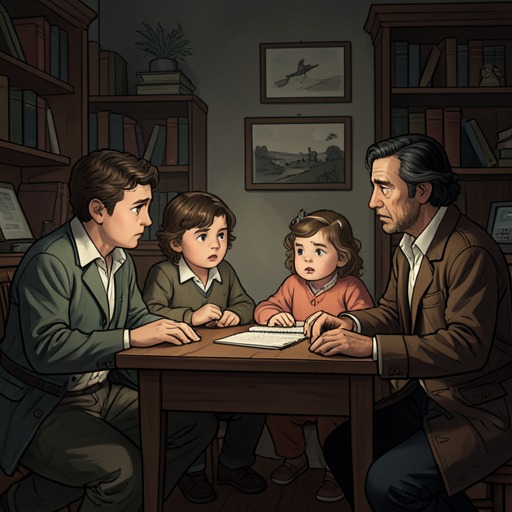
The consequences become clear when a visitor arrives with news of Herbert’s accident. His mother urgently asks whether he is hurt. The visitor bows and says that Herbert is badly hurt but is not in any pain. For a moment, his reassurance seems to offer relief; then its implication dawns on her. The visitor’s averted face confirms what his words have not yet plainly stated, and she reaches for her husband’s hand as the room falls silent.
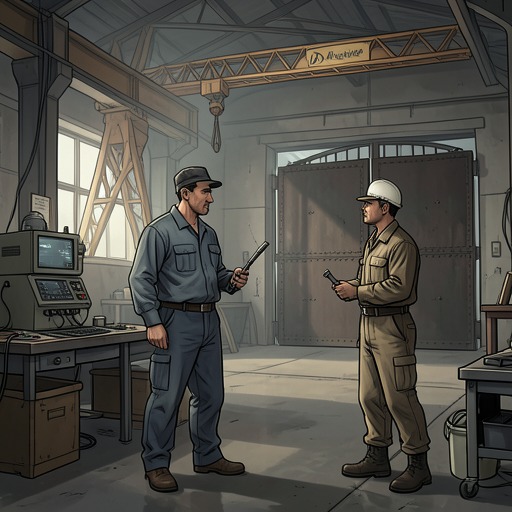
The visitor explains that Herbert was caught in the machinery. Mr. White repeats the phrase in a daze, staring out of the window, then holds his wife’s hand as he did during their courtship nearly forty years earlier. He tells the visitor that Herbert was the only one left to them and that the loss is hard. The scene makes the wish’s cost specific: the son whose future the household shared has died in a workplace accident, and his parents must absorb the news together.
Compensation and the wish’s fulfillment
The visitor says that Maw and Meggins wishes to convey sympathy, while stressing that he is only the company’s servant and is obeying orders. He then makes the company’s position explicit: it disclaims all responsibility and admits no liability. In consideration of Herbert’s services, however, it will present the family with a sum as compensation. The account carefully distinguishes the company’s expression of sympathy from its refusal to accept responsibility; the payment is offered despite that disclaimer, not as an admission of fault.
When Mr. White asks how much the sum is, the visitor answers: two hundred pounds. The exact match completes the wish in the starkest possible way. The money first named at Herbert’s suggestion returns as the company’s compensation after his death. Mr. White drops his wife’s hand, rises, and stares at the visitor in horror. Unaware of his wife’s shriek, he smiles faintly, reaches out as if sightless, and collapses unconscious to the floor. The response places shock beside fulfillment: the wished-for amount has arrived, but only as a measure attached to an irreparable loss.
Aftermath and significance
The Whites bury their dead in a huge new cemetery two miles away, then return to a house steeped in shadow and silence. Events have moved so quickly that at first they can scarcely realize what has happened. They remain expectant, as if something else might occur to lighten a burden too heavy for their old hearts. That expectation does not undo the scene’s reversal: the family has received the precise sum it asked for, but the household’s central relationship has been broken by Herbert’s death.
The event’s force lies in the contrast between the modest wording of the wish and the scale of its consequence. Two hundred pounds is first proposed as a practical benefit; later, the same number identifies the compensation attached to a death. Its recurrence does not make the payment an equivalent for Herbert’s life. Rather, the exactness exposes the gap between what can be counted and what the family has lost. The company’s formal offer and denial of responsibility sharpen that gap, while Mr. White’s faint smile and collapse turn fulfillment into a moment of horror. The first wish establishes the story’s central warning: a desire may be granted in a form that destroys the happiness it was meant to secure.